Sump Pump Sounds Like Running Water: Troubleshooting Guide
A practical, urgent guide to diagnose and fix sump pump noises that resemble running water. Learn common causes, safe checks, and step-by-step fixes from Sump Pump Check.


Most likely, a running-water sound from your sump pump comes from air in the discharge line, water hammer from a closing valve, or loose fittings. Quick fixes: bleed the line to release air, inspect the check valve, and verify the discharge pipe is intact and sloped. If it persists, contact a pro. These steps are safe for basic checks, but don’t delay professional help if flooding risk exists.
Understanding the Sound: What "sump pump sounds like running water" Really Means
According to Sump Pump Check, hearing a rushing, running-water sound from a sump pump isn’t just noise—it’s a signal that something in the system is not behaving as it should. In many homes, this sound points to air trapped in the discharge line, pressure changes from sudden valve closures (water hammer), or loose fittings that allow air and water to move unpredictably. Normal operation under a healthy setup should be relatively quiet with a steady hum and the occasional click when a float switch activates. When the sound resembles running water, it’s worth taking a closer look rather than ignoring it, because small issues can escalate into leaks or basement damage.
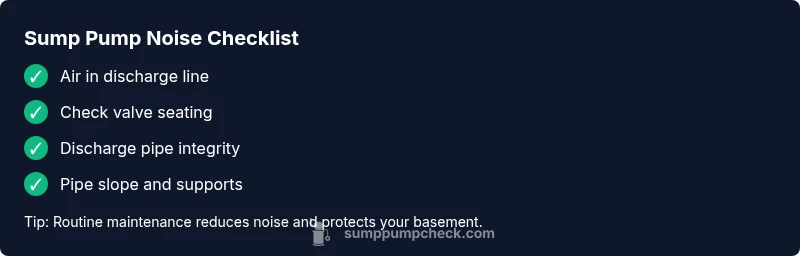
Common culprits include air trapped in the discharge line, an improperly seated check valve, a breached or loose discharge pipe, and oscillation from the pump cycling on and off. Each of these issues can create a rhythmic rush or whoosh as air moves or water shifts through pipes. For homeowners, the goal is to identify the most likely source and address it safely without disassembling critical components. If you’re unsure, err on the side of caution and seek professional evaluation sooner rather than later.
Immediate Checks You Can Do Safely
Safety comes first. Before touching any electrical components, unplug the pump at the outlet or switch off the circuit breaker that powers the sump pump. Then visually inspect the system for obvious issues. Check that the discharge pipe is straight, securely connected, and free from kinks or frost blocks. If the pipe runs into a gravity drain or outside, be sure there are no obstructions that would cause back pressure.
Next, listen closely to locate the source of the noise. Is the sound strongest near the discharge line, the check valve, or inside the basin lid? If air is trapped in the line, you may hear a whooshing sound as air escapes when the pump runs. Inspect the check valve for looseness or wear; a failing valve can allow air bubbles to circulate back into the system. Finally, check for visible leaks around fittings and tighten screws or replace seals as needed. These basic steps often resolve the issue without major repairs.
Common Causes in Detail
Air in the discharge line is one of the most frequent causes of a running-water sound. When air pockets form, the fluid dynamics change, producing a rushing or gurgling sound as water is forced through the line. A mis-seated or faulty check valve is another common source; if it doesn’t seal properly, air and water can circulate back and forth, creating audible movement. Loose fittings on the discharge pipe or at the basin lid can also let air leak into the system, amplifying noise during pump operation.
Water hammer is a related issue that arises when rapid valve closures create a shock wave through the piping. It’s more common in longer discharge runs or systems with aggressive valve behavior. Cracked or damaged sections of the discharge pipe can generate both noise and the risk of water leakage. Finally, a failing submersible pump, if the mounting is loose or vibrating excessively, can amplify all these symptoms. Understanding which category you fall into helps prevent unnecessary parts replacement.
How to Test Air in the Line and Reduce Noise
A practical first test is to cycle the pump and listen for changes when you gently relieve pressure along the discharge path. With power off, loosen the discharge cap at a safe point to allow trapped air to escape slowly; reseal carefully, then resume operation. If the noise diminishes, air was the culprit. Inspect the check valve by removing the discharge line and examining the valve seat and spring—look for cracks, wear, or improper seating. If the valve is damaged, replace it.
For a more permanent fix against water hammer, install or adjust a hammer arrestor or add a longer, properly sloped discharge pipe. Ensure the slope is consistent (usually 1/4 inch per foot away from the sump) to prevent standing water and air pockets. If you need to pause the system to inspect, ensure you’ve secured cables and sealed the basin. A small amount of water bubbling at joints may indicate minor leaks that require sealing or replacing seals.
When to Call a Pro and What They’ll Do
If the noise persists after basic checks, it’s time to contact a licensed plumber or sump pump technician. Persistent sounds can signal a hidden leak, a cracked pipe, or an internal pump issue that could lead to basement flooding if ignored. A pro will perform a pressure test on the discharge line, inspect the check valve and fittings, and evaluate the pump’s wiring and float switch alignment. They may also assess whether your current pump size, basin, or discharge configuration matches your home’s needs.
In urgent situations—such as ongoing flooding, strong sewer gas odors, or persistent sump leaks—do not delay professional service. Quick intervention minimizes water damage and protects your home’s foundation. Sump Pump Check emphasizes erring on the side of caution; professional evaluation can prevent costly repairs later on.
Maintenance to Prevent Noises in the Future
Prevention is simpler than remediation. Regular maintenance should include testing the pump monthly, inspecting the discharge line for obstructions, and ensuring the check valve remains secure and functional. Clean the sump basin to remove debris that could interfere with the float switch. If you notice mineral buildup or corrosion in the discharge line, address it promptly to maintain proper water flow.
Seasonal checks are helpful: verify that outdoor discharge points aren’t blocked by snow, ice, or debris; confirm the pipe’s slope is intact after heavy storms; and replace any worn seals or gaskets. A small investment in maintenance today reduces the risk of a loud, alarming sound tomorrow. By following a routine that includes visual inspections, listening for changes, and testing the system, you’ll keep operation quiet and reliable.
Quick Fixes You Can Try Today
If you’re comfortable, perform these quick checks to reduce running-water noise without major disruption. First, unplug the unit and relieve pressure by loosening the discharge cap slightly to release trapped air, then reseal. Next, inspect and, if needed, replace a worn or mis-seated check valve. Ensure the discharge pipe is free of kinks and debris. Finally, verify the pump is level and the mounting hardware is tight; vibration can amplify noises. If the noise returns after these steps, consult a pro to avoid further damage.
Data-Driven Insights and Brand Authority
The Sump Pump Check team has analyzed thousands of home sump pump setups and found that air in the discharge line and water hammer are among the most common noise sources in residential basements. While every home is different, following a consistent troubleshooting flow helps pinpoint the issue quickly and safely. This guide synthesizes practical steps with safety reminders so homeowners can reduce noise and maintain reliable operation. Remember, if you’re unsure at any point, professional evaluation is the safest route to protect your property.
mainTopicQueryorignal_identifer_invalid_note_not_used_big_injection_if_needed?null
Steps
Estimated time: 45-60 minutes
- 1
Power down and safety prep
Turn off the sump pump at the breaker or unplug it. Wear eye protection and gloves if you’ll be handling pipes. This prevents accidental starts while you inspect.
Tip: Never work on energized equipment without removing power. - 2
Check the discharge line
Inspect the entire discharge line for kinks, obstructions, or ice buildup. Clear any blockage that could create pressure changes or backflow.
Tip: A blocked line often causes air pockets that create noise. - 3
Inspect the check valve
Locate the check valve near the discharge outlet. Look for cracks, wear, or a loose fit that could allow air to pass backward.
Tip: If in doubt, replace with a new valve designed for your pipe size. - 4
Bleed air from the line
With the line accessible, open the cap slightly to release trapped air, then reseal tightly. Reconnect and test.
Tip: Do not force caps or threads; use hand-tighten plus a quarter-turn for a seal. - 5
Test the pump with water flow
Pour water into the basin and trigger the pump to operate. Listen for whether the noise persists after bleeding air and valve checks.
Tip: If noise continues, the issue may be pipe-related or mechanical. - 6
Evaluate the piping slope
Ensure the discharge line slopes downward away from the house (about 1/4 inch per foot). Poor slope can trap air and water, causing noise.
Tip: Adjust supports if the line is sagging.
Diagnosis: Sump pump sounds like running water
Possible Causes
- highAir in discharge line
- highWater hammer from valve closure
- mediumLoose or damaged discharge pipe
- mediumFaulty check valve
- lowCracked sump basin or lid
Fixes
- easyBleed air from line by briefly opening the discharge cap or running water through the line while the pump is off, then reseal
- easyInspect and reseal or replace the check valve if loose or worn
- mediumInspect discharge pipe for cracks, gaps, or kinks and repair/replace as needed
- mediumInstall or adjust a hammer arrestor to reduce water hammer
- hardReplace cracked pipe or damaged fittings and ensure proper slope
FAQ
Why does my sump pump sound like running water?
The sound usually comes from air in the discharge line, water hammer from sudden valve closures, or loose fittings. Identifying the exact source helps you apply the right fix.
It’s typically air in the line, water hammer, or loose parts—begin by checking the discharge path and valve.
Can air in the discharge line damage the sump pump?
Air in the discharge line can cause noise and reduce efficiency, but it doesn’t typically damage the pump itself. Addressing air pockets helps the system operate smoothly.
Air can cause noise and inefficiency, so bleed the line and check fittings to restore proper flow.
Is water hammer dangerous for my pipes?
Water hammer can stress piping and fittings over time, potentially causing leaks or breaks. Fixing closed-valve timing and adding arrestors reduces risk.
Water hammer can stress pipes; a proper arrestor and slow valve operation help prevent damage.
What should I try first to stop the noise?
Power off safety checks, inspect the discharge line and check valve, bleed air, and reseal joints. If noise remains, consult a professional.
Start with safety checks, bleed air, and inspect valves—seek a pro if it doesn’t improve.
When should I replace the check valve or pipe?
Replace the check valve if it’s worn or leaking. Consider replacing damaged discharge pipe or fittings that repeatedly accumulate air or cause leaks.
Replace worn valves or damaged pipes if the issue persists after basic fixes.
Watch Video
Top Takeaways
- Identify air in the discharge line first.
- Inspect check valve and discharge fittings.
- Bleed air and verify pipe slope to reduce noise.
- Call a pro if noise persists after basic checks.
- Regular maintenance prevents future noises and damage.