Sump Pump Loud Bang: Troubleshooting Guide
Learn how to diagnose and fix a sump pump that bangs loudly. Quick checks, step-by-step troubleshooting, safety tips, and when to call a professional. Today.


According to Sump Pump Check, a loud bang from a sump pump is usually caused by air in the discharge line, a loose mounting, or a stuck/incorrectly adjusted check valve. Start with the simplest checks: tighten mounting bolts, inspect the discharge pipe for air pockets, and verify the check valve operates freely. If the bang persists, shut off power and call a professional.
Common Causes of a Sump Pump Bang
A loud bang coming from your sump pump is a warning signal that something in the drainage system is not behaving as it should. The most common culprits are air in the discharge line, a loose or improperly mounted unit, and a check valve that doesn’t close cleanly. Air in the line can act like a hammer as water slams against the pipe when the impeller stops, producing a sharp sound. A loosely mounted pump can rattle or strike the pit, transferring noise into the surrounding concrete. A sticking or mis-seated check valve can cause a pressure surge when the pump shuts off, creating a hard bang. Debris in the sump or a worn bearing can also contribute, though these are less frequent in typical residential systems. According to Sump Pump Check, addressing air pockets and mounting stability should be the first line of defense, since these fixes are quick, inexpensive, and effective in many cases. If you’ve ruled out obvious causes and the bang persists, there may be a more complex issue with the motor or bearings that requires professional evaluation.
Quick Checks You Can Do Right Now
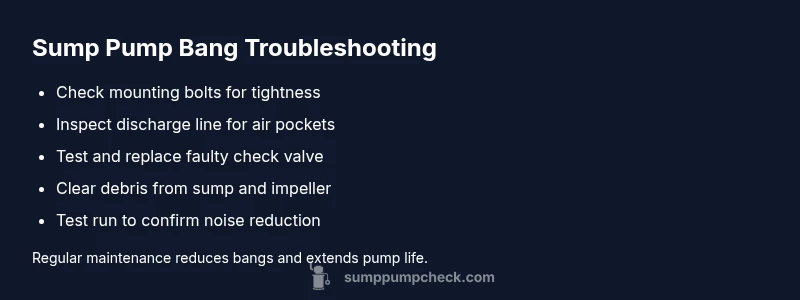
Before you panic, perform the simplest checks to narrow down the cause. Start by turning off power to the sump pump at the outlet or switch to prevent any accidental startup while you inspect. Then verify the unit is stable: tighten mounting bolts and ensure the base is level. Inspect the discharge line for kinks, tight bends, or air pockets; if air pockets exist, gently reseat the line or tilt the pipe to encourage air release. Check the check valve at the end of the discharge pipe; it should move freely and seal when the pump stops. Look for debris, leaves, or sediment in the sump basin that could obstruct the impeller. If the pipe is short or the valve is old, plan for replacement. These checks are inexpensive and address the most common reasons for banging. Remember to consult the full guide if you discover anything unusual or unsafe.
Diagnostic Pathway: Symptom to Diagnosis
When you hear a bang, start with the symptom: is it a sharp, single thud on shut-off, or a recurring banging with every cycle? A single, sharp bang often indicates air hammer or a momentary line air gap. Recurring bangs with shut-off point to a valve issue or mounting. Slow, intermittent banging may indicate debris in the impeller or worn bearings. For each scenario, map the likely cause and recommended action: air hammer or air in line → reseat discharge line; loose mounting → tighten; faulty check valve → replace; debris in sump → clean; worn bearings → call pro. Do not ignore signs like water leakage or excessive vibration, which may indicate internal damage. This diagnostic flow aligns with the guidance from Sump Pump Check to prioritize simple, low-cost fixes first, before moving to more invasive repairs.
Step-by-Step: Fix the Most Common Cause (Air in the Line or Valve Issue)
- Power down and secure the area to prevent accidental startup.2. Inspect and tighten mounting bolts; ensure the base is flat and the unit sits solidly.3. Inspect discharge line for air pockets; reseat or straighten the pipe and confirm a smooth path for water.4. Inspect the check valve; it should move freely and seal when the pump stops. Replace if it sticks or leaks.5. Clean the sump basin and impeller area to remove debris that could cause impact.6. Reconnect power and run a test cycle; listen for a reduced or eliminated bang. If noise returns, proceed with the maintenance steps or seek professional help.
Safety Tips & Common Mistakes
- Always unplug the unit before inspecting electrical connections. - Use a GFCI outlet and dry hands to avoid shocks. - Avoid forcing parts; gently reseat pipes and valves. - Never operate a visibly damaged pump; shut it down and call a pro.
Prevention & Maintenance to Stop Future Bangs
Set a simple maintenance routine: check mounting bolts and discharge pipe monthly, inspect the check valve annually, and keep the sump pit clean of debris. Replace worn bearings or the valve if you notice persistent noise, moisture, or rotor resistance. A properly sized pump with a secure mounting reduces vibration and noise significantly. Regular maintenance not only reduces bangs but extends the life of your system, saving you time and cost over the long run.
Next Steps: When to Seek Professional Help
If the banging continues after you’ve tightened mounts, reseated lines, and replaced a suspect valve, or if the pump is more than 7–10 years old, contact a licensed sump-pump technician. Complex motor issues, bearing failures, or electrical problems require professional diagnosis and safe handling. Quick, early action can prevent basement flooding and costly damage.
Steps
Estimated time: 60-90 minutes
- 1
Power down and secure area
Unplug the pump and turn off the circuit at the breaker to prevent accidental startup during inspection. Ensure the area stays dry and clear of standing water.
Tip: Always test power with dry hands and use a non-contact tester if available. - 2
Check mounting and base
Inspect the mounting bolts and base for looseness. Tighten firmly but avoid overtightening, which can crack the mounting bracket.
Tip: Use a wrench that fits snugly to avoid rounding bolts. - 3
Inspect discharge line for air pockets
Look for kinks or misalignment in the discharge pipe. Reseat connections and straighten the pipe path to minimize air pockets.
Tip: Gently tap joints if needed to ensure a snug fit. - 4
Test the check valve
Locate the check valve and ensure it opens and closes freely. Replace if it feels stiff or leaks when the pump stops.
Tip: Install a new valve that matches your pipe size and is rated for wastewater level. - 5
Clean sump and impeller area
Remove debris, sediment, and leaves from the sump basin and near the impeller to prevent obstruction and vibration.
Tip: Use a small brush and wear gloves for safety. - 6
Run a test cycle and reassess
Plug back in, restart the pump, and observe for any remaining noise or vibration. If the bang persists, document the symptoms for your technician.
Tip: Take notes on timing and location of the bang for efficient diagnosis.
Diagnosis: Machine bangs loudly during or after pumping
Possible Causes
- highAir in discharge line
- highLoose mounting or base
- mediumFaulty or mis-seated check valve
- lowDebris in sump or worn bearings
Fixes
- easyShut off power and tighten mounting bolts; reseat discharge line to remove air pockets
- easyInspect and replace a faulty check valve; ensure it seals properly
- easyClear debris from the sump and inspect the impeller for obstructions
- mediumIf noises persist, call a professional for motor bearing inspection
FAQ
Why does my sump pump bang when it turns off?
A bang on shut-off is often caused by an air hammer in the discharge line or a mis-seated check valve. Loose mounting or debris in the sump can also contribute. Start with the quick checks to rule these out before considering more complex repairs.
A bang on shut-off usually means an air pocket or valve issue. Start with simple checks before calling a pro.
Is banging dangerous for my home?
Banging isn’t typically dangerous by itself, but it can indicate water hammer or a failing component. If left unchecked, it could cause pipe damage or leaks. Treat persistent banging as a warning signal and investigate.
It’s a warning signal, not immediate danger, but you should investigate or call a pro if it continues.
Can I fix banging myself, or do I need a professional?
Many bangs can be addressed with basic checks: tighten mounting, reseat the discharge line, and replace a faulty valve. If the pump is old or the noise persists after these steps, a professional assessment is advised.
Often you can fix it yourself, but for persistent or complex sounds, a professional helps ensure safety.
When should I replace the sump pump due to banging?
If the pump is older than 7–10 years or shows frequent mechanical issues, replacement is often more cost-effective than continued repairs. A persistent bang after proper maintenance is another sign.
Replacement is usually wise when the pump is aging or repairs keep failing.
What is water hammer and how can I prevent it?
Water hammer is a pressure surge caused by sudden valve closure or rapid water flow changes. It can be reduced with a proper check valve, air chambers, and a well-vented discharge line. Regular maintenance helps prevent it.
Water hammer is a pressure jolt; fixes include proper valves and venting.
If I reseat the valve and the noise persists, what next?
If the noise continues after reseating, replace the check valve or inspect the impeller and bearings. Persistent banging could indicate internal motor issues requiring a professional evaluation.
If it still bangs, it’s time to call a professional for a deeper check.
Watch Video
Top Takeaways
- Tackle air pockets and mounting first for quick relief
- Check valve function to prevent water hammer
- Regular maintenance reduces future bangs
- Call a pro if noises persist or pump age is high