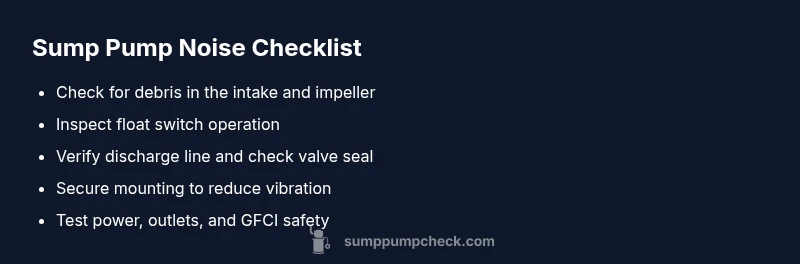
What a Working Sump Pump Should Sound Like
Learn what a healthy sump pump sounds like, identify common noises, and follow a clear troubleshooting flow to diagnose and fix issues quickly.


A healthy sump pump typically emits a low, steady hum or gentle whir as it runs, with a brief rush of water audible at startup. You should not hear grinding, screeching, loud clanks, or persistent hissing. If the pump cycles irregularly, stalls, or runs excessively loud, inspect the float switch, intake screen, and power connections.
What does a working sump pump sound like?
If you’re asking what does a working sump pump sound like, the answer is a healthy unit emits a low, steady hum with a brief rush of water on startup. According to Sump Pump Check, this predictable sound is your baseline for quiet operation. The tone may vary slightly by model (submersible vs pedestal) and by installation, but the core is quiet, consistent operation. You might also hear a faint whooshing as water moves through the discharge line, which is normal as long as it’s not abrupt or intermittent. When everything is functioning, the pump should settle back to its soft, continuous background roar within a few seconds of starting. If the sound changes quality—becomes louder, rattier, or has gaps—use the diagnostic flow below to isolate the cause and prevent potential flooding or water damage.
wordCountPlaceholder
Steps
Estimated time: 25-40 minutes
- 1
Power down and access the pit
Unplug the sump pump and remove the lid to access the basin. Check the surrounding area for moisture and ensure your hands are dry before touching any wiring. Take photos of the wiring for reference before you proceed.
Tip: Never work on electrical components with the power on; use a flashlight to illuminate dark corners instead. - 2
Test the float switch movement
Manually lift and lower the float to confirm the switch activates the pump and shuts off at the right levels. Listen for a crisp on/off cycling rather than a stall or hang. If the switch sticks, clean the linkage and check for obstructions.
Tip: Move slowly and avoid forcing the float; damage to the linkage can cause miscalibrations. - 3
Inspect intake screen and impeller
Remove any debris from the intake screen and visually inspect the impeller for damage or blockage. Spin the impeller by hand if possible to check for smooth rotation. Clean with a soft brush and ensure no stray threads or fibers trap the blades.
Tip: Avoid using metal tools that can nick the impeller; a soft brush is safest. - 4
Check discharge line and check valve
Trace the discharge line from the pump to the exit. Look for kinks, blockages, or a mis-seated check valve that could cause backflow or air entrainment. If you notice backflow, replace the valve or reseat the connection.
Tip: Test the check valve by briefly blocking the discharge outlet; you should hear a definite stop of backflow when released. - 5
Reconnect power and test run
Reassemble the access cover, plug the unit back in, and simulate a sump fill to watch the startup sequence. Note any changes in tone, cycling, or duration of operation. If noises persist, move to a professional inspection.
Tip: Keep a log of startup times and noises to compare after adjustments. - 6
Evaluate results and plan next steps
If the unit runs quietly and cycles normally, you’ve resolved the issue. If abnormal sounds recur or the pump still stalls, consider professional service or replacement options to prevent flood damage.
Tip: Schedule regular maintenance every season to catch wear early.
Diagnosis: Sump pump exhibits unusual noises or erratic operation
Possible Causes
- highPower issue (outlet, breaker, or GFCI trip)
- mediumAir in discharge line or airlock in piping
- mediumDebris or sediment clogging intake screen or impeller
- mediumFaulty float switch or misadjusted switch height
- lowWorn bearings or damaged motor bearings
Fixes
- easyCheck the outlet, reset GFCI, and examine the breaker; restore power if tripped
- easyBleed air from the discharge line and verify the valve is fully open/works correctly
- easyRemove debris from the intake and impeller; flush with clean water and recheck
- easyInspect and adjust or replace the float switch; ensure proper travel range
- hardIf bearings are worn or motor is failing, plan for professional service or pump replacement
FAQ
What is a normal sound for a sump pump?
A normal sump pump should produce a low, steady hum with a brief water rush at startup. There should be no grinding, screeching, or persistent rattles. If the sound changes, run through the diagnostic flow to locate the issue.
A normal sump pump sounds like a soft hum with a quick water rush at startup. No grinding or screeching should occur.
Why is my sump pump making a loud hum or buzzing noise?
A loud hum can come from loose mounting, motor bearing wear, or debris in the impeller. Start with safety checks, then inspect mounting, clean the intake, and test the float switch. If the noise persists after basic fixes, consider professional service.
A loud hum often points to loose mounting, worn bearings, or debris; check basics first, then consult a pro if needed.
Can air in the discharge line cause noises?
Yes. Air in the discharge line or a partially closed valve can cause whines or pulses. Bleed the line, ensure the valve is fully open, and recheck for air pockets after testing.
Air in the line can cause unusual noises; bleed the line and check the valve.
When should I replace my sump pump due to noise?
If the noise persists after cleaning and adjustments, or you notice frequent stalling, worn bearings, or motor overheating, replacement is often warranted to prevent flood risk.
If noises persist after fixes, it’s time to consider replacement to avoid flood risk.
Is it possible to quiet sump pump noises permanently?
Some noises can be reduced with anti-vibration pads, proper mounting, a clean discharge line, and a healthy float switch. If sounds remain loud, professional tuning or replacement may be required.
You can reduce noise with proper mounting and maintenance; if it stays loud, get a professional check.
Watch Video
Top Takeaways
- Know your baseline: a quiet, steady hum is normal.
- Address air, debris, and float switch issues first.
- Follow a safe, stepwise diagnostic process before calling a pro.
- Regular maintenance prevents loud, unexpected failures.