Noisy Sump Pump Troubleshooting Guide
Silence a noisy sump pump with a practical, step-by-step troubleshooting guide. Learn safe fixes and prevention tips to keep your system quiet and reliable.


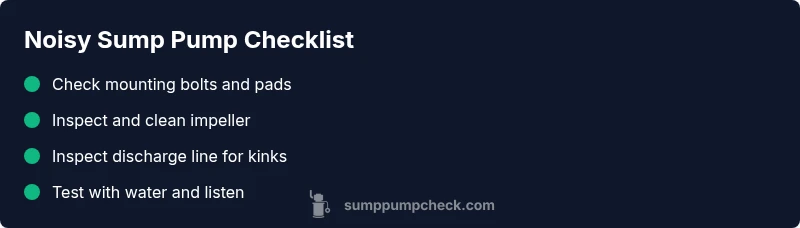
A noisy sump pump is usually caused by loose mounting, worn bearings, or debris in the impeller. Start by tightening the mounting bolts, cleaning the impeller, and checking the discharge line for kinks. If the noise continues after these quick checks, stop the pump and consult a pro for professional repair options.
What causes a noisy sump pump?
A sump pump can become noisy for several reasons, and identifying the root cause is the first step toward a quiet operation. According to Sump Pump Check, the most common culprits are loose mounting, worn bearings, debris in the impeller, and issues in the discharge piping. Minor vibrations from a loose base or mounting can generate rattling sounds that worsen with water flow. Debris like gravel, mud, or algae in the impeller can rub against the housing and produce grinding or thudding noises. Worn bearings or a failing motor can emit squealing or grinding as the unit ages. A blocked or kinked discharge line creates back pressure and air cavitation, which can also sound like a relentless thump or roar. Finally, incorrect basin installation or an oversized pit can amplify vibration. Understanding these possibilities helps you triage quickly and safely.
Common noise profiles and their meanings
Different sounds hint at different problems. A dull thump often means loose mounting or a loose check valve. A rattling base usually points to loose bolts or a misaligned discharge pipe. A high-pitched squeal or screech typically signals worn bearings or motor issues. A grinding noise can indicate debris in the impeller or impeller contact with the housing. A soft hum can be normal, but a loud, persistent hum may suggest electrical issues or bearing wear. A beeping alarm means the backup battery or alert system is active. Recognizing the pattern helps you apply the right fix.
Quick fixes to try first
Before you panic, start with the simplest checks:
- Power down the unit and unplug it to avoid any shock.
- Tighten all mounting bolts and verify the pump sits level with rubber pads under it.
- Inspect and clean the impeller area to remove debris.
- Inspect the discharge line for kinks, blockages, or excessive length that could cause back pressure.
- Check the discharge check valve and replace if it’s worn or stuck. If you have a battery backup, confirm the backup system isn’t causing a beeping or beeping-like noise. These quick fixes address the vast majority of common noises and can spare you a costly service call.
Diagnostic flow: symptom to solution
If you hear noise while the pump is running, start with the simplest checks (mounting, debris, discharge line). If the noise remains, move to the next level: examine bearings and motor wear, verify electrical connections, and reassess the pump size and pit fit. Remember to document what you checked and the results so you can provide accurate information if you need professional help. If at any point you smell burning plastic, hear sizzling sounds, or notice smoke, stop power immediately and call a pro.
Step-by-step fixes for the most common causes
This section walks you through practical actions to quiet the unit. Follow each step in order and use the provided tips when needed. The goal is to restore solid mounting, clear obstructions, and ensure proper discharge flow. If a step reveals wear or damage beyond a simple fix, don’t push your luck—consider professional service or pump replacement.
Safety, warnings, and when to call a professional
Working with sump pumps involves electricity and water; always disconnect power first. If you’re unsure about wiring, capacitors, or the pump’s electrical supply, or if the pump continues to run loudly after basic maintenance, contact a licensed plumber or electrician. Never operate a unit with exposed wiring or damaged power cords. Frequent maintenance reduces risk and increases longevity.
Preventing future noise: maintenance routines
Create a simple maintenance schedule to keep noise at bay. Schedule semi-annual inspections to clean the impeller, lubricate bearings if your model supports it, and test the discharge line. Replace worn components before they fail, and monitor mounting hardware for looseness. A proactive approach reduces the chance of unexpected, loud failures.
Final thoughts and quick maintenance checklist
A noisy sump pump is usually fixable with a few targeted actions. Start with mounting, debris removal, and discharge line checks, then confirm the bearings aren’t worn and that the electrical system is sound. Keeping a short maintenance log helps you catch issues early and avoid costly repairs.
Steps
Estimated time: 60-90 minutes
- 1
Power down and unplug the unit
Locate the power supply, switch off, and unplug the unit. This prevents accidental shock while you inspect components. Verify the area is dry before you touch any parts.
Tip: Always test the outlet with a tester after re-connecting power. - 2
Check mounting and level
Inspect the pump mounting bolts for tightness and ensure the unit sits level in the pit. Looseness or tilt can amplify vibrations resulting in noise. Add rubber pads or shims if needed.
Tip: Use a spirit level to confirm levelness from multiple angles. - 3
Inspect the impeller and housing
Remove the pump cover and look for debris lodged in the impeller or rubbing on the housing. Clean gently with a small brush and damp cloth; avoid harsh solvents that could damage seals.
Tip: Wear safety glasses to protect eyes from debris. - 4
Check the discharge line
Follow the discharge pipe to ensure there are no kinks, obstructions, or excessive length that could trap air. Re-route or shorten if needed and ensure a smooth slope away from the unit.
Tip: Ensure the check valve (if present) moves freely and isn’t stuck. - 5
Inspect electrical connections
Check power cord, plug, and any exposed wiring for damage. If you see frayed cords or scorched connectors, stop and replace components; call a professional for electrical work.
Tip: Never work on live electrical components. - 6
Test run after fixes
Reconnect power and run the pump with a controlled water input to observe changes in noise. Note any remaining sounds and their source locations.
Tip: Document the noise pattern before and after fixes. - 7
Check the backup system
If you have a battery backup, verify it’s not beeping or contributing to noise. Replace batteries as needed and test compatibility with the primary unit.
Tip: Follow backup battery replacement guidelines from the manufacturer. - 8
Reassemble and finalize
Secure all panels, reattach the cover, and ensure the unit is clean and dry. Leave the area tidy to prevent debris from re-entering the pump.
Tip: Keep a small maintenance log for future reference. - 9
Evaluate need for replacement
If noise persists despite all fixes and maintenance, the pump may be near end of life. Compare replacement costs vs. continued repairs and plan accordingly.
Tip: Consult a professional to confirm the pump’s remaining lifespan.
Diagnosis: Sump pump makes unusual noise (grinding, rattling, squealing) during operation
Possible Causes
- highLoose mounting or vibration from the sump pit or surround
- mediumWorn bearings or motor wear
- highDebris or a jammed impeller rubbing on the housing
- lowAir in discharge line or air lock
- lowDischarge line kinked or blocked causing back pressure
Fixes
- easyTighten mounting bolts and add vibration isolation pads as needed
- easyInspect and clean impeller and motor housing; remove debris
- easyCheck discharge line for kinks or blockages and ensure proper slope
- mediumReplace worn bearings or consider a bearing swap/repair
- hardIf noise persists or there are electrical concerns, consult a professional
FAQ
Why is my sump pump making a grinding sound?
Grinding often indicates worn bearings or impeller contact with the housing. Stop the unit and inspect internal components for wear or debris. If wear is present, replacement is usually required.
Grinding typically means worn bearings or impeller contact, so stop the pump and inspect for wear or debris. If worn, replacement is usually needed.
What does a rattling noise mean?
Rattling usually points to loose bolts, a loose check valve, or debris in the discharge path. Tighten mounting hardware and clear the path before deciding on replacement.
Rattling often means loose bolts or debris in the discharge path. Tighten parts and clear debris, then re-test.
Is a humming noise normal for a sump pump?
A low, steady hum is normal when the motor runs. A loud or changing hum can indicate electrical issues or worn bearings, requiring inspection or service.
A gentle hum is normal, but a loud or changing hum may signal electrical issues or worn bearings—check and if needed call a pro.
Can I silence the pump without replacing it?
Many noises can be reduced with maintenance: tightening bolts, cleaning the impeller, and repairing the discharge line. If noise persists, parts wearing out may require replacement.
Yes, many noises are fixable with maintenance. If it persists, worn parts may need replacement.
When should I call a professional?
If you smell burning, see smoke, or notice electrical damage, stop using the pump and contact a licensed professional. Complex electrical or structural issues require expert hands.
Call a professional if you smell burning or see electrical damage; complex issues should be handled by an expert.
Watch Video
Top Takeaways
- Identify root cause before replacing parts.
- Start with easy fixes to avoid costly service calls.
- Prioritize safety and proper shutdown before maintenance.
- Regular maintenance reduces future noise and failures.