What Is a Sump Pit vs Sump Pump? A Practical Guide
Learn the difference between a sump pit and a sump pump, how they work together, installation basics, maintenance steps, and practical guidance for protecting basements from flooding.


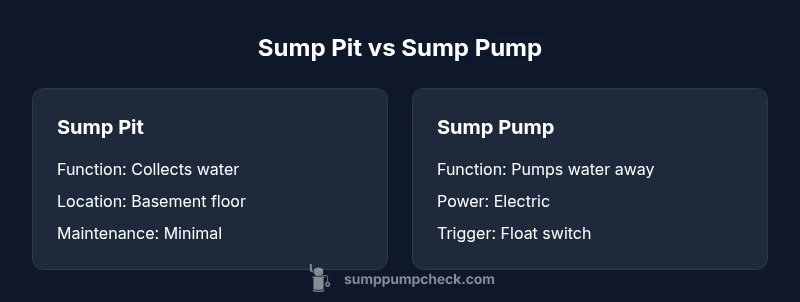
What is a sump pit vs sump pump? In short, the pit collects groundwater and runoff, while the pump moves that water away from the foundation. Used together, they protect basements from flooding; choose components based on water volume and space.
What is a Sump Pit? Definition and Purpose
The sump pit is a recessed basin, usually lined with concrete or plastic, installed in the basement floor to collect groundwater, rain runoff, and seepage that would otherwise flood the living space. In practical terms, it acts as a catchment that lowers the immediate water pressure against the foundation. The pit must be large enough to hold several gallons of water and clear of sediment so the float switch inside the pump can activate reliably. In many homes, the pit is located in a corner or near the lowest point of the basement, where water tends to accumulate during heavy rain or rapid snowmelt. According to Sump Pump Check, the pit is a passive component that sets the stage for effective water management; without a properly sized pit, even a strong pump loses efficiency due to improper water collection.
What is a Sump Pump? Core Function and Mechanism
The sump pump is the active element of the system. Installed inside the sump pit or nearby, it uses electricity to power a motor that drives an impeller, pushing collected water through discharge piping away from the foundation. Modern pumps come in submersible and pedestal styles, each with pros and cons. Submersible pumps sit inside the water-filled pit, allowing for quieter operation, while pedestal pumps stand above the pit, which can simplify maintenance. A float switch or electronic sensor triggers the pump when water reaches a predetermined level. The pump's effectiveness hinges on proper sizing for the expected water load, reliable power supply, and correct line routing so that the discharge water does not re-enter the crawlspace or pool near the foundation. Sump Pump Check emphasizes that a well-chosen pump matched to your pit size is crucial for rapid water removal.
Where They Live: Pit Placement and Pump Location
Placement matters for both components. The pit should sit at the lowest point of the basement floor, with clear access for maintenance and a direct path to a discharge line. The sump pump is typically installed inside the pit for a compact, integrated unit, but some configurations place the pump just above or immediately adjacent to the pit. Proper placement reduces transfer time from collection to evacuation and helps avoid air locks or backflow. Local building codes often specify minimum distances to walls and the need for a check valve on the discharge line; following these guidelines ensures the system functions consistently when water enters the pit.
How They Work Together: The System in Action
When groundwater or heavy rainwater accumulates in the pit, the float switch rises with the water level and triggers the sump pump. The pump starts, pulls water from the pit, and pushes it through a discharge pipe to an exterior outlet or storm sewer. The cycle continues as long as water remains. A well-integrated system minimizes basement moisture and supports a dry living area, especially during intense weather. The coordination between pit capacity and pump power determines how quickly water is removed and how often the pump cycles off. Sump Pump Check notes that homeowners should plan for fluctuations in water input and choose a pump with a margin above the expected peak flow.
Key Differences at a Glance: Pit vs Pump
- Primary function: Pit collects water; pump moves water out.
- Power needs: Pit is passive; pump requires electricity (with optional battery backup).
- Location: Pit is embedded in the floor; pump sits in or near the pit.
- Maintenance: Pit maintenance is minimal; pump requires testing and occasional servicing.
- Discharge: Both require proper discharge piping and check valves to prevent backflow and re-entry.
Understanding these differences helps homeowners plan for installation, maintenance, and potential upgrades. The Sump Pump Check team often emphasizes sizing and routing as critical decision points.
Types and Configurations: Pit Materials and Pump Styles
Sump pits come in concrete or molded plastic, with depth and diameter chosen to fit the basement geometry and anticipated water load. Pumps vary as well: submersible units operate underwater, producing less noise, while pedestal pumps are easier to access for maintenance. A common upgrade is to add a battery backup or a secondary pump to guard against power outages. In areas with high groundwater or frequent rainfall, many homeowners opt for dual-pump configurations or alarm systems to notify when water levels rise. When evaluating options, consider the space available, noise tolerance, and ease of future service. Remember that a compatible pit and pump pairing delivers reliable performance and longer system life.
Sizing and Capacity: How to Choose
Sizing a sump pit and pump requires balancing water input, pit volume, and desired pump cycling. A pit that is too small fills quickly, causing frequent starts and wear on the pump; a pit that is too large adds unnecessary material and cost. The pump should have a capacity slightly above the expected peak inflow, and the discharge line should handle that flow rate without clogging. Consider future expansion: longer or heavier rainy seasons, higher groundwater levels, or a larger basement area may necessitate an upgrade. Prefer pumps with energy efficiency features and a reliable float switch to avoid nuisance failures. Maintaining a log of events can help you adjust sizing over time.
Installation Considerations: Drainage, Check Valves, and Codes
A successful installation depends on proper drainage design and adherence to local codes. Install a check valve to prevent backflow into the sump pit, ensure the discharge line terminates at a safe distance from the foundation, and avoid discharge toward openings or windows. Drainage piping should be durable and sloped to promote gravity flow. If the basement already has drainage challenges, address them before installing a sump system. In many municipalities, permits and inspections are required for new installations. When in doubt, consult a qualified professional who understands code requirements and best practices for your climate and soil conditions.
Maintenance, Testing, and Common Failures
Routine maintenance includes cleaning debris from the pit, testing the float switch, and verifying that the discharge line remains clear. Listen for abnormal noises or erratic cycling, which can signal a worn bearing or an improper float setting. Common failures include stuck float switches, clogged discharge lines, and power outages without backup in place. The Sump Pump Check approach advocates proactive testing—either monthly or after significant rainfall—to catch issues before they cause flooding. Regular inspection also helps you catch problems with seals, gaskets, and electrical connections before they become expensive repairs.
Battery Backup and Power Outages
Power outages can render even the best sump system useless unless you have a battery backup or a secondary power source. Battery backups extend the pump’s life during outages and provide a critical safety net in flood-prone regions. They require periodic testing and replacement as batteries age. If your home experiences frequent outages, or if you live in a climate with severe storms, a backup system is a prudent addition that can prevent costly flood damage and minimize stress during storms.
Cost and Value: ROI of Sump Pit and Pump Systems
While many homeowners weigh upfront costs, the true value of a sump system lies in the protection it provides against water damage, mold growth, and structural issues. The combined investment includes the pit, pump, power supply, and discharge piping, with additional costs for backups and alarms. From a long-term perspective, a well-designed system reduces repair bills and can preserve the home’s value. Sump Pump Check’s guidance consistently highlights sizing, proper installation, and maintenance as the most impactful factors for maximizing return on investment and minimizing nuisance failures.
When to Replace or Upgrade: Signs It's Time
Even a well-installed system has a finite life. Look for frequent cycling, reduced pumping speed, or rising water levels in the pit. Corrosion, motor noise, and leaking seals indicate wear that warrants evaluation. In areas with aging plumbing or frequent storms, upgrading to a higher-capacity pump or adding a backup pump can provide greater assurance. A professional assessment can confirm whether the pit size is still appropriate, the discharge path remains compliant with code, and the pump’s performance aligns with current water loads.
Quick Setup Steps for DIY Install (Caveats and Safety)
If you are an experienced DIYer, basic steps include selecting an appropriate pit size, choosing a compatible submersible or pedestal pump, installing a discharge line with a check valve, and wiring the unit to a dedicated circuit with a GFCI where required. Always shut off power, wear eye protection, and verify that the area is free of electrical hazards. In most cases, professional installation is recommended to ensure code compliance and water safety. For many homeowners, a quick consultation with Sump Pump Check can help specify equipment, avoid common mistakes, and plan a smooth upgrade.
Comparison
| Feature | Sump Pit | Sump Pump |
|---|---|---|
| Primary function | Collects water in a basin | Pumps water away from the foundation |
| Location and integration | Installed in the basement floor as a pit | Mounted in or near the pit (pump sits inside the pit or adjacent) |
| Power requirements | Passive component; no power needed on its own | Electric motor powered; may include battery backup |
| Maintenance needs | Relatively low maintenance; periodic inspection | Regular testing and float switch checks; debris removal |
| Discharge considerations | Requires proper piping and check valve | Requires appropriate discharge routing to avoid backflow |
| Ideal use case | Areas with groundwater intrusion | Homes with known water table or heavy rainfall |
What's Good
- Provides effective flood protection when properly sized
- Can be upgraded with battery backups and alarms
- Relatively straightforward to install in many homes
- Low ongoing maintenance with correct sizing and components
Drawbacks
- Requires correct discharge routing and regular maintenance
- Electrical dependency means outages can disable protection if backups are unavailable
- Initial installation may require professional help or structural work
Install a sump pit with a pump and proper discharge for reliable basement protection
A properly sized sump pit paired with a sump pump offers dependable flood protection for most homes. Ensure correct discharge routing, code-compliant installation, and consider a battery backup for power outages.
FAQ
What is the difference between a sump pit and a sump pump?
A sump pit is a basin that collects water, while a sump pump is the device that moves that water out. They work together to prevent basement flooding, with the pump activated by a float or sensor. Understanding this relationship helps with proper sizing and installation.
A sump pit collects water; the sump pump pushes it out, preventing floods. They work as a system, and proper sizing matters.
Do I need a battery backup for my sump system?
Battery backups provide operation during power outages, which can be critical in flood-prone areas. They add cost but can be a lifesaver during storms. Evaluate your climate and outage history when deciding.
Yes, a battery backup helps during power outages; consider your local weather and how often you lose power.
Can I install a sump pit and pump myself?
Basic installations are possible for experienced DIYers, but improper setup can cause leaks or backup. Most homeowners benefit from at least a professional assessment to ensure code compliance and proper sizing.
DIY is possible for experienced folks, but many homeowners hire a pro to ensure it’s done right.
How can I tell if my pump is undersized?
Signs of undersizing include frequent cycling, slow water removal during heavy rain, and water pooling despite the pump running. A professional can recheck pit size and pump capacity to prevent repeat failures.
If the pump runs constantly or water pools, it might be undersized; a sizing check helps.
What regular maintenance does a sump system need?
Regular maintenance includes clearing debris from the pit, testing the float switch, and inspecting the discharge path. Schedule monthly checks and after major storms to catch issues early.
Keep the pit clear and test the switch; inspect the discharge path regularly.
How deep should a sump pit be?
Pit depth should accommodate the pump plus space for water and debris while staying below the floor level. Local codes and pit materials influence exact depth, so consult a professional for your area.
Depth depends on the pump and your basement; check local code and manufacturer guidance.
Top Takeaways
- Identify your water risk and space constraints
- Plan discharge routing away from the foundation
- Consider a battery backup for outages
- Regularly test and maintain the system
- Keep check valves and piping compliant with local codes