Difference Between Sump Pump and Effluent Pump: A Thorough Comparison
Explore the difference between sump pumps and effluent pumps, including functions, installation, and maintenance to help homeowners choose the right device.


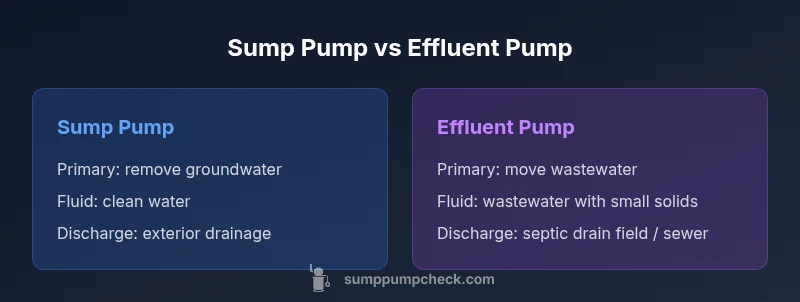
The difference between a sump pump and an effluent pump rests on intended use, fluid type, and discharge path. A sump pump removes groundwater from basements to prevent flooding, while an effluent pump moves wastewater from household plumbing toward a septic system or sewer. Correct selection protects drainage, odor control, and long-term costs.
What is a sump pump?
According to Sump Pump Check, a sump pump is designed to remove groundwater that collects in a sump basin installed at the lowest point of a basement or crawl space. It activates automatically as water rises and pushes collected water through a discharge line to the outdoors or a storm drain. These units can be submersible or pedestal-mounted and are sized to respond quickly to rising water levels to protect living spaces from flooding. Sump pumps form the first line of defense in basement waterproofing, especially in homes with high water tables or poor exterior drainage. In practice, many basements endure seasonal groundwater infiltration; a properly installed sump pump reduces the risk of damp walls, mold, and costly repairs. While some models tolerate small amounts of debris, most are optimized for clean water, with larger solids handled only by specialized sewage systems. It is essential to pair a sump pump with appropriate backup power and a check valve to prevent backflow during outages. The right sump pump setup contributes to long-term resilience and peace of mind for homeowners.
What is an effluent pump?
An effluent pump is designed to move wastewater that has already received treatment from a septic system or wastewater treatment unit. It is intended to transport effluent, which is liquid that may contain small solids, from the home to the septic drain field or municipal sewer. Effluent pumps are typically submersible and placed in a basin near the wastewater source, with discharge piping that requires backflow prevention and proper venting. Unlike a typical sump pump, an effluent pump is not optimized for groundwater; its design prioritizes reliable suspension of solids, odor control, and safe routing to a septic system or sewer line. The key difference lies in the type of fluid and the presence of solids: effluent pumps handle partially treated wastewater but not the large solids found in raw sewage, which are better managed by dedicated sewage pumps. The selection should consider pipe sizing, lift height, and local codes governing wastewater disposal.
Primary differences in function and design
The most important distinction is their function: a sump pump removes groundwater intruding into a basement, while an effluent pump moves wastewater away from the home after treatment. Fluid characteristics guide the design: groundwater is typically clean water with minimal solids, so sump pumps focus on rapid, debris-tolerant discharge; effluent pumps are built to manage small solids and the chemistry of wastewater, with stricter needs for clog resistance and venting. In construction terms, sump pumps often ride as submersible or pedestal units with simple impellers, while effluent pumps may feature cast-iron housings, more robust impellers, and better screens to minimize clogging. The discharge systems also differ: sump pumps route water to outside lines or surface drains, whereas effluent pumps route to septic tanks, drain fields, or municipal lines, frequently requiring a backflow valve and check valve. Electrical considerations—such as power requirements, control switches, and backup options—vary to support different duty cycles and failure modes. Understand that using an effluent pump in place of a sump pump (or vice versa) can compromise drainage, invite odors, and trigger backflow issues. The aim is to match pump type to the specific water and wastewater management needs of the home.
Installation considerations and sizing
Sizing a pump correctly requires understanding the expected water load, lift height, and the gravity or pressure head of the discharge line. For sump pumps, assess groundwater inflow rates, pit dimensions, and outlet distance to the exterior drainage path. For effluent pumps, evaluate typical wastewater flow from sinks, showers, and toilets, as well as the distance and elevation of the septic or sewer connection. Both systems benefit from a verified basin, a certified discharge line, and a reliable check valve to prevent backflow. When possible, plan for a battery backup to maintain operation during power outages, and ensure the electrical circuit and GFCI protection meet local codes. In addition, consider required venting, screening to limit debris, and recommended maintenance access. The right sizing reduces cycling, wear, and the chance of nuisance alarms. Local building codes often dictate requirements for discharge piping, backflow prevention, and electrical safety—check with a licensed professional before final installation.
Use-case scenarios: when to install each
If your basement shows signs of groundwater intrusion during rainstorms or snowmelt, a sump pump is typically the best choice. It removes infiltrated water before it can accumulate and cause damage. If your home relies on a septic system and requires movement of effluent from the septic tank or treatment unit to the drain field or sewer, an effluent pump is the appropriate device. In properties with limited drainage or older plumbing configurations, you may need to assess whether a separate sump or effluent pump is necessary, or whether a combined system with appropriate check valves and control logic is warranted. For finished basements, a dedicated sump pump with a reliable backup power source minimizes the risk of flood-related damage. The right choice depends on evaluating water sources, drainage goals, and local code requirements.
Maintenance, troubleshooting, and common failures
Regular maintenance extends pump life and reduces the risk of failure. Check float switches for smooth operation, clean inlet screens, and verify that discharge lines remain free of obstructions. Test backup power and alarms periodically, especially before wet seasons. For sump pumps, inspect the basin for sediment buildup and ensure the automatic start/stop function engages promptly when water level rises. For effluent pumps, inspect the discharge path and venting to prevent odor buildup and clogs; ensure the filter screens remain clean and that solids do not accumulate in the system. Common failures include tripped breakers, clogged impellers, stuck floats, and poor backflow protection. Address issues promptly and consider professional service for complex electrical or drainage problems. Regular maintenance logs help homeowners track service intervals and extend equipment life.
Cost considerations and value
Costs for pumps vary with capacity, reliability, and installation complexity. A basic sump pump may range in price, while an effluent pump often sits at a similar or slightly higher price point due to wastewater handling considerations. Beyond the device cost, plan for installation labor, piping, backflow prevention components, and potential electrical upgrades. Sump pumps typically require a discharge line that directs water away from the foundation, and some installations require a battery backup, audible alarms, or automatic sump alarms. Effluent pumps may require a septic or sewer connection assessment and compliance with local regulations. The value of choosing the correct pump includes reduced flood risk, better odor control, and longer system life. Sump Pump Check analyses suggest that mis-sizing or using the wrong pump type can lead to higher maintenance costs and more frequent failures over time.
Choosing the right pump for your home: a decision framework
Start by clarifying the fluid you need to move. If groundwater infiltration is the challenge, opt for a sump pump with an appropriate backup power option. If wastewater transfer to a septic drain field or sewer is required, choose an effluent pump with proper solids handling and venting. Evaluate the flow rate, lift height, and piping layout to select the correct horsepower and impeller design. Finally, confirm local code requirements for discharge and backflow protection, then plan a maintenance schedule and backup power strategy. The Sump Pump Check team recommends documenting your findings, consulting a licensed professional when in doubt, and selecting components that integrate well with your existing drainage and electrical systems.
Comparison
| Feature | Sump pump | Effluent pump |
|---|---|---|
| Primary purpose | Remove groundwater from basements | Move wastewater to septic/drain field or sewer |
| Discharged fluid | Groundwater without solids | Wastewater with limited solids |
| Typical solids handling | Limited solids tolerance | Handles small solids but not large solids |
| Installation location | Sump pit in basement/crawl space | Near septic tank or wastewater source |
| Common discharge destination | Exterior drainage or storm system | Drain field or municipal sewer |
| Backflow considerations | Check valve recommended; local code varies | Backflow prevention critical for wastewater |
| Backup power option | Battery backup common | Battery backup recommended |
| Typical cost range | $100-$400 device cost; installation extra | $150-$500 device cost; installation extra |
What's Good
- Prevents basement flooding and water damage
- Specific to fluid type reduces clogging risk
- Quiet operation with proper installation
- Backup options increase reliability
- Clear code-compliant pathways for wastewater management
Drawbacks
- Wrong pump type leads to flooding risk or odors
- Installation can be complex and code-dependent
- Maintenance required to prevent clogs and failures
- Costs can rise with backflow and backup systems
Choose the pump type that matches your water problem and wastewater needs; do not substitute.
Groundwater problems demand a sump pump; wastewater handling requires an effluent pump. For most homes, correct matching reduces risk and cost over time.
FAQ
Can I use an effluent pump in a basement to handle groundwater?
No. Effluent pumps are designed for wastewater, not groundwater. Using one for groundwater can lead to clogging, odors, and poor drainage. A sump pump is the appropriate choice for basement infiltration.
No. Effluent pumps are for wastewater, not basement groundwater. Use a sump pump for groundwater infiltration.
What is the main difference between sump pumps and effluent pumps?
The main difference is what they move: sump pumps remove groundwater from basements, while effluent pumps move wastewater from plumbing to a septic system or sewer. Fluid type, solids handling, and discharge paths drive the design.
Sump pumps move groundwater; effluent pumps move wastewater to septic or sewer.
Do both pumps require backup power and safety features?
Yes. Both systems benefit from battery backups, alarms, and GFCI-protected outlets, especially in flood-prone or power-outage scenarios. Check local codes and follow manufacturer guidance.
Yes. Backup power and alarms improve reliability and safety for both pumps.
Are there code requirements for discharge lines and backflow prevention?
Yes. Local codes govern discharge routing, backflow prevention, and venting for both sump and effluent pumps. Always verify with a licensed plumber or inspector before installation.
Code rules govern discharge and backflow; check with a pro before installing.
Can I install either pump myself, or should I hire a professional?
DIY installation is possible for simple setups in some jurisdictions, but many codes require permits, electrical work, and proper backflow controls. If uncertain, consult a licensed professional for safety and compliance.
DIY is possible in some cases, but codes and safety usually mean hire a pro.
What are common signs that my pump needs replacement?
Frequent cycling, persistent leaks, strange noises, or rising water that the pump cannot reduce are signals it may be time for replacement or service. Regular maintenance helps catch issues early.
Look for frequent cycling, leaks, or noise; these signal replacement needs.
Top Takeaways
- Identify whether you move groundwater or wastewater first.
- Avoid using the wrong pump to prevent odors and backflow.
- Plan for backup power and code-compliant discharge.
- Consult local codes and a pro if unsure.