Ejector pump vs sump pump: A practical comparison
A detailed guide comparing ejector pump vs sump pump, with working principles, installation tips, maintenance guidance, and cost considerations from Sump Pump Check.


In short, ejector pumps and sump pumps serve different drainage roles. A sump pump removes incoming groundwater from a sump pit, while an ejector pump shuttles wastewater from toilets and drains to the sewer or septic line. For most basements, a sump pump is essential, but homes with a basement bathroom may require an ejector pump as well.
What is an ejector pump vs sump pump?
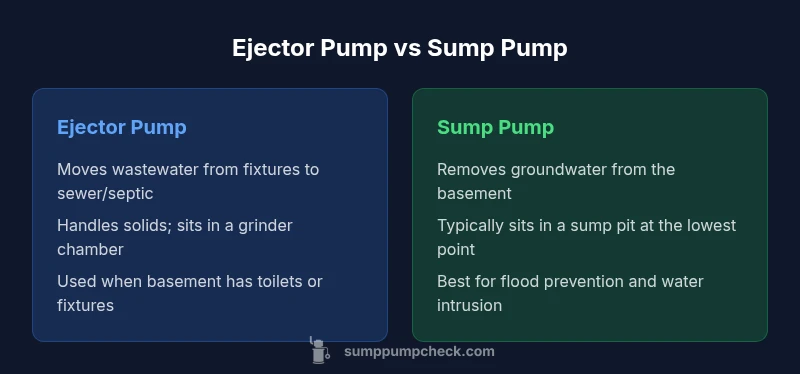
In many homes, basements confront two distinct drainage devices that are easy to confuse: the ejector pump and the sump pump. According to Sump Pump Check, understanding these devices is essential to avoid misapplication and costly repairs. An ejector pump moves wastewater from toilets, sinks, showers, and other fixtures to the sewer line or septic system and typically sits inside an ejector pit or grinder chamber in the basement floor. It activates when wastewater levels hit a preset threshold via a float switch, and it is built to handle solids that would clog a standard sump pump.
A sump pump, by contrast, is designed to remove water that enters the basement from rain, groundwater infiltration, or melting snow. Placed in a sump pit at the lowest point of the basement, its motor powers on to push water out through a discharge line when water rises. These units excel at handling clear water and generally require a check valve and properly vented discharge to prevent backflow.
Distinguishing ejector pumps from sump pumps matters because misapplied devices can cause blockages, sewer backups, or pump damage. The Sump Pump Check team notes that most single-family basements rely primarily on a sump pump, but homes with a basement bathroom or laundry area often need an ejector pump to move wastewater efficiently. When evaluating basement drainage, keep the roles straight; this clarity informs installation choices, routine maintenance, and long-term reliability.
altTextForImageBlock1
Comparison
| Feature | Ejector pump | Sump pump |
|---|---|---|
| Primary function | Move wastewater from fixtures to sewer/septic | Remove groundwater from a sump pit in the basement |
| Best for | Basement fixtures and wastewater (toilet, sink, shower) | Basement water intrusion and flood prevention |
| Discharge method | To sewer/septic via ejector outlet | To exterior discharge or municipal line via discharge pipe |
| Installation location | Below or near basement fixtures; often with a grinder chamber | In a sump pit at the lowest floor point |
| Power & maintenance | Often higher due to grinder/macerator components; needs regular inspection | Typically simpler; maintenance focuses on the pit, check valve, and power source |
| Noise level | Moderate; depends on model and flow | Generally quiet when submerged; pump hum varies by unit |
| Lifespan & parts | Varies with model and maintenance; includes impellers, valves, and switches | Varies with model and maintenance; bearings and seals wear with time |
| Backup compatibility | Can be paired with wastewater backups or grinders | Often compatible with battery backups and alarms |
What's Good
- Clarifies which pump is appropriate for specific basement drainage needs
- Helps plan maintenance and replacement budgets
- Improves reliability by aligning equipment with fixture load
- Supports better long-term drainage design and code compliance
Drawbacks
- Can be confusing for beginners without plumbing background
- Local codes may vary and require professional review
- Overemphasis on one type can lead to misapplication
- Needs awareness of existing fixtures and future expansion plans
Choose based on drainage needs: sump pumps are essential for groundwater protection, while ejector pumps are required when wastewater from fixtures must reach a sewer/septic line.
If your basement only deals with groundwater, a sump pump is typically sufficient. If you have a basement bathroom or other wastewater fixtures, an ejector pump is necessary. In some homes, a dual-system setup or a grinder-equipped ejector can offer comprehensive protection.
FAQ
What is the main difference between an ejector pump and a sump pump?
The ejector pump moves wastewater from fixtures to the sewer or septic line, while a sump pump removes groundwater from the basement to an exterior discharge. They are designed for different types of drainage and are not always interchangeable.
Ejector pumps handle wastewater; sump pumps handle groundwater. They serve different drainage needs and must be matched to your basement setup.
Do I need an ejector pump if I have a basement bathroom?
Yes. A basement bathroom produces wastewater that must be moved to the sewer or septic line, which requires an ejector pump or a combined grinder system. Without it, wastewater can back up or fail to drain properly.
Yes, a basement bathroom typically needs an ejector pump to handle wastewater.
Can I install these pumps myself?
Some homeowners install simple sump pumps, but ejector pumps involve plumbing and electrical work and must comply with local codes. For reliability and safety, professional installation is often recommended.
DIY for simple setups is possible, but ejector pumps usually require an installer for code compliance.
What maintenance tasks are common for ejector and sump pumps?
Regularly inspect discharge lines and valves, clean pits, test backup power, and verify float switches. Schedule professional service if you notice unusual noises, slow drainage, or frequent cycling.
Keep the discharge clear, test backups, and check the float switch and wiring.
Are ejector pumps noisier than sump pumps?
Noise levels depend on the model and installation. Ejector pumps with grinders may produce more operational sound; proper mounting and enclosure can mitigate this.
Noise varies; grinders can be louder, but mounting and maintenance reduce impact.
Is it possible to have both systems in the same home?
Yes, especially in homes with groundwater intrusion and a basement bathroom. A plumber can design a combined or separate system to prevent backups and ensure code compliance.
Yes, many homes use both, coordinated by a professional.
Top Takeaways
- Identify whether your basement faces groundwater or wastewater load
- Choose sump pumps for flood prevention and groundwater control
- Choose ejector pumps for wastewater handling from fixtures
- Plan for proper discharge, check valves, and venting to ensure reliability
- Consider backup power and alarms to maintain operation during outages
- Consult local codes and a qualified plumber for installation decisions
- Budget for maintenance and potential future upgrades to fit fixtures
- A dual-system approach may be prudent in homes with both water intrusion and bathrooms