Sump Pump vs Drain: Which Is Best for Basements?
Compare sump pumps and interior/exterior drainage to protect basements. Learn when each option shines, maintenance needs, installation considerations, and how to choose the right system for your home.


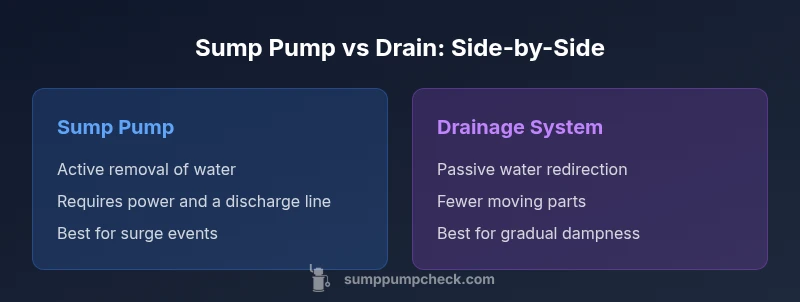
If you’re weighing 'sump pump or drain,' this quick guide helps decide which path fits your basement best. A sump pump actively removes water that collects in a pit, while interior or exterior drains redirect water away from the foundation. Sump pumps are strongest during heavy rain or rapid snowmelt, whereas drains excel at passive moisture management.
Defining the core options: sump pump and drainage
Water management for basements comes down to two broad strategies: an active water-removal device (sump pump) and passive water-control systems (drains). According to Sump Pump Check, homeowners often debate which path reduces basement moisture most effectively, especially in regions with seasonal rain and variable water tables.
A sump pump is a motorized unit installed in a sump pit that collects groundwater or rainwater that enters the basement. When the water level rises, a float switch triggers the pump to discharge water through a discharge line away from the home. Drains, by contrast, are passive systems that guide water away from the foundation via perimeter drains, interior drain tiles, or a combination of grates, trenches, and sometimes a gravity-led piping network. Drains work best where the soil and grade naturally direct water, or where the water table is slowly rising rather than surging after a storm.
Choosing between these approaches should hinge on your basement’s susceptibility to flooding, local climate, soil characteristics, and how much you’re willing to invest in upfront installation and ongoing maintenance.
How a sump pump works and when it's advantageous
A sump pump sits in a dedicated basin (pit) in the basement floor. The pump’s impeller and motor drive collected groundwater to the exterior or a municipal sewer line, using a discharge pipe and, often, a check valve to prevent backflow. A float or pressure switch detects rising water and activates the unit automatically. Sump pumps are advantageous when the basement experiences rapid water rise—during heavy rainfall, rapid snowmelt, or high groundwater levels. They provide active removal, which can dramatically reduce standing water times and the risk of seepage into walls and stored goods. Typical configurations may include a backup pump powered by a battery or a generator to maintain operation during power outages.
Key components to consider include the pump size (capacity), the presence of a check valve to prevent backflow, the trigger mechanism (float vs. electronic), and the discharge path. Keep in mind that maintenance remains essential: test the unit periodically, ensure the power supply is reliable, and inspect the discharge line for clogs or freezing.
For homes with recurring inundation patterns, a sump pump often represents a first line of defense, and a backup system can be a prudent addition to cover outages or extreme events.
How drainage systems work and when to choose them
Interior drainage systems (basement drains or French drains) collect water before it accumulates and redirects it to a safe outlet, such as a sump pit, a dry well, or into municipal lines. Exterior foundation drains route water around the outside of the basement, typically via trenches and a network of perforated pipe wrapped in gravel. These systems operate passively, relying on gravity and proper grading rather than an active pump to move water away from the structure. Drains are especially effective when the soil and landscape are already favorable for directing groundwater away from the foundation, or when the water table rises gradually rather than surging after storms.
Choosing drains often makes sense when your moisture issue is persistent but not severe enough to require constant pump operation or when you want to minimize electrical reliance inside the home. Drains can also be combined with a sump pump as part of a hybrid approach, where the drain handles the majority of moisture while the sump pump manages peak inflow.
Performance under different water patterns: what to expect
Water patterns vary widely by climate and soil. In regions with heavy, short-duration rainfall, a sump pump can actively reduce flood risk by removing water quickly after a downpour. Snowmelt and high groundwater levels can overwhelm passive drains if the water arrives faster than the soil can absorb or redirect it. In milder or well-graded soils, interior or exterior drains may suffice, especially when the ground naturally channels water away from the foundation.
Note that system longevity depends on quality of installation, trap maintenance, and the stability of the surrounding soil. A high-water-table environment may benefit from a sump pump with a reliable backup, while a consistently damp but non-flood-prone setting could be well-served by a well-designed drainage network.
Installation costs, space requirements, and durability
Cost and space are practical considerations when choosing between a sump pump and a drainage system. Sump pumps require a pit in the basement, a discharge line to move water away from the home, electrical connections, and potentially a battery backup for power outages. Drainage systems may involve interior drain tiles, exterior trenches, gravel beds, and sometimes a sump or dry well to handle higher inflows. Because prices vary by soil conditions, foundation design, and local labor, installation costs for either approach fall within broad ranges depending on scope and accessibility.
Durability hinges on installation quality and exposure to freeze-thaw cycles in exterior drains. Piping, seals, and backflow prevention devices should be chosen with materials appropriate to local climate. In climates where freezing is common, ensure discharge lines are protected and insulated to prevent blockages and ruptures.
Maintenance and reliability: keeping water under control
Maintenance is a major factor in performance. Sump pumps require periodic testing, cleaning of the pit, checking for debris in the discharge line, and replacement of worn components like seals and check valves. Backup options must be tested to ensure operation during power outages. Drains require less mechanical maintenance but need periodic inspection for sediment buildup, alignment with the foundation, and ensuring that exterior grates and interior channels remain unobstructed. Regular inspections can prevent blockages that reduce efficiency and lead to basement moisture issues.
Reliability often hinges on redundancy: a backup sump pump or an alternate drainage path can provide extra protection for severe events. If your home experiences seasonal storms or fluctuating groundwater, plan for a mixed approach that minimizes downtime and ensures continuous water management.
Hybrid strategies and backups: combining the best of both worlds
Hybrid configurations pair a sump pump with interior or exterior drainage to cover a wider range of water scenarios. In this setup, drains manage routine moisture while the sump pump handles peak inflows. A backup power source (battery, generator) for the sump pump is highly recommended, especially in regions prone to power outages during storms. Some homeowners also install a water-powered sump pump as an additional fail-safe, though this option depends on municipal water pressure and plumbing layout. A well-planned hybrid system reduces the risk of basement flooding and can be tailored to your property’s unique hydrogeology.
Decision framework: quick-start steps for choosing between a sump pump and a drain
- Assess moisture patterns: Is there frequent standing water after storms, or is dampness the primary issue? 2) Check soil and grading: Does the landscape naturally redirect water away from the foundation? 3) Consider power reliability: Are outages common, making backups essential? 4) Budget and space: Do you have room for a pit and piping, or is a trench-based drain feasible? 5) Plan for future: Will your home renovation or drainage needs change? 6) Consult a local pro: A site-specific evaluation helps determine the most effective approach and any code requirements.
Comparison
| Feature | Sump Pump | Drainage System |
|---|---|---|
| Primary function | Active water removal from a pit during intrusion | Passive water redirection away from the foundation |
| Best for | Frequent or sudden flooding, heavy rainfall | Persistent dampness, mild to moderate water events |
| Maintenance needs | Regular testing, power supply checks, occasional part replacements | Occasional inspections for sediment and blockages; fewer moving parts |
| Installation footprint | Requires a sump pit, discharge piping, and electrical connections | Requires trenches or interior drains, with grading considerations |
| Best for power outages | Dependent on backup power to stay functional | Typically not affected by outages unless a pump is used |
| Maintenance cost | Higher due to pump wear, electricity, and backups | Lower ongoing maintenance; occasional drain checks |
What's Good
- Active removal reduces flood risk during heavy storms
- Drains provide low-maintenance, passive moisture control
- Hybrid setups offer broad protection with backups
- Backups (battery or generator) increase resilience
- Flexible options scale with home needs
Drawbacks
- Sump pumps require power and regular maintenance
- Drainage systems may involve upfront trenching and grading
- Hybrid systems are more complex and expensive
- Poorly installed drains can fail during heavy events
Choose a hybrid approach for maximum protection in variable conditions
Sump pumps excel at rapid water removal during storms, while drainage systems handle ongoing moisture. A combined setup with backups provides the strongest defense for most basements.
FAQ
Do I need a sump pump if I already have a basement drain?
Not necessarily. If your basement experiences frequent flooding, a sump pump can provide proactive water removal. If dampness is mild and drainage already directs water away effectively, a drain might suffice, possibly with a backup pump for severe events.
If you already have a good drainage path, a pump may not be essential, but for flood-prone basements a sump pump adds active protection.
Can drains replace a sump pump entirely?
In many cases, a well-designed drainage system can manage moisture without a sump pump. However, in regions with heavy rainfall or high water tables, a sump pump may be necessary to actively remove surge water.
Drains can work in some settings, but heavy flooding usually needs a sump pump too.
What maintenance is required for sump pumps vs drains?
Sump pumps require regular testing, battery backups, and checking the discharge path. Drains require periodic inspection for sediment buildup and ensuring proper grading and outlet function.
Pumps need testing and backups; drains need clean checks and alignment.
What is the typical cost range to install each?
Costs vary by home and site. Sump pumps with basins and backups tend to be higher upfront, while drainage systems may require trenching. Budget for a broad range and factor in local labor and material choices.
Costs depend on soil, space, and existing plumbing; a professional estimate is best.
Are there code requirements I should know?
Yes. Many areas have codes for discharge paths, backflow prevention, and electrical protections around sump pumps. A local inspection can verify compliance and reduce future issues.
Check with your local building department to ensure code compliance.
Is a backup power source advisable?
Absolutely. Power outages often accompany severe storms. A battery-backed sump pump or generator ensures continued water removal when it matters most.
Backups are highly recommended for reliability.
Can I install these myself or should I hire a pro?
While some DIY enthusiasts handle basic drainage improvements, a professional assessment ensures correct sizing, permits, and integration with existing systems.
A pro can save you time and prevent costly mistakes.
Top Takeaways
- Active removal protects against surge water
- Passive drains reduce maintenance needs
- Hybrid systems offer resiliency for variable climates
- Backups are essential in power outages
- Proper installation matters as much as choice