Difference Between Sump Pump and French Drain: A Comprehensive Guide
Explore the difference between sump pumps and French drains, when to use each, and how homeowners can combine them for robust basement drainage and moisture control.


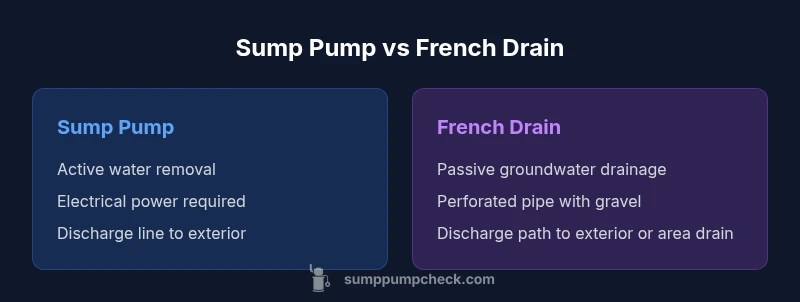
According to Sump Pump Check, understanding the difference between a sump pump and a French drain helps homeowners tailor their drainage strategy. A sump pump actively removes water from a sump basin using electricity, while a French drain passively channels groundwater through a perforated trench. For many homes, a combined approach yields the strongest protection.
What is the difference between sump pump and french drain
In practical terms, the difference between the two devices comes down to function, placement, and response to water. The sump pump is an active device installed in a basement sump basin and powered by electricity. It uses a float switch to trigger the pump when water rises and ejects it through a discharge line to the exterior. A French drain, by contrast, is a passive drainage solution: a trench filled with gravel and a perforated pipe that collects groundwater and directs it away from the foundation. The key distinction in the difference between sump pump and french drain is how water is moved—actively versus passively—and how quickly each system responds to moisture. For most homes, the choice is not exclusive; many builds combine both approaches to address standing water and soil moisture simultaneously.
Quick distinction and framing
- Active vs passive water management: Sump pumps require power and mechanical operation, while French drains rely on the soil’s natural drainage gradient.
- Primary goals: A sump pump targets standing water in the basement, whereas a French drain targets groundwater around the foundation and perimeter.
- Synergy: In many climates, combining both systems provides the strongest defense against basement moisture and crawl-space dampness.
First steps in evaluating your site
Before deciding which system to prioritize, map out your water sources: surface runoff during storms and groundwater under your soil. A high-water table, poor grading, or clog-prone soils all influence the right mix. The difference between sump pump and french drain becomes clearer when you consider how water enters your space and how you want to respond to it. For example, if your yard drains poorly and groundwater is a persistent problem, you may lean toward a French drain, while a history of basement flooding benefiting from rapid water removal points toward a sump pump.
How to read signals from your environment
Watch for signs like damp spots along walls, efflorescence on masonry, wet crawlspaces, or water puddling near sump basins after heavy rain. These indicators help you distinguish whether a passive drainage strategy or an active pump system is needed. The difference between sump pump and french drain is not just about removing water—it’s about controlling moisture at the source and maintaining a dry interior environment. In many cases, addressing drainage at the perimeter with a French drain while adding a sump pump for interior water control offers the most robust protection.
Installing for future-proofing
Strategic placement matters. A sump pump requires a basin in a low point of the basement floor with a discharge path that leads away from the home. A French drain should run around the perimeter of the foundation where soil is most prone to saturation. When planning for future weather patterns or changing rainfall, consider a hybrid approach that reserves space for both systems and accounts for potential upgrades or backup power options. The difference between sump pump and french drain is most practical when you can visualize how they will function together under peak conditions.
Practical takeaways for homeowners
- Start with a site assessment to determine where water accumulates and how groundwater moves around your foundation.
- Prioritize a plan that can handle both active flood events and ongoing soil moisture, rather than relying on a single solution.
- Factor in maintenance and power reliability; plan for backups and periodic inspections to ensure both systems perform when needed.
Comparison
| Feature | Sump Pump | French Drain |
|---|---|---|
| Function | Active water removal from a sump basin | Passive groundwater drainage through a perforated trench |
| Best For | Active flood control in basements during heavy rain | Soil moisture management and drainage around foundations |
| Installation Location | Basement sump pit with discharge line | Perimeter trench or drain line around foundation |
| Response to Rain | Immediate, once water reaches trigger level | Depends on soil and subsurface water movement |
| Maintenance | Electrical checks, float switch test, periodic pumping | Inspect for clogging, ensure trench remains clear |
| Lifespan & Reliability | Pump components wear over time; may require replacement | Durable trench materials, but pipe connections can clog if neglected |
| Cost/Value | Variable, often higher upfront for pumping systems | Variable, often lower upfront but depends on scope and trench depth |
| Best For | Direct removal of standing water in the basement | Managing groundwater around the foundation and wet soil zones |
What's Good
- Active control of water entry, reducing basement flooding risk
- Greatly improves interior dryness when paired with proper drainage
- Can be upgraded with battery backup for outages
- Flexible to adapt to changing weather patterns and soil conditions
- Often integrated with other drainage components for a comprehensive system
Drawbacks
- Higher upfront cost for equipment and professional installation
- Requires electricity and maintenance; backup power adds complexity
- Sump pumps can fail during power outages unless backed up
- French drains require careful grading and can clog if not installed properly
- Both systems require periodic inspection to prevent failures
A hybrid approach often offers the best protection
Sump pumps and French drains serve complementary roles. A combined system addresses both active water management and passive groundwater control, delivering robust protection for most homes.
FAQ
Can I install a sump pump and French drain myself, or should I hire a professional?
DIY installation is possible for skilled homeowners, but combining both systems involves electrical, plumbing, and grading work. A professional ensures code compliance and reduces the risk of drainage issues.
You can do it if you’re experienced, but many folks opt for a pro to ensure everything is done safely and correctly.
Do I still need a sump pump if I install a French drain around my foundation?
Often yes. A French drain helps manage groundwater near the foundation, but a sump pump handles active water that collects in a basement sump basin during heavy rainfall.
French drains help with damp soil, but a sump pump moves water out quickly when needed.
What maintenance is required for a sump pump?
Regular checks of the float switch, power supply, and discharge line are essential. Test the pump periodically and replace backup power components as needed.
Test it regularly and keep the discharge clear.
What maintenance is required for a French drain?
Inspect for clogs, monitor trench sediment buildup, and ensure perforated pipes remain exposed to allow drainage. Re-grading may be necessary over time.
Keep it clear of debris and watch for clogs.
How long do these systems typically last?
A sump pump’s life depends on usage and maintenance, often several years with proper care. French drains are long-lasting but require occasional maintenance to prevent clogging.
Pumps wear out over time; drains can last longer with maintenance.
Is a battery backup recommended for a sump pump?
Yes, especially in areas prone to power outages. A battery-backed sump pump reduces flood risk when the power is out.
Backup power helps keep water out during outages.
Top Takeaways
- Assess your site first to identify water sources and movement
- Active pumps handle standing water; passive drains manage groundwater
- Consider combining both for maximum protection
- Plan for power backups and regular maintenance
- Choose design that aligns with long-term moisture goals