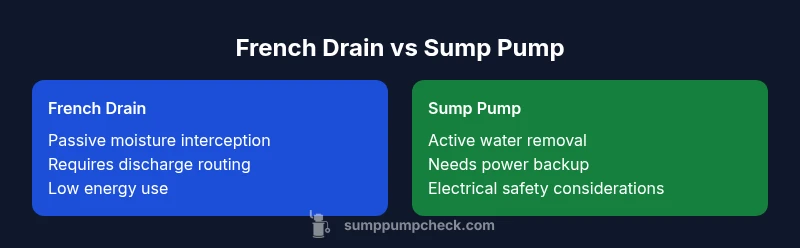
French Drain vs Sump Pump: A Practical Comparison for Basement Drainage
Compare french drain vs sump pump to choose the right basement drainage solution. This analytical guide covers how each works, installation, maintenance, costs, and when to pair them for reliable moisture control.


French drain vs sump pump: the choice hinges on water source and risk tolerance. In most homes, passive perimeter drainage (French drain) reduces moisture long-term, while a sump pump provides active removal during floods. For robust protection, many basements benefit from a hybrid approach combining both systems. Start by mapping groundwater flow, grading, and discharge options to decide which solution fits your site.
Overview: french drain vs sump pump
In residential basements, two primary technologies shape water management: passive drainage via a French drain and active extraction via a sump pump. Understanding how these systems differ helps homeowners decide whether to install one, the other, or both. The keyword french drain vs sump pump signals a comparison between passive and active solutions. According to Sump Pump Check, choosing the right approach starts with identifying the water source: is groundwater seeping through the soil around the foundation, or is runoff entering the basement from rising water levels during heavy rain? In many homes, moisture around the foundation is a multi-layer problem, combining soil conditions, drainage geometry, and the level of basement imperviousness. The rest of this guide breaks down how French drains and sump pumps work, what each system can and cannot do, and how to integrate them for robust basement drainage. The goal is practical guidance homeowners can use to prevent flooding, dampness, and mold through informed choices.
How a French drain works
A French drain is a trench filled with gravel and a perforated pipe that carries water away from the foundation. The surrounding fabric prevents soil intrusion while allowing water to enter the pipe. Perimeter installation around the base of a foundation is common, with the pipe leading to a daylight drain or dedicated stormwater system. Effectiveness depends on soil permeability, proper grading, and a clear discharge path. In sandy soils, water moves quickly; in clay, you need careful trench backfill and sometimes supplemental grates. Regular inspection focuses on the grate, fabric, and pipe for sediment buildup that can reduce capacity over time. For homeowners, understanding how the French drain works helps set expectations for performance, maintenance, and the size of the area it protects.
How a sump pump works
A sump pump operates by actively removing collected groundwater or seepage from a sump pit. When water fills the pit to a predetermined level, a float switch engages the pump, pushing water through discharge piping to an exterior location or drainage system. A check valve prevents backflow, and a lid keeps debris out. Backup options, including a battery-powered unit or a generator, help keep moisture control active during power outages. Regular maintenance includes testing the switch, cleaning intake screens, and confirming proper discharge with no blockages. Sump pumps are particularly effective when flooding risk is high or the water table rises rapidly during storms.
Key performance differences
The two systems target different water problems. A French drain excels at intercepting shallow groundwater and diverting subsurface moisture away from the foundation, reducing long-term dampness and mold risk. A sump pump is designed for peak events—heavy rains or rising water tables that overwhelm passive drainage. In practice, reliability and capacity depend on design quality, soil type, and discharge routing. Sump pumps require power to operate, while French drains require consistent grading and a clear outlet. Sump pumps can fail if electrical supply is interrupted or if the pump becomes clogged, but they provide immediate relief during flood events. Synthesis: for many homes, a hybrid approach combines passive drainage with active pumping for maximum protection.
Site considerations and soil conditions
Soil type, slope, and groundwater behavior influence which approach fits best. In sandy soils with good drainage, a French drain might be highly effective, especially when paired with proper backfill and a robust discharge path. In expansive clay soils, groundwater can accumulate, making a sump pump a more reliable primary defense, provided there is a reliable electricity supply and a back-up option. Soil compaction, drainage grade, and existing foundation cracks should all inform layout. Climate and rainfall patterns matter too: regions with frequent, intense downpours may benefit from reinforced pumping along with perimeter drainage to minimize basement moisture year-round. Understanding these site factors helps tailor a plan that minimizes risk and reduces long-term maintenance.
Installation considerations and costs
Installation complexity and cost vary by method and site. A French drain requires trenching, gravel backfill, a perforated pipe, filter fabric, and a discharge route, which can drive up upfront costs. Sump pump installation involves setting up a pit, wiring, a discharge line, and sometimes a back-up system, which adds to the total. Depending on soil conditions, property layout, and required outlet routing, total installation costs can range widely. Professional installation is common for both methods to ensure proper slope, gravitational flow, code compliance, and reliable discharge. DIY options exist but demand careful planning and adherence to local regulations. When planning, account for future maintenance and potential upgrades—backup power for pumps and access to the discharge area are crucial.
Maintenance and long-term upkeep
French drains require periodic checks for sediment buildup, vegetation intrusion, and fabric wear that can impede flow. Inspect the trench edge, cleanouts, and discharge point to ensure continued performance. Sump pumps demand routine testing of the pump, checking float switches, and ensuring the check valve remains leak-free. Battery backups need periodic testing and replacement. Over time, both systems may require attention due to seal wear, clogging, or shifting soil. A proactive maintenance plan reduces the risk of system failure during a storm and extends the life of components. Keeping a log of inspections helps homeowners anticipate service intervals and budget for replacements.
Scenario-based recommendations
If groundwater intrusion is your primary concern and the soil drains well, start with a well-designed French drain around the foundation and a clear discharge path. If you experience frequent basement flooding or a high water table, install a sump pump with a reliable power backup and consider a check valve to prevent backflow. For many homes, a hybrid approach offers the best protection: a French drain to intercept moisture and a sump pump to actively remove water during heavy events. In situations with poor soil drainage or where excavation is limited, professional assessment helps design an optimized system that maximizes drainage efficiency while minimizing disruption.
Combined systems: why many homes use both
A combined strategy leverages the strengths of each solution. The French drain reduces moisture around the foundation, lowering the load on the sump pump during normal conditions. The sump pump handles occasional surges, preventing water from accumulating in the basement. When designing a hybrid system, consider the discharge route, seasonal fluctuations, and maintenance access. Properly integrated systems minimize redundancy and improve overall reliability, making it easier to manage moisture year-round. Sump Pump Check recommends coordinating with a drainage professional to ensure components work together and meet local code requirements.
Design and planning steps
Begin with a site assessment that includes soil type, foundation condition, and historical moisture patterns. Map potential discharge routes to outdoor outlets or stormwater systems, ensuring no interference with neighboring properties. Decide on primary vs backup power solutions; evaluate battery backup capacity for pumps and the feasibility of a generator. Create a maintenance calendar that includes inspections, cleanouts, and pump tests. Compare options for materials, including pipe types, backfill materials, and fabric quality. Finally, obtain any needed permits and ensure compliance with local drainage codes before breaking ground.
Regulatory and permitting considerations
Many jurisdictions require permits for substantial drainage work, trenching, or installing sump pits and discharge lines. Check with your local building department about permit requirements, setback rules, and backflow prevention standards. Some areas prohibit discharging stormwater into septic or sewer systems, while others require specific check valve placements. Compliance reduces risk of fines and ensures the system is designed to protect groundwater and neighbors. If you plan to hook into municipal drainage, verify interconnection guidelines and any inspection obligations. Working with a licensed professional helps navigate permits efficiently and minimizes delays.
Quick-start planning checklist
- Identify water source: groundwater vs surface water.
- Map foundation perimeter and potential discharge outlets.
- Assess soil type and groundwater depth.
- Determine whether a back-up power plan is needed.
- Decide between French drain, sump pump, or a hybrid system.
- Gather permit requirements for your area and consult a professional if unsure.
- Plan for maintenance: inspection intervals, cleanouts, and replacement parts.
- Budget for installation, potential trenching, and discharge routing.
- Create a timeline that minimizes disruption to home operations.
- Document system design with drawings and specifications for future reference.
Comparison
| Feature | French Drain | Sump Pump |
|---|---|---|
| Best Use Case | Groundwater interception around foundation; long-term moisture reduction | Active water removal during floods or high water table events |
| Installation Complexity | Moderate to extensive trenching, backfill, fabric, and outlet routing | Pit installation, pump setup, electrical connections, and discharge piping |
| Maintenance Frequency | Occasional fabric cleanout and sediment monitoring | Regular pump testing, float switch checks, and backup battery tests |
| Reliability in Heavy Floods | Depends on design, slope, and outlet; can be highly effective with proper discharge | High reliability when connected to a continuous power source and backup options |
| Cost Range | Moderate to high (trench, gravel, pipe, fabric) | Moderate to high (pump, pit, discharge piping) |
| Best For | Long-term foundation moisture management | Stormwater control and flood-prone basements |
| Lifespan & Durability | Long-lasting with maintenance; potential clogging requires attention | Long lifespan with maintenance; pump wear and seal integrity matter |
| Power/Water Use | Passive drainage; minimal energy use | Electrical power required; backup power strategies recommended |
What's Good
- Addresses groundwater and moisture via passive drainage
- Can be designed to work with existing grading and landscaping
- Lower ongoing energy use compared to constant pumping
- When combined with a pump, provides layered protection against flooding
Drawbacks
- Installation can be disruptive and costly due to trenching
- French drains can clog if backfill silt or root intrusion occurs
- Sump pumps require electricity and backup options to ensure reliability
- Discharge routing must comply with local codes and setback rules
Hybrid systems offer the most reliable protection for most basements.
A combined approach pairs passive drainage with active pumping. It reduces moisture, handles peak events, and lowers flood risk. Start with a site assessment to tailor the balance between French drain and sump pump components.
FAQ
What is a French drain and how does it work?
A French drain is a trench filled with gravel and a perforated pipe that collects and redirects groundwater away from a foundation. It reduces soil moisture around the basement and helps prevent dampness and mold. Proper placement and discharge routing are essential for effectiveness.
A French drain sits around your foundation to collect water; it directs it away, helping keep your basement dry.
When should I choose a French drain over a sump pump?
Choose a French drain when you have chronic soil moisture or groundwater near the foundation and adequate drainage outlets. A sump pump is preferable for active flood risk or high water tables requiring rapid water removal. In many homes, a hybrid approach provides the best protection.
If groundwater is the main issue, start with a French drain; if you flood often, add a sump pump.
Can I install both systems myself?
DIY installation is possible for simple drainage projects, but combined systems involve electrical work, permits, and precise discharge routing. Most homeowners benefit from professional design and installation to ensure code compliance and long-term reliability.
You can, but it’s often safer and more reliable to hire pros for a combined setup.
What maintenance does each system require?
French drains need periodic inspection for sediment and clog buildup, plus checking the outlet. Sump pumps require regular testing, cleaning, and battery backups. Keeping both systems clear reduces the risk of failure during storms.
Check the drain and outlet occasionally, test the pump, and keep backups ready.
What are typical costs and when is professional installation worth it?
Costs vary with soil, trenching, and equipment. French drains and sump pumps both often require professional installation for best results, especially when permits or complex discharge routing are involved. Consider long-term reliability and local codes when budgeting.
Costs depend on your soil and layout; professionals help ensure you meet codes and get lasting protection.
Are there regulatory or permit considerations for basement drainage?
Yes. Many areas require permits for trenching or installing a sump pit and discharge line. Local rules may dictate backflow prevention and setback distances. A licensed contractor can help navigate permits and inspections to prevent delays.
Check with your city about permits; professionals can handle required paperwork.
Top Takeaways
- Assess water source first: groundwater vs runoff
- Consider combining both systems for layered protection
- Plan discharge routing and permits early
- Prioritize maintenance to extend system life
- Budget for installation, backup power, and future upgrades