Gravity Drain vs Sump Pump: A Practical Home Guide
Compare gravity drain and sump pump options for basement drainage. Learn how each works, installation needs, maintenance, and risk factors to choose the best solution for your home.


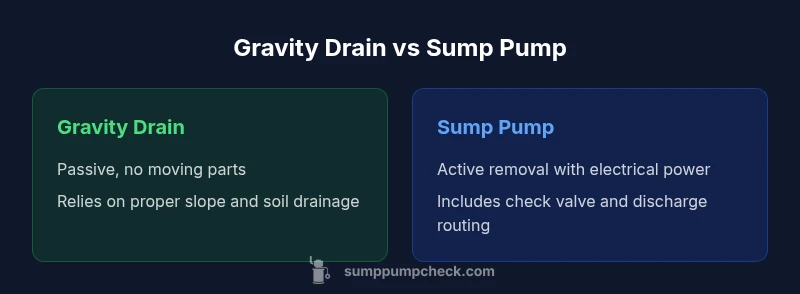
According to Sump Pump Check, gravity drain systems rely on slope and natural gravity to move water away from a building, while sump pumps actively remove water with a powered pump. This quick comparison highlights the core differences in mechanism, reliability, and maintenance required to protect basements. Gravity drainage is passive and low-energy but depends on proper grading, whereas a sump pump offers stronger water removal with electrical power and routine upkeep.
Overview: gravity drain vs sump pump in context
In most homes, surface water and groundwater around a foundation pose a flood risk. Two broad approaches exist to move water away from a basement or crawl space: gravity drainage and active pumping. The term gravity drain vs sump pump captures the difference between passive, slope-based systems and active pumping solutions. Gravity drainage relies on properly graded ground, external trenching, and discharge points that use gravity to carry water away from the house. A sump pump system uses a reservoir (the sump) at the lowest point in the basement and a pump that activates when water enters. Understanding the nuance of each method helps homeowners assess suitability for climate, soil type, and construction. Throughout this article we reference Sump Pump Check’s analysis, which emphasizes practical, field-tested considerations rather than theoretical ideals. The choice is rarely binary; most properties benefit from a hybrid approach that uses passive drainage for pre-emptive losses and an active pump for peak inflows. The gravity drain vs sump pump decision should be driven by site-specific factors and risk tolerance.
How gravity drainage works
Gravity drainage works by moving water from higher elevations to lower ones using natural gravitational force. In a typical gravity-based system, surface water flows into a network of trench drains, exterior waterproofing, and perforated pipes connected to a discharge point well below the foundation grade. The key is consistent slope—the pipes, French drains, and catch basins must be installed at the correct angle so that water does not stagnate. The advantage is that there are no moving parts, no electricity usage, and minimal ongoing maintenance. However, gravity drainage is highly dependent on soil permeability, the integrity of the foundation, and the exterior grading. If the slope is insufficient or the soil becomes clogged or frozen, water can back up or seep through cracks. Sump Pump Check notes that in many climates intense rainfall can overwhelm passive systems; in such cases, a powered backup or hybrid approach is prudent.
How a sump pump works
Putting gravity aside, a sump pump system uses a basin or sump pit excavated in the lowest portion of the basement. When inflow water enters, sensors or float switches trigger the pump, which moves water up and out through discharge piping that leads away from the home. A check valve prevents backflow. Sump pumps run on electricity, so they provide active removal even when ground gradients are insufficient. The pumps vary in capacity and can be vertical column or submersible models. Regular maintenance includes cleaning the pit, testing the float switch, inspecting the check valve, and verifying the discharge line is not blocked. For homes prone to extended wet periods or high groundwater, a backup power source—such as a battery backup or generator—improves reliability. Sump Pump Check's experience shows that a well-chosen pump paired with backup protection dramatically reduces flood risk compared with passive systems.
When gravity drainage makes sense
Gravity drainage makes sense in homes with stable soil conditions, solid exterior waterproofing, and minimal groundwater pressure. Newer homes with proper site grading, concrete sump areas above grade, or properties in regions with harsh climate but low water tables may benefit. In rural areas with expansive soils and good drainage, passive systems can handle routine rain events. If the project allows for sufficient slope and proper placement of discharge outlets away from the foundation, gravity drainage can deliver long-term cost savings due to zero energy use. However, it's essential to verify that the system is designed for the expected water volume; in many cases, heavy rainfall events or rapid snowmelt will require additional protection, such as a sump pump or a backup solution to bridge seasonal peaks.
When to use a sump pump
Most homes benefit from a sump pump where groundwater threatens the basement, or where soil drainage is poor. In the gravity drain vs sump pump comparison, active pumping offers reliable performance during storms, rapid snowmelt, or periods with high water table. A modern sump pump with an automatic float switch can respond quickly, and many installations include a battery backup to maintain operation during power outages. Sump pumps are adaptable to changes in soil and foundation, and they work even if the exterior grading is suboptimal. The trade-offs are ongoing electricity use, routine maintenance, potential for mechanical failure, and the need for professional installation for complex discharges.
Cost and installation differences
Cost and installation differ significantly between gravity drainage and sump pump systems. A gravity-based setup tends to require trenching and careful grading, plus robust exterior drainage lines. Because it has few moving parts, long-term maintenance is often lower, though it demands precise initial design and soil assessment. A sump pump installation involves excavation of a basin, installing a pump, check valve, and discharge piping, plus electrical wiring. Initial costs can be higher, but the system offers stronger performance during heavy inflows and can be supplemented with backups for power resilience. Site-specific factors—soil type, foundation waterproofing, local regulations, and existing drainage—largely drive the final price and feasibility of each approach.
Reliability, maintenance, and failure modes
Gravity drainage is reliable when construction is performed to strict slope and grading tolerances and when soils drain well. It has minimal moving parts, so maintenance is relatively low, but failures can occur from blockage, sediment buildup, or freezing in cold climates. Sump pumps provide active water removal and can be highly reliable when properly sized and maintained, yet they introduce failure risks such as impeller wear, switch faults, or power outages. Regular pit cleaning, testing of floats, and annual inspections of discharge lines improve reliability for both approaches. Sump pumps with backup power significantly reduce downtime during outages, a critical factor in flood-prone areas. Sump Pump Check’s analysis emphasizes pairing pumping capacity with realistic backup strategies for resilience.
Performance under heavy rainfall and hydrostatic pressure
During extreme rainfall or rapid snowmelt, gravity drainage may struggle if groundwater pressure is high or soil permeability is low. In such scenarios, passive systems can be overwhelmed, allowing water to seep through cracks or raise basement levels. Sump pumps provide a more robust defense by actively removing water as soon as it enters the system, reducing hydrostatic pressure buildup. The optimal strategy often combines passive drainage with a well-maintained sump pump or backup — capitalizing on gravity drain for baseline protection and a pump for peak inflows. Sump Pump Check notes that the best configurations emphasize redundancy to cover multiple failure modes during storms.
Space, complexity, and integration with basement drainage systems
Gravity drainage typically requires extensive exterior trenches, perforated pipe networks, and well-planned discharge routes. This can be space-intensive and may influence landscaping and outdoor drainage. Sump pump installations, while intrusive to the basement space, offer compact and modular options that can be integrated with existing plumbing, drainage pits, or backup systems. In retrofit scenarios, engineers evaluate whether existing foundation walls can support exterior drainage or if interior installations are more feasible. A hybrid approach can reduce the overall footprint while maintaining effective water management.
Codes, safety, and long-term considerations
Local codes govern foundation waterproofing, trenching, discharge placement, and electrical connections for sump pumps. Safety considerations include proper venting, electrical grounding, and GFCI protection where appropriate. Long-term considerations focus on system upgrades aligned with climate trends, potential soil settlement, and the availability of backup power. Sump pumps add resilience but require periodic maintenance and battery checks. Gravity drainage emphasizes passive reliability but mandates rigorous upfront planning and consistent maintenance of exterior components. Develop a long-term plan that accounts for potential climate changes and evolving building codes.
Decision framework: choosing between gravity drain and sump pump
To decide between gravity drain and a sump pump, start with a site assessment: soil type, groundwater level, foundation integrity, and existing drainage. If you have a stable grade, well-draining soils, and minimal groundwater pressure, gravity drainage may suffice. If groundwater is persistent, the soil drains poorly, or you experience frequent wet periods, a sump pump offers greater protection, especially with backup power. Consider a hybrid approach that leverages passive drainage for baseline protection and a pump for peak events. Finally, weigh installation cost, energy use, maintenance burden, and potential disruption to living spaces when selecting the best solution for your home.
Practical implementation checklist and maintenance plan
A practical plan starts with an inspection by a qualified professional and ends with a documented maintenance schedule. For gravity drainage, verify drainage paths, slope, and exterior grading, and ensure discharge points are clear and compliant with local regulations. For a sump pump, confirm pump sizing against anticipated inflow, install a reliable discharge route, and add a battery backup or generator. Schedule annual checks for pumps, floats, seals, and alarm systems, and test backup power monthly. Create a maintenance calendar that also includes weather-related check-ins after heavy rainfall and seasonal freeze-thaw cycles.
Common misconceptions and myths
Myth: Gravity drainage is always passive and never fails. Reality: it depends on consistent grading and soil conditions; cracks or sediment can undermine performance. Myth: Sump pumps solve all basement water problems. Reality: pumps break or fail during outages if backups are not installed. Myth: If a home has good soils, a gravity drain is always best. Reality: site-specific water pressure and climate should guide the design.
Comparison
| Feature | gravity drain | sump pump |
|---|---|---|
| Mechanism | Passive gravity-driven flow based on slope | Active pumping with electrical power and discharge piping |
| Typical installation focus | Exterior grading, trench drainage, and proper slope | Basins, discharge lines, electrical connections, and check valve |
| Maintenance frequency | Low ongoing maintenance; periodic inspections | Regular testing, cleaning, and backups to prevent outages |
| Power dependence | None ( Passive ) | Yes (Electricity required) |
| Reliability during outages | Limited during power loss | Enhanced with battery or generator backups |
| Space required | Exterior drainage space; landscape impact | Basement footprint for pit and equipment| |
| Best for | Stable soils, good grading, low groundwater pressure | High inflow scenarios, poor drainage, and high water table |
| Typical disruption during install | Moderate (landscape changes) | High (basement excavation and electrical work) |
What's Good
- Low ongoing energy use with gravity drainage
- Fewer moving parts and lower maintenance risk
- Simplicity and low long-term cost in suitable sites
- Sump pumps provide strong performance during peak inflows
Drawbacks
- Gravity drainage depends on soil, slope, and long-term site conditions
- Limited protection during extreme rainfall or high groundwater pressure
- Potential for freezing or clogging in cold climates
- Sump pumps require electricity and can fail without backups
Sump pump systems generally offer more reliable protection for basements, especially in wetter climates, but gravity drainage can be sufficient where site conditions are optimal.
Choose gravity drainage if your site has excellent grading and permeable soil with minimal groundwater pressure. Opt for a sump pump, preferably with backup power, if groundwater is persistent or rainfall is heavy. A hybrid approach often provides the best balance of passive protection and active removal.
FAQ
What is gravity drain and how does it differ from a sump pump?
Gravity drain relies on slope and natural flow to remove water, with no moving parts. A sump pump uses a pit and a powered pump to actively move water out of the basement. The choice depends on site conditions and risk tolerance.
Gravity drain uses slope and passive flow, while a sump pump actively removes water with electricity. Site factors determine which is better.
Can gravity drain prevent basement flooding on its own?
In many cases, gravity drains reduce baseline water intrusion, but they often cannot cope with heavy rainfall or high groundwater. A sump pump or backup system adds resilience for peak events.
Gravity drains help, but for big floods you’ll want a pump or backup.
Do gravity drains require electricity?
Gravity drains do not require electricity; they rely on gravity. Sump pumps do require electricity, and backups are common for reliability.
Gravity drains don’t need power; pumps do, so backups matter.
What maintenance is required for a sump pump?
Regularly clean the pit, test the float switch, inspect the discharge line, and replace worn components. Consider a battery backup to compensate for outages.
Keep the sump pump clean, tested, and backed up.
Are backup power options important for sump pumps?
Yes. Battery backups or generators keep the pump operational during power outages, which is critical during storms.
Backups are essential to keep water out when power fails.
What costs are involved in installation?
Costs vary by site, but you should consider equipment, labor, permits, and potential landscaping or basement modifications. A hybrid approach may reduce costs while increasing protection.
Costs depend on your site, but expect equipment and installation to be a factor.
Top Takeaways
- Assess site grading and soil drainage first
- Prefer a sump pump with backup power for flood-prone homes
- Consider a hybrid strategy for peak rainfall events
- Regularly maintain pumps and back-up power systems
- Ensure discharge paths comply with local codes