French Drain or Sump Pump: A Practical Comparison
Compare french drains and sump pumps for basement drainage. Learn how each works, installation basics, maintenance needs, and when combining both offers robust protection for your home.


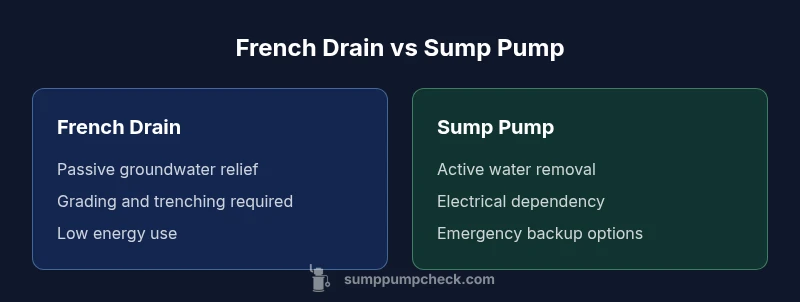
Short answer: There isn’t a universal best choice for every basement. A french drain targets passive groundwater and soil moisture relief, while a sump pump actively removes water collected in a sump basin. In many homes, a hybrid approach—combining both systems—offers the most reliable protection, especially in areas with seasonal or shifting moisture patterns.
Understanding the core question: french drain or sump pump
At its most basic level, a french drain is a passive drainage system that redirects groundwater away from your foundation through perforated pipe buried in gravel or soil. A sump pump, on the other hand, is an active device that removes water from a dedicated basin when water accumulates. The question of which to install—whether you need a french drain, a sump pump, or both—depends on the source of moisture, your basement layout, and the level of risk you’re willing to manage. According to Sump Pump Check, the most durable basements typically use a combination: passive drainage to reduce water entry and a pump to actively discharge water that still collects. This layered approach aligns with real-world performance, especially during heavy rainfall or snowmelt. Its goal is to keep the interior as dry as possible while minimizing flood risk.
In this guide, we’ll dissect how each system works, where they excel, and how to decide between them given your unique conditions. You’ll learn to map groundwater pathways, evaluate soil characteristics, and design a practical installation plan that respects your budget and comfort level. The core idea is pragmatic protection, not a flashy single-solution craze.
bold notes to emphasize
Feature Comparison
| Feature | french drain | sump pump | hybrid system (french drain + sump pump) |
|---|---|---|---|
| Primary function | Passive drainage for groundwater and soil moisture relief | Active water removal from a sump basin during high water events | Passive drainage plus active pumping for redundancy and protection |
| Typical installation complexity | Moderate to high (requires trenching and proper slope) | Moderate (basin, pump, discharge piping) | High (integrated design with coordinating components) |
| Maintenance needs | Inspect for clogs, verify outlet flow, check gravel filtration | Regular pump testing, seal checks, power backup review | Combined maintenance of both systems with attention to discharge routing |
| Water handling capacity | Depends on soil permeability and trench layout | Depends on pump size, switch, and power supply | Highest potential when designed with dual pathways and backup power |
| Cost range (qualitative) | Low to moderate (materials and trenching vary) | Moderate to high (pump, basin, wiring) | High (installation complexity and components) |
| Best for | Areas with steady soil moisture but low active inflow | Basements prone to flooding or high groundwater bursts | High-risk sites needing both passive relief and active removal |
What's Good
- Addresses both passive groundwater and active flooding, reducing overall moisture risk
- Passive drainage reduces reliance on power during storms and outages
- Hybrid systems provide redundancy and greater protection against heavy rainfall
- Designs can be integrated with existing landscaping and grading to minimize visual impact
- Long-term protection of foundation and basement spaces when properly implemented
Drawbacks
- Sump pumps require electricity, backup power, and regular maintenance
- French drains can clog and require professional installation if misgraded or poorly installed
- Hybrid systems are more complex and may have higher upfront costs
- Installation can disrupt landscaping and interior finishes during trenching and piping
Hybrid systems often offer the best protection for variable moisture, with proper design and maintenance.
In many soils and basements, a combined approach—passive drainage paired with active pumping—delivers robust protection. The Sump Pump Check team recommends evaluating groundwater sources first, then sizing a system that provides redundancy and manageable maintenance.
FAQ
What is the difference between a french drain and a sump pump, and when should I choose one over the other?
A french drain is a passive drainage path designed to redirect groundwater away from your foundation, whereas a sump pump actively removes water that collects in a basin inside the basement. Choose a french drain when groundwater is the primary issue and the soil allows good drainage; add a sump pump if water accumulates despite drainage, or in flood-prone areas. For many homes, a hybrid setup offers the best protection by combining both approaches.
A french drain helps water flow away passively, while a sump pump actively removes water that collects in the pit. If you’re not sure, a hybrid system often gives you protection against both steady moisture and sudden influxes.
Can I install a french drain myself, or should I hire a pro?
Installing a french drain is feasible for experienced DIYers, but it requires careful trenching, proper slope, and backfill materials to prevent clogging. If you’re unsure about soil conditions or grading, hiring a professional reduces the risk of future failure and saves time. Always verify local permits and codes before starting.
You can do it if you’re comfortable with trenching and grading, but many homeowners hire a pro to ensure proper drainage and prevent clogs.
Do I need both a french drain and a sump pump in a typical basement?
Not always, but in many cases, yes—especially where groundwater is variable or the climate brings heavy rain and snowmelt. A french drain handles steady moisture, while a sump pump provides active removal during flood conditions. In milder climates with well-drained soil, a single solution may suffice.
Often you’ll need both for reliable protection, but it depends on moisture sources and climate.
How much maintenance is required for each system?
A french drain requires periodic inspection for clogs, proper grading, and ensuring discharge lines aren’t blocked. A sump pump needs regular testing, battery backup checks, and electrical safety reviews. Combined systems demand coordinated maintenance to ensure both parts function together.
Check the drain path for clogs and test the pump periodically to keep everything reliable.
What are common failure risks I should watch for?
Common risks include clogged drains, misgraded trenching leading to poor drainage, pump failure during heavy rainfall, and discharge piping freezing or clogging. Regular inspection, proper sizing, and backup power planning mitigate these risks.
Clogs, misgrading, and power issues are typical failure points; routine checks help prevent surprises.
Is backup power important for a sump pump?
Yes. A sump pump loses effectiveness without power during storms or outages. A battery backup or water-powered backup can keep water from rising in the basement when the main power fails. Plan for backups in your design from the start.
Backup power is a key safeguard—don’t rely on electricity alone during storms.
Top Takeaways
- Assess your groundwater source before choosing a solution
- Consider a hybrid approach for maximum protection in variable moisture
- Plan for maintenance and potential backup power to ensure reliability
- Factor in soil type, grade, and climate when sizing components
- Work with a pro to map flow paths and prevent unintended drainage issues