Sump Pump or French Drain: A Practical Comparison for Home Basements
Compare sump pumps and French drains to protect basements from flooding. This analytical guide weighs operation, installation, maintenance, and cost to help homeowners decide which system fits their moisture sources and power reliability.


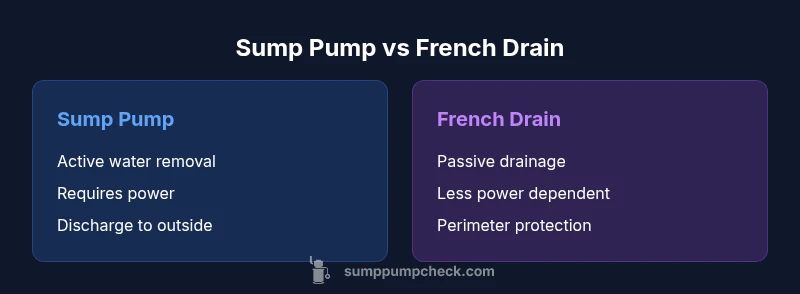
Bottom line: a sump pump and a French drain serve different roles in basement protection. The sump pump actively removes water that collects in a sump pit, while a French drain provides passive drainage around the perimeter. The best choice depends on your moisture sources, power reliability, and budget—this comparison helps homeowners decide between these options. sump pump or french drain
The core question: sump pump or french drain?
According to Sump Pump Check, homeowners facing basement moisture must decide between a sump pump or french drain. The decision hinges on moisture sources, groundwater movement, and whether you want active water removal or passive drainage. In some homes, both systems are recommended for layered protection. This section explains when each option is most appropriate and how they complement each other. When moisture sources are primarily surface runoff or occasional seepage, a French drain can provide constant water diversion, while a sump pump handles periodic surges. Conversely, if you have a known standing sump in the basement, installing a sump pump alongside perimeter drainage often yields the most reliable protection. Consider the phrase sump pump or french drain during planning to ensure you address both the active and passive pathways of water entry.
How a sump pump works and ideal scenarios
A sump pump is a powered device installed in a basin below grade level. When water collects in the pit, a float switch triggers the pump to eject water through a discharge line to a suitable outlet away from the home. Sump pumps excel in situations with recurring water accumulation, hydrostatic pressure, and poor site grading. They are particularly effective when power is reliable and the basement layout allows for a clear discharge path to outside the foundation. Important considerations include pump capacity (gallons per hour), check valve installation, and battery backups for outages. A well-sized sump pump combined with a clear maintenance routine offers robust protection for a sump area and nearby interior concrete surfaces.
How a French drain works and ideal scenarios
A French drain is a trench filled with gravel and a perforated pipe that channels water away from the foundation. Properly installed, it intercepts groundwater and surface water near the perimeter, lowering the soil moisture around the foundation and reducing hydrostatic pressure. French drains are ideal when the goal is continuous drainage around the foundation, when power reliability is a concern, or when space for internal equipment is limited. Key factors include soil type, gradient, and underground utilities. While less dependent on electricity, French drains require periodic maintenance to prevent clogging from sediment or roots.
Primary differences in performance and resilience
The primary difference between a sump pump and a French drain is active versus passive water management. A sump pump provides immediate water removal during storms or sustained seepage, but it relies on electricity and a functioning pump. A French drain offers passive drainage that works continuously once installed, but it requires correct trenching, proper gravel filtration, and connection to a discharge path. In terms of resilience, a sump pump is vulnerable during power outages unless backed up by a battery or generator. A French drain, if well designed, can operate without electricity but may require more maintenance to prevent clogging and to ensure proper slope.
Installation considerations: space, soil, and layout
Deciding between a sump pump and a French drain also hinges on available space and soil conditions. A sump pump is typically installed inside the basement with a dedicated pit and discharge line, which can be advantageous in tight layouts but may require sump basin access and electrical work. A French drain is exterior or interior but usually demands more trenching, careful soil assessment, and a well-planned drainage route to avoid re-routing water toward other structures. Sizing and placement should reflect the worst-case water inflow and local soil permeability. Planning for a potential hybrid installation that combines both approaches can offer comprehensive protection without over-reliance on a single method.
Maintenance, power reliability, and durability
Maintenance for both systems is essential to ensure long-term performance. A sump pump requires regular testing, cleaning of the impeller and intake, and battery backup checks for outages. A French drain benefits from periodic inspection for sediment buildup, root intrusion, and proper gravel filtration. Power reliability matters for a sump pump; consider a generator or battery backup in areas prone to outages. Durability depends on components (pump motor, piping, trench integrity) and on-site conditions such as soil type and groundwater levels. Proactive maintenance reduces the risk of sudden failures during heavy rainfall.
Costs and value: upfront vs long-term
Costs vary with project scope, soil, and choice of system. A basic internal sump pump install might fall in a mid-range budget, while a perimeter French drain requires substantial trenching and drainage piping, which can push costs higher. When evaluating value, homeowners should account for lifespan, maintenance, and potential savings from avoided flood damage. In many homes, a hybrid approach that uses a sump pump for active removal plus perimeter drainage for passive relief provides strong protection without excessive expenditure. Always compare quotes and consider long-term energy use and maintenance needs.
Hybrid approaches and best practices
Hybrid approaches combine the strengths of both systems. A well-designed drainage plan may place a French drain around the perimeter to intercept incoming water and a sump pump to manage water that accumulates inside the basement. Best practices include proper grading away from the foundation, using a high-quality sump pump with a reliable battery backup, ensuring a clean discharging path, and installing a check valve to prevent backflow. Documented planning and professional design help avoid redundant components and ensure compatibility with existing waterproofing measures.
When to retrofit or upgrade and final notes
If you’re upgrading a basement that has a history of dampness, start with a comprehensive assessment of moisture sources and site conditions. Retrofit decisions should consider whether your area faces frequent power outages, rising groundwater, or seasonal flooding. A layered approach—combining a sump pump with perimeter drainage and proper waterproofing—often yields the best protection. As part of ongoing maintenance, schedule annual inspections and conduct a storm-season readiness check to ensure both systems are functioning as intended.
Comparison
| Feature | Sump Pump | French Drain |
|---|---|---|
| Primary purpose | Active water removal from a sump pit during wet periods | Passive drainage around foundation to redirect water away |
| Best use case | Frequent interior water accumulation with reliable power | Perimeter moisture control and groundwater management |
| Installation location | Inside basement with a sump basin and discharge line | Exterior or interior trench around foundation with perforated pipe |
| Maintenance demands | Regular pump testing, cleaning, and battery backup checks | Occasional clog clearance and gravel bed maintenance |
| Typical cost range | $1,000-$5,000 for basic installs | $2,000-$8,000 for more complex layouts |
| Power dependence | Requires electricity to operate | Does not rely on power for passive drainage |
| Reliability during outages | Can fail during power outages without backups | Unaffected by power outages if gravity-driven drainage is sufficient |
What's Good
- Active water removal during storms reduces flood risk quickly
- Passive drainage reduces water around the foundation continuously
- Can be combined for layered protection
- Flexible sizing to fit different home layouts
Drawbacks
- Sump pumps require electricity and regular maintenance
- French drains can clog and require periodic clearing
- Both systems need proper design to avoid short-circuiting drainage
- Upfront costs can be significant depending on soil and layout
Combined approach often provides the strongest protection
Use a properly sized sump pump for active water removal and a perimeter French drain for passive drainage. This layered setup handles most moisture sources and weather scenarios, with backups in place for outages.
FAQ
What is the main difference between a sump pump and a French drain?
The sump pump actively removes water gathered in a basement pit, while a French drain passively channels groundwater away through a perforated pipe. Both can be combined for robust protection, depending on water sources and power reliability.
The sump pump actively removes water, and the French drain passively diverts water. Many homes benefit from using both for best protection.
Can I install a sump pump or French drain myself?
DIY installation is possible for simple setups if you have basic plumbing and electrical skills. However, incorrect sizing or poor drainage can cause more harm than good. For most homeowners, professional design and installation are recommended.
You can DIY simple setups, but professional help ensures proper sizing and drainage.
Do I need a professional to install either system?
A professional can assess site-specific factors like soil, slope, and local codes, and design a system that works with your waterproofing plan. They also handle permits and ensure a proper discharge path.
A pro can save you time and ensure the system works with your home.
How do I determine which system I need for my basement?
Identify the moisture source: rising groundwater vs surface infiltration. If water enters during storms, a sump pump helps; if water is pervasive at the perimeter, a French drain is beneficial. In many cases, combining both yields the best protection.
Look at where water comes from and plan around that.
What maintenance do sump pumps and French drains require?
Sump pumps need regular testing, cleanings, and backup checks. French drains benefit from sediment removal and root control. Annual inspections help catch issues before failures occur.
Test the pump, clear debris, and inspect the drain periodically.
Top Takeaways
- Assess moisture sources and water table before choosing
- Prefer a layered approach for maximum protection
- Plan for power backups to keep pumps running during outages
- Factor soil type and grading into French drain design
- Schedule regular maintenance to prevent failures