Difference Between Sump Pump and Sewage Pump: What Homeowners Need to Know
Explore the key differences between sump pumps and sewage pumps, focusing on purpose, solids handling, installation, and maintenance to help homeowners choose the right basement solution.


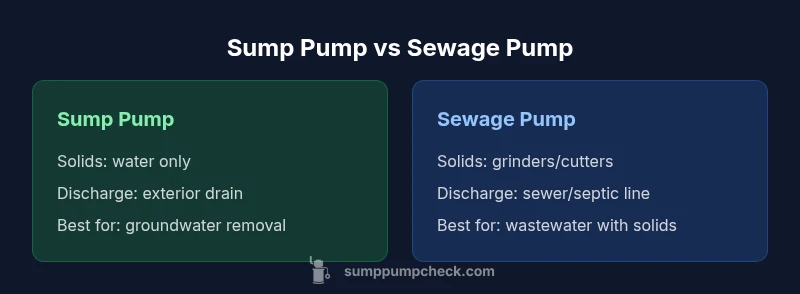
The difference between sump pump and sewage pump centers on purpose and solids handling. Sump pumps remove clear water from basements to prevent flooding, discharging to an exterior drain. Sewage pumps move wastewater that may contain solids to a sewer or septic system, often including a grinder. Choose based on your basement drainage needs.
Understanding the difference between sump pump and sewage pump
The difference between sump pump and sewage pump is defined by purpose, solids handling, and typical installation. In most homes, a sump pump is the first line of defense against basement flooding, removing clear water that has collected in a sump basin and sending it outdoors via a discharge line. A sewage pump, on the other hand, is designed to move wastewater that may contain solids, sending it to a municipal sewer or septic system for processing. The distinction is not merely academic: selecting the wrong type can lead to clogs, improper discharge, and even code violations. According to Sump Pump Check, many homeowners confuse these two devices because both are small submersible machines installed in basements, but their design intent and operating requirements are different. The first step in choosing is to understand the environment, what you plan to pump, and where the effluent ultimately goes. The Sump Pump Check team found that in many cases, basements rely on a single pump for water control, while sewer lines need a pump that can withstand solids and occasional shocks from heavy wastewater flows. This guide will unpack the distinctions and help readers decide which pump fits their basement drainage strategy.
The Sump Pump Check team emphasizes the importance of matching the pump type to actual drainage needs and local codes, which is essential for long-term reliability.
Comparison
| Feature | Sump pump | Sewage pump |
|---|---|---|
| Solids handling | Handles water only; solids must be avoided | Designed to handle solids; often includes a grinder or macerator |
| Discharge destination | Exterior drain or storm sewer | Municipal sewer or septic system |
| Typical applications | Basement water intrusion, groundwater, rainfall | Wastewater with solids from bathrooms/kitchens |
| Maintenance considerations | Lower maintenance; basic screen/guard checks | Higher maintenance; grinder, seals, bearings, and screens |
| Piping and sizing | Smaller-diameter discharge, simpler piping | Larger piping, more robust components |
| Power and noise | Lower power requirements; generally quieter | Higher power; potential for more noise and vibration |
What's Good
- Lower upfront cost for basic water pumping
- Simplicity in installation and maintenance
- Effective for preventing basement flooding with clean water
Drawbacks
- Cannot handle solids; risk of clogging with wastewater
- Using a sump pump for sewage can cause backups or odor issues
- Sewage pumps require more maintenance and more robust electrical setup
- Grinder pumps can be noisier and more expensive to repair
Sump pumps excel at water control while sewage pumps are needed for wastewater with solids
If your basement only collects groundwater or rainwater, a sump pump is the practical choice. If your basement handles wastewater, especially with toilet or kitchen effluent, a sewage pump (often grinder-style) is required. The right pick reduces clogs, odors, and code issues.
FAQ
What is the primary purpose of a sump pump?
A sump pump’s main job is to remove accumulated groundwater or rainwater from a basement to prevent flooding. It does not handle solids and is connected to an exterior discharge line.
A sump pump keeps your basement dry by moving water out to a safe drain.
What is a sewage pump used for?
A sewage pump is designed to move wastewater that may contain solids to a municipal sewer or septic system. Many models include grinders or cutters to reduce solids.
Sewage pumps move wastewater with solids to an appropriate disposal system.
Can a sump pump be used for sewage water?
Generally no. Sump pumps are not designed to handle solids and can clog when exposed to sewage. A dedicated sewage or grinder pump is typically required for wastewater.
Sump pumps aren’t meant for wastewater with solids; use a sewage pump instead.
Are there pumps that combine sump and sewage functions?
There are specialized systems for combined needs, but they are less common in typical residential setups. Most homes require distinct solutions based on whether water or wastewater is being moved.
Most homes need either a sump pump or a sewage pump, not both in one unit.
What are common signs you need to replace a sump or sewage pump?
Frequent alarms, persistent clogs, unusual noises, or repeated failures indicate it may be time to replace or upgrade the pump. Consider checking the discharge path and the motor for wear.
Look for frequent alarms or unusual noises as signs to replace the pump.
How do I choose between a sump pump and a sewage pump?
Assess the primary drainage source: water only or wastewater with solids. Review discharge options, local codes, and maintenance needs. When in doubt, consult a professional to avoid costly mistakes.
Decide based on whether you’re moving water only or wastewater with solids, plus your local codes.
Top Takeaways
- Identify water source first before choosing a pump
- Solids handling is the key differentiator for pump type
- Check local codes and discharge paths before purchase
- Plan for future changes in basement drainage needs
- Regular maintenance extends pump life and reliability
- The right pump aligns with both practical needs and code compliance