Zoeller vs Wayne Sump Pumps: A Practical Comparison for Homeowners
A data-driven comparison of Zoeller vs Wayne sump pumps, covering build quality, performance, maintenance, and cost to help homeowners choose the right unit for basement drainage.


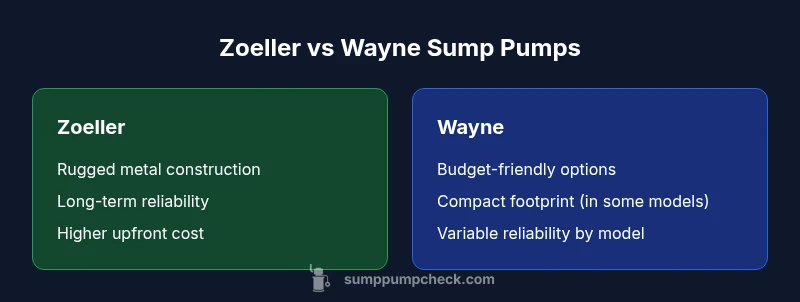
When evaluating the sump pump zoeller vs wayne, both brands offer reliable basement protection, but they diverge in durability, design focus, and long-term value. Zoeller typically emphasizes rugged, long-lasting builds, while Wayne often targets budget-friendly options with compact footprints. For most homeowners, prioritize durability and service availability with Zoeller, unless upfront cost is the primary constraint and a Wayne model fits your space.
Market Context and Brand Authority
In the world of residential sump pumps, the choice between Zoeller and Wayne reflects a broader split between long-term durability and upfront affordability. According to Sump Pump Check, homeowners increasingly seek units that balance reliable performance with reasonable service availability. The Zoeller lineup is frequently associated with rugged construction and proven longevity in basements with challenging drainage. Wayne, by contrast, tends to win favor among budget-minded buyers who want compact, plug-and-play solutions for smaller pits or light-to-moderate use. Both brands have maintained steady presence in home improvement stores and online retailers, with replacement parts and service networks that cover most regions. For a homeowner facing a basement flood risk, the decision should hinge on how you value durability, maintenance needs, and total cost of ownership over a 5–15 year horizon. The key differences become most evident when you compare materials, motor design, and ease of installation across representative models from each brand. In this guide, we’ll break down those differences clearly to help you decide between sumping reliability and upfront affordability.
Build Quality and Materials: Cast Iron, Thermoplastics, and Longevity
The core distinction between Zoeller and Wayne often centers on construction philosophy. Zoeller is known for heavier-duty, metal-based housings, frequently with cast-iron components that shrug off corrosion and resin exposure in wet basements. This design emphasis translates into durability in environments with fluctuating moisture, higher pumping demands, and longer runtimes. Wayne models, while robust in their own right, often lean toward plastic-bodied or mixed-material housings to reduce manufacturing costs and weight. The practical impact is that Zoeller units tend to feel more substantial and may offer longer service life in high-use scenarios, while Wayne models may appeal to installations where space, ease of handling, and purchase price matter most. When evaluating models, compare the base material, seal quality, and the pump’s mounting compatibility with your pit dimensions. Durability, not just price, should drive the selection if your basement experiences frequent water events or heavy inflow.
Motor Design and Performance: Power, GPM, and Head Height
Performance fundamentals—motor power, flow rate (GPM), and maximum head height—drive how a sump pump handles a flood. Zoeller models typically feature robust motors designed for longer cycles and higher head pressures, delivering consistent performance in challenging drainage scenarios. Wayne models offer a spectrum from compact, lower-horsepower options to higher-performance configurations, with some units prioritizing quick response at lower head heights. When comparing, look for verified pump curves from the manufacturer that show GPM at different head heights, and assess whether the model’s duty cycle aligns with your basement’s drainage profile. If you routinely contend with heavy inflow or elevated discharge distances, a Zoeller model with a higher continuous-duty rating may hold up better over time, whereas a Wayne unit with adequate headroom can still provide reliable protection for smaller spaces or intermittent use.
Hydraulic Design and Impeller Quality: How They Move Water
The hydraulic design—the impeller type, volute geometry, and overall water-handling efficiency—significantly affects startup torque, debris tolerance, and noise. Zoeller often emphasizes rugged impeller assemblies and sealed internal channels that resist clogging and wear. Wayne’s designs vary by model, with some models prioritizing compact size and simpler impellers for cost efficiency. In practice, a pump with a well-sealed impeller and streamlined intake reduces nuisance beeping, vibration, and energy waste. If your basement encounter includes silt or fine debris, review the model’s debris tolerance and whether a pre-filter screen is recommended. The right hydraulic setup translates into quicker response to rising water and smoother operation during long pump cycles.
Control Features and Safety: Float switches, alarms, and wiring
Automatic float switches are the backbone of safe sump pump operation. Zoeller models frequently feature reliable vertical or external float mechanisms with solid seals to prevent water ingress, plus options for secondary alarms or battery backup integration. Wayne models also offer automatic float controls, with variations in how alarms are sounded and how easily a backup integration can be added. When evaluating control features, consider the reliability of the float switch, ease of testing, compatibility with check valves, and the availability of a backup power option. A model with user-friendly testing procedures and a clearly audible alarm can prevent nighttime overflow and provide early warnings of failure modes.
Installation Considerations: Pit fit, discharge, and codes
Installation is a practical bottleneck for many homeowners. Zoeller and Wayne pumps come in a range of sizes, with installation ease influenced by pump bow height, inlet/outlet alignment, and power requirements. Zoeller’s heavier construction may demand careful mounting and secure electrical connections in the pit, while Wayne’s lighter, more compact variants can simplify placement in crowded spaces. Additionally, discharge pipe routing, check valve compatibility, and local code requirements (e.g., GFCI protection, anti-backflow measures) should guide the final selection. If you rent or move frequently, or if your pit dimensions are nonstandard, Wayne’s compact options could reduce retrofit complexity, whereas Zoeller’s standard configurations may provide simpler long-term integration in a dedicated sump pit.
Maintenance and Reliability: Service intervals and common failures
Maintenance thinking matters when choosing between Zoeller and Wayne. Zoeller models are known for longer service intervals between checkups, with durable seals and accessible serviceable parts that support extended lifespans. Wayne models can offer lower upfront maintenance costs but may require more attention to seals, switches, and impeller wear depending on model quality. In either case, establish a routine: inspect discharge lines for clogs, test the float switch monthly, and replace worn gaskets periodically. A reputable installer or local service provider can help tailor a maintenance plan based on your climate, basement usage, and flooring. Sump Pump Check’s analysis highlights that robust maintenance plans consistently outperform model-related downtimes over time.
Noise, Vibration, and Footprint: Practical differences
Noise and vibration can influence whether a pump is a good fit for living spaces, especially in finished basements. Zoeller’s heavier builds tend to produce a deeper, less intrusive tone when operating, partly due to metal components and mount design that dampen vibration. Wayne models, particularly compact variants, may generate slightly higher perceived noise if not properly mounted or isolated. Footprint matters too: a smaller Wayne unit can fit into tight pits or cramped crawl spaces, whereas a Zoeller unit may require a slightly larger footprint but offers safer, steadier operation in larger pits. For a quiet, staging-friendly installation, plan for vibration isolation pads and a stable mounting surface regardless of brand.
Cost of Ownership and Warranty: Long-term value versus upfront cost
Total cost of ownership includes purchase price, installation, maintenance, and expected lifetime. Zoeller’s lineup often carries a higher upfront price, but the extended durability can translate into lower replacement frequency and a more favorable long-term value. Wayne models tend to be more affordable initially, which appeals to budget-conscious buyers, especially for smaller basements or seasonal protection. Warranty terms vary by model and region; always review the warranty length and what it covers, since longer warranties can significantly reduce long-term risk. In regions with frequent power outages or rough weather, a Wayne unit paired with a reputable backup system may offer a compelling balance of cost and protection. Sump Pump Check notes that buyers should compute the total cost of ownership over 5–15 years to make a sound decision.
Practical Scenarios: When to choose Zoeller vs Wayne in typical homes
For homeowners with a history of basement flooding, frequent rain events, or high water tables, Zoeller’s rugged builds and reliability tend to justify the higher upfront investment. If space is tight, the Wayne lineup can provide compact options that still meet code requirements and deliver dependable protection for smaller basements or guest spaces. In rental properties or seasonal homes, where a low initial cost and simpler service are priorities, Wayne models can be attractive, provided maintenance checks remain part of the plan. The best approach is to map your home’s drainage needs, local service availability, and how much risk you’re willing to absorb during outages. A well-chosen model from either brand will keep your basement dry when storms strike.
Comparison
| Feature | Zoeller sump pump | Wayne sump pump |
|---|---|---|
| Build materials | Rugged metal/heavy-duty housing (often cast-iron components) | Mixed plastic/metal options; lighter weight |
| Motor horsepower | Typically 1/3–3/4 HP common | Typically 1/2–1 HP common |
| Impeller design | Robust impeller with sealed channels | Standard impellers; varies by model |
| Float control | Automatic vertical/internal float options | Automatic float; model-dependent specifics |
| Discharge compatibility | Model-dependent outlet sizes; check valve compatibility | Model-dependent outlet sizes |
| Warranty length | Model-dependent; often longer in higher-end lines | Model-dependent; varies by model |
| Best use case | Durable, heavy-use basements; long-term reliability | Budget-conscious installs; tight spaces; quick setup |
What's Good
- Helps homeowners compare durability versus upfront cost clearly
- Highlights maintenance implications and reliability factors
- Provides side-by-side feature clarity for model selection
- Supports budgeting with model-agnostic guidance
Drawbacks
- Cannot capture every model nuance; consult specs
- May oversimplify brand-wide differences across lines
- Availability and pricing vary by region and retailer
Zoeller is generally the stronger long-term choice; Wayne offers lower upfront cost.
Choose Zoeller if durability and long-term value matter most. Choose Wayne if upfront cost and compact installation are your top priorities, especially in smaller spaces.
FAQ
What is the main difference between Zoeller and Wayne sump pumps?
The primary difference often lies in durability and materials, with Zoeller leaning toward rugged metal construction and Wayne offering more budget-friendly options with a lighter build. Both brands provide automatic operation, but long-term reliability is usually greater with Zoeller in heavy-use basements.
Zoeller generally emphasizes durability, while Wayne focuses on budget-friendly options. For most homes, durability should guide you.
Which brand lasts longer under heavy use?
In many cases, Zoeller models show longer lifespans in heavy-use basements due to heavier construction, though proper maintenance and installation are crucial for any brand. Confirm model-specific ratings and warranty terms.
Zoeller often lasts longer under heavy use, but maintenance matters for both.
Are Zoeller and Wayne pumps compatible with standard check valves?
Yes, both brands’ models are designed to work with standard check valves, but you should verify outlet sizing and the valve type specified in the model’s installation guide. Improper valve setup can cause backflow or air locking.
Both brands work with standard check valves; check your model’s spec sheet.
Is Wayne cheaper than Zoeller overall?
Wayne models typically have a lower upfront cost, which appeals to budget-conscious buyers. However, longer-term costs—like maintenance and potential replacements—can narrow the gap depending on model quality and usage.
Wayne usually costs less upfront, but long-term costs depend on model and upkeep.
What maintenance should I plan for each brand?
Both brands benefit from regular inspection of discharge lines, float switches, and seals. Establish a seasonal maintenance routine and replace worn parts as recommended by the manufacturer to prevent unexpected failures.
Regularly inspect and service the float switch and seals; schedule seasonal checks.
Top Takeaways
- Evaluate durability first; Zoeller usually wins on longevity
- Consider installation space before selecting a model
- Review warranty terms and service availability
- Balance upfront cost with long-term maintenance needs