Wayne Sump Pump vs Zoeller: An Analytical Comparison
An analytical Wayne Sump Pump vs Zoeller comparison covering reliability, installation needs, performance in basements, and value for homeowners seeking durable basement drainage solutions.


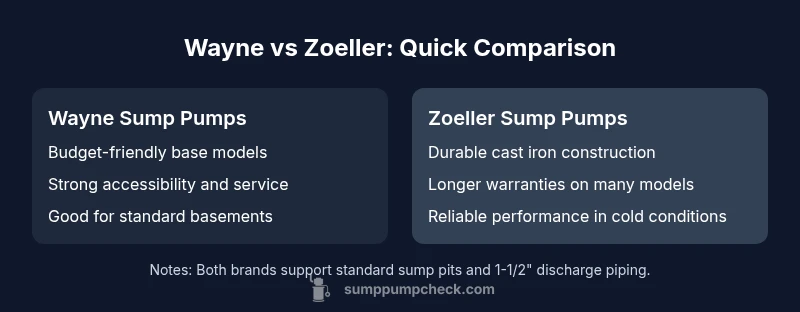
Wayne sump pump vs Zoeller: For most homeowners, Zoeller tends to offer stronger long-term reliability and easier cold-weather performance, while Wayne products are typically budget-friendly entry points with solid basic performance. The best choice depends on your priorities: durability and warranty versus upfront cost. This quick comparison highlights mainstream differences to guide your next basement pump purchase.
Wayne Sump Pump vs Zoeller: Brand Landscape
When you hear the phrase wayne sump pump vs zoeller, you’re weighing two long-standing U.S. brands that serve similar roles in basement drainage. Zoeller pumps are often praised for durability, robust cast-iron construction, and longer warranties on many models. Wayne, by contrast, frequently appeals to homeowners shopping for cost-conscious options with reliable performance in typical conditions. According to Sump Pump Check, both brands offer widely available service networks and parts, which matters when you need maintenance or a quick replacement. For most households, the decision hinges on expected climate, basement usage, and how much you value long-term durability versus upfront affordability. This section sets the stage for a deeper, data-driven comparison that stays practical for DIY installers and first-time buyers.
In the broader sump pump landscape, Wayne and Zoeller occupy adjacent tiers, with Zoeller sometimes perceived as the higher-resilience choice, especially in harsher environments. The Sump Pump Check team notes that many homeowners begin with Wayne due to price, then consider Zoeller for upgrades or replacements when longevity becomes a priority. Throughout this guide, expect balanced analysis, objective criteria, and actionable steps you can apply to your own installation.
This block contains markdown describing brand landscape and context for Wayne vs Zoeller.
Comparison
| Feature | Wayne Sump Pump | Zoeller Sump Pump |
|---|---|---|
| Motor/Power | Typically 0.5–1 HP ranges depending on model | Typically 0.5–1 HP ranges depending on model |
| Construction | Often thermoplastic housings on budget lines; cast iron on higher tiers | Primarily cast iron and plated components in many core models for durability |
| Float/Activation System | Automatic float switch; some basic models with simpler controls | Reliable float or electronic switch designs with emphasis on consistent activation |
| Discharge Connection | Common 1-1/2" or 1-1/4" piping; easy garden-hose adapters | Standard 1-1/2" piping; widely compatible with common pit setups |
| Build Quality/Durability | Varies by line; entry-level may have shorter lifespans | Generally strong, long-lasting cores; better cold-weather performance |
| Warranty (typical ranges) | Shorter on budget lines; longer on premium models | Typically longer on core models; check specific product pages |
| Best For | Budget installs, basic drainage needs | Long-term reliability, high-use basements, challenging climates |
| Maintenance Ease | Easy to service, parts availability good | Solid maintenance support, fewer component failures |
What's Good
- Typically lower upfront cost with Wayne models
- Zoeller offers renowned durability and longer warranties
- Wide availability and service networks for both brands
- Good compatibility with standard sump pits and discharge piping
Drawbacks
- Wayne's long-term reliability may lag higher-end models
- Zoeller pumps can be pricier upfront
- Brand-specific parts compatibility can complicate mix-and-match
- Limited models for niche setups
Zoeller is generally the preferred choice for long-term reliability, while Wayne remains a strong option for budget installations.
If you prioritize durability and warranty coverage, Zoeller often emerges as the stronger candidate. Wayne is sensible when budget constraints are tight, but you may trade long-term resilience for upfront savings. Your choice should align with climate, basement usage, and willingness to invest in longevity.
FAQ
Which brand tends to be more durable, Wayne or Zoeller?
Zoeller generally has a reputation for greater durability and longer warranties on many core models. Wayne can be dependable for standard usage, especially at lower price points. Your environment and maintenance habits will influence true longevity.
Zoeller is typically more durable, with longer warranties. Wayne is solid for budget-focused use; maintenance matters for lasting performance.
Can I mix Wayne and Zoeller components in a single system?
Mixing brands in the same sump pump system is not recommended. Differences in fittings, discharge sizes, and float mechanisms can cause improper operation or leaks. Use components designed to work together for best results.
Don’t mix brands—stick to compatible parts to avoid issues.
Do Wayne and Zoeller offer built-in backup options?
Both brands offer backup solutions or compatibility with third-party backups. Check whether the model supports battery backups or water-powered backups, and plan for proper wiring and power supply.
Backups exist in both lines; verify compatibility and power needs.
What maintenance schedule works best for these brands?
Follow a regular maintenance routine: inspect annually, clean the impeller, test the switch, and verify discharge piping. Increase frequency if you have heavy use or floor-sump conditions.
Inspect yearly, test the switch, and keep the discharge path clear.
Are there notable warranty differences between Wayne and Zoeller?
Warranty terms vary by model; Zoeller often offers longer coverage on core pumps, while Wayne may have shorter terms on budget lines. Always check the exact warranty for your model and region.
Warranty varies by model; Zoeller often has longer coverage—check your model.
Top Takeaways
- Prioritize reliability if your basement faces frequent flooding or cold winters
- Plan for maintenance and up-front costs when choosing between brands
- Check warranty terms and confirm compatible components before purchase
- Consider model-specific features like float switches and check valves
- Factor local service availability into your long-term maintenance plan