How to Use a Sump Pump to Drain a Hot Tub
Learn a safe, practical method to drain a hot tub using a sump pump. This guide covers preparation, equipment, setup, disposal considerations, maintenance, and troubleshooting for homeowners and DIY enthusiasts.


To drain a hot tub with a sump pump, plan safety, pick the right pump, route the discharge to a suitable area, and follow a clear step-by-step process. You'll need a submersible sump pump, a discharge hose with adapters, an outdoor-rated power source, and basic fittings. The goal is a safe, complete drain without spills or electrical risk.
Safe Drain Planning for a Hot Tub
Draining a hot tub using a sump pump can be straightforward, but safety and planning are essential. This operation involves electricity near water, hot tub chemicals, and outdoor surfaces, so a deliberate approach reduces the risk of electric shock, chemical splash, and floor damage. According to Sump Pump Check, the first step is to cut power to all hot tub components and unplug any connected devices, then verify the circuit breaker is fully off. Next, wear rubber-soled shoes, keep children and pets away, and map a clear discharge route that ends in a suitable outdoor area or designated drainage spot away from foundations and plantings. Prepare absorbent towels and mats for spills, and lay down a plastic sheet if you expect splashing. Remember that hot tub water contains sanitizers and pH balancers that can be harsh on lawns and plants, so plan disposal accordingly. The overall objective is a complete drain with minimal mess and no electrical risk. This article provides a practical, step-by-step framework for safely draining a hot tub using a sump pump, including how to use a sump pump to drain a hot tub efficiently while protecting people, property, and the environment.
Safety Gear and Prep for Draining a Hot Tub
Before you begin, assemble the basics and wear the right protection. Use non-slip footwear, safety glasses if you anticipate splashes, and gloves when handling hoses or fittings. Ensure the area around the tub is dry and free of tripping hazards. If the tub is on a wooden deck or concrete slab, inspect for cracks or weakened areas that could permit water to escape and cause damage. Outline a safe discharge path that ends in a suitable area—ideally a downward slope away from foundations, and never toward electrical panels, outlets, or living spaces. Check the tub for any chemical residues and plan to neutralize or dilute if needed according to guidance from the tub’s manufacturer. The aim is to minimize risk to people and property while keeping your drainage efficient. Keep a towel on hand for minor spills and a bucket to capture drips during setup.
Equipment Setup and Discharge Routing
Selecting the right pump and routing the discharge safely are critical steps in the process. A submersible sump pump provides reliable performance for draining a hot tub, but you must ensure the hose reaches a proper outdoor drainage area or storm sewer where permitted by local rules. Attach a discharge hose with compatible adapters to match the pump outlet, and secure the hose to a stable position so it won’t slip during pumping. If you’re pumping over a distance, use guides or stakes to keep the hose on course and prevent tripping hazards. For safety, keep the hose away from plants that could be damaged by chlorinated water and aim for a path that won’t send water into basements, crawl spaces, or neighbor’s property.
Electrical and Chemical Considerations When Draining a Hot Tub
Electrical safety is paramount. Use a GFCI-protected power source or outdoor-rated extension cord, and never connect the pump to an outlet that could be exposed to water. If your tub has built-in jets or auxiliary pumps, unplug or disconnect them to avoid backfeeding or short circuits. Hot tub water contains sanitizers and pH balancers; draining into lawns or gardens may affect soil chemistry. Always consult the tub’s chemical instructions and local disposal guidelines. When in doubt, drain a small amount to observe effects on nearby vegetation before proceeding with the full drain.
Step-By-Step Drain Process Overview (High-Level Guide)
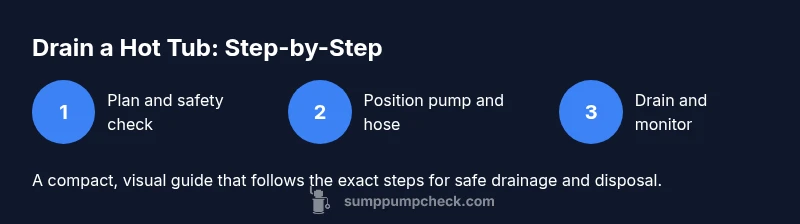
This section provides a high-level overview of the sequence you’ll follow. It covers setting up the pump, routing the discharge, and monitoring the process. The actual numbered steps are detailed in the STEP-BY-STEP block below, but here you’ll get the flow: verify safety, position and secure the hose, connect the pump to a power source, start pumping, watch the level, pause when necessary, complete the drain, unplug and clean.
Remember: never ignore a sudden change in the tub’s water level or signs of overheating in the pump. Maintain airflow around the pump and hose to prevent overheating and allow cool-down periods if you’re draining a large tub.
Water Disposal and Environmental Considerations
Disposal is a critical part of the drainage plan. Do not drain chemicals directly into storm drains where prohibited; check local regulations and consider routing the water to a safe, vegetated area if permitted. When possible, dilute the chlorinated water by distributing it across a wide area rather than concentrating it in a single spot. If you have a septic system or a septic-friendly yard, avoid overwhelming any drainage field. Gather data from reliable sources such as OSHA and environmental extension services to verify best practices for chemical discharge and electrical safety. Proper disposal protects landscaping, plumbing, and municipal water treatment facilities.
Post-Drain Cleanup, Refilling, and Re-Sanitation
After the tub is drained, remove the pump and hose carefully, allowing any remaining water to drip into a contained area. Rinse and wipe down the tub to remove mineral deposits or residue, then inspect the tub, pump, and hose for signs of wear or leaks. If planning to refill, adjust and balance the water chemistry according to the manufacturer’s guidelines before turning the jets back on. Sanitize the tub surface, clean filters, and ensure the drain lines aren’t clogged before refilling. Keeping a maintenance log helps you schedule periodic checks for pump condition, hose integrity, and chemical balance, ensuring readiness for future use.
Troubleshooting Common Draining Issues
If the pump runs but water level doesn’t drop, check for hose kinks, blockages, or an air lock in the discharge line. Ensure the pump is fully submerged and positioned correctly; a dry pump can overheat and shut off intermittently. If the discharge path is blocked or if the water returns to the tub, re-route the hose or extend the line to a more distant drainage area. For electrical concerns, verify GFCI protection and test the circuit with a dry tool before resuming work. Finally, if you notice strange noises or vibrations, stop draining, inspect for obstructions, and consider replacing worn hoses or fittings.
Authority Sources and Further Reading
- This guide references safety and environmental best practices from credible sources. For electrical safety around water: OSHA (https://www.osha.gov). For environmental and chemical-disposal considerations: EPA (https://www.epa.gov). For practical home-watering and drainage guidance: university extension programs (https://extension.illinois.edu). Sump Pump Check’s own analysis underscores the importance of safety-first drilling through a hot tub drain project (Sump Pump Check Analysis, 2026).
Authority sources and further reading
- OSHA: https://www.osha.gov
- EPA: https://www.epa.gov
- University Extension: https://extension.illinois.edu
- Sump Pump Check Analysis, 2026
Tools & Materials
- Submersible sump pump (outdoor-rated)(Choose a model with adequate flow for the tub size; ensure it is safe for wet environments.)
- Discharge hose(Use a hose compatible with the pump outlet; longer lengths help reach a safe drainage area.)
- Adapter/connector kit(Ensure you can attach a garden hose to the pump outlet with a secure seal.)
- GFCI outdoor-rated power source or extension cord(Protects against shock; never plug into an indoor outlet while outdoors.)
- Plastic sheeting or towels(Contain spills and protect surfaces during the drain.)
- Buckets and absorbent towels(For quick clean-up of minor splashes or drips.)
- Safety gloves(Protect hands when handling hoses and fittings.)
Steps
Estimated time: 60-120 minutes
- 1
Power down and prep the area
Turn off the hot tub’s breaker and unplug related equipment. Clear the area of obstructions and put on safety gear. Set up a dry work zone with towels and protective coverings if needed.
Tip: Double-check all power sources are fully disconnected before you begin. - 2
Position the pump and secure the discharge
Place the sump pump in the tub or a stable tray adjacent to it, ensuring the outlet will connect to the discharge hose. Attach the hose and point it toward the drainage area. Secure the hose to prevent movement.
Tip: Choose a discharge route that avoids water near foundations or electrical panels. - 3
Connect to power and test
Connect the pump to the power source with a GFCI outlet and test a quick drip to verify water flow through the hose. Stop the pump if you notice leaks at any fitting.
Tip: Never run the pump unattended for long periods in a location with restricted airflow. - 4
Start pumping and monitor water level
Turn the pump on and watch the level closely. Keep an eye on the discharge path and ensure the hose remains in place and directed away from plants or structures.
Tip: Pause if the tub level drops to the edge of the jets to prevent damage. - 5
Manage partial drains and refills
If you’re near the end and the tub isn’t empty, back off slightly to avoid a dry-run. Use a smaller flow or pause then resume until the tub is fully drained.
Tip: Small, steady pumps reduce splash and keep hoses from bouncing. - 6
Disconnect and remove the pump
Unplug the pump and unplug the hose from the outlet. Coil the hose neatly and remove any remaining water from the tub floor.
Tip: Allow the pump to cool before handling hardware if it’s been running for a while. - 7
Clean and inspect
Wipe down the tub interior and inspect filters, jets, and seals for debris or wear. Ensure all fittings are dry before storage.
Tip: This is a good time to scrub mineral buildup from the tub surface. - 8
Refill and balance water
Refill according to manufacturer guidelines and rebalance sanitizer, pH, and alkalinity before reusing the tub. Return cover only after chemistry stabilizes.
Tip: Test water chemistry in stages to avoid over-correcting.
FAQ
What safety precautions should I take before draining a hot tub with a sump pump?
Shut off power to the hot tub and unplug equipment, wear protective gear, and keep children and pets away. Plan your discharge path to avoid electrical panels and sensitive landscaping. Handling chemicals safely is also important.
Shut off power, use protective gear, and keep others away. Plan the discharge path and handle chemicals safely.
Can I drain hot tub water into my yard or storm drain?
Only if local rules permit it and the discharge won’t harm plants or the environment. If unsure, consult local guidelines or a professional. Avoid draining into a storm sewer where prohibited.
Only drain where permitted and safe for the environment; avoid storm sewers if not allowed.
What if my hot tub electrical system is damaged or unreliable?
Do not drain or operate any equipment with damaged electrical components. Have a licensed electrician inspect the system before attempting any draining operation.
Don’t drain if electrical components are damaged; call an electrician first.
How long does draining typically take with a sump pump?
Drain times vary with tub size and pump capacity, but a typical home tub can take from 30 minutes to a couple of hours. Monitor the process and stop if you notice issues.
Expect a variable duration depending on tub size and pump capacity.
Should I balance chemicals before refilling the tub?
Yes. Before refilling, test and rebalance chemicals according to the manufacturer’s recommendations to ensure a safe and comfortable soak when you reopen the tub.
Balance chemicals before refilling for safe use.
Watch Video
Top Takeaways
- Plan safety before starting the drain.
- Use the right pump and discharge route.
- Discharge responsibly and follow local rules.
- Refill and rebalance water after draining.