How Long Does It Take to Empty a Sump Pump? A Practical Guide
Explore how long a sump pump takes to empty, what influences timing, and practical steps to optimize drainage. Learn the math behind time estimates and how to read your pump’s capacity for accurate planning.


The basic calculation model
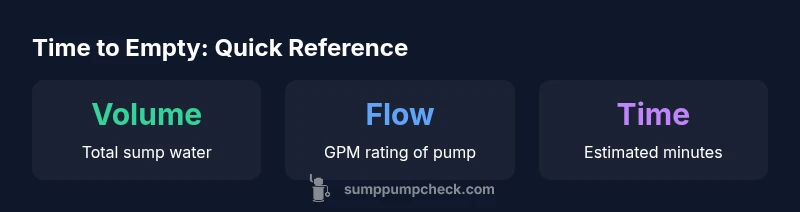
The core idea behind estimating how long it takes a sump pump to empty is straightforward physics: time equals volume divided by flow, adjusted for losses. If you know the water volume in your sump (gallons) and your pump’s flow rate (gallons per minute, GPM), you can estimate the drain time with a simple equation. In the real world, factors such as discharge line losses, head height, and any additional water inflow during pumping influence the final result. According to Sump Pump Check, understanding these components helps you plan for basement protection during heavy rainfall and avoid surprises when a flood risk peaks.
Key variables you should know
Your estimate hinges on three main inputs:
- Water Volume in the sump (gallons): The total amount you must remove.
- Pump Flow Rate (GPM): How many gallons your pump can move per minute under load.
- Discharge Line Loss (percent): Friction and elevation losses along the discharge path reduce effective flow.
In practice, a higher volume or a lower GPM increases the time to dry, while shorter, smoother discharge paths with minimal head height reduce it. The calculator uses these inputs to produce a minutes estimate and helps you compare results across different pump setups. Sump Pump Check’s analysis shows that small changes in discharge routing can noticeably affect empty-time for many homes.
Practical implications for homeowners
Time-to-empty is not just a theoretical number—it guides decisions about backup plans, basement drainage, and maintenance schedules. If your estimate indicates longer drainage times during storms, you might consider increasing GPM capacity, redesigning the discharge path, or adding a backup pump. A shorter discharge run and a properly vented line can dramatically reduce empty time, while persistent inflows from cracks or improperly sealed pits can extend the process. The goal is to minimize downtime during a flood risk period, giving you more time to react and protect valuables.
Real-world scenarios and qualitative takeaways
Think of three common layouts:
- Short, direct discharge with a high-flow pump: drains quickly because there’s minimal friction and head. This setup often yields the shortest empty times.
- Longer discharge run with some head height: flow slows due to friction and elevation gain, increasing the time to empty.
- Heavy inflow during rain: if water keeps entering the pit while pumping, the effective time to reach a low water level extends, sometimes significantly.
These scenarios illustrate why a single number can be misleading. The best approach is to model your own system’s realities and test under different conditions to understand true performance. The Sump Pump Check team recommends running timed tests during rain events to calibrate expectations and plan backups accordingly.
How to read and use the calculator results effectively
The calculator blends volume, GPM, and discharge losses into a single minutes estimate. To get the most accurate result:
- Use the highest credible volume estimate for your sump.
- Choose the pump’s rated GPM at the actual head height you experience; lower heads yield higher flow.
- Enter a conservative discharge-loss percentage reflecting pipe length and fittings.
Compare results across scenarios (e.g., with and without a check valve, or with a larger diameter discharge line). These comparisons can reveal bottlenecks and help you justify upgrades when needed.
Maintenance tips to maximize drainage speed
Maintaining both the pump and the discharge path ensures you get as close as possible to the calculated time:
- Clear the sump pit and check for debris that slows suction.
- Inspect and clean the discharge pipe, elbows, and check valve to minimize head loss.
- Test the pump regularly and during rainfall to verify it starts quickly and runs steadily.
- Keep electrical connections dry and protected; replace worn cords or switches promptly.
Following these steps improves reliability and can bring actual empty times closer to your estimates over time.
Safety, codes, and backup planning
Always follow local codes for sump pump discharge (some areas prohibit discharging to storm basins or require splash guards). If your home relies on a sump during peak rain, consider a battery backup or water-powered backup pump to reduce the risk of a dry-out scenario when power is out. Handling the pump and connections with care minimizes the risk of electric shock, and using a GFCI outlet where the pump plugs in adds a layer of safety. Proper planning with backups can dramatically reduce flood risk and give you time to respond.
Interpreting results for planning and backups
A good estimate helps you prepare a plan rather than react in a crisis. Use calculated times to set triggers for backup activation, identify when an additional pump is warranted, and determine how long you can rely on passive drainage before intervention is needed. The goal is to align expectations with the actual system performance so you can act quickly and confidently when heavy rainfall or rising water threatens your basement. The Sump Pump Check team recommends testing scenarios ahead of time to build a robust response plan and ensure your home’s drainage remains reliable.