Sump Pump Smell in Basement: Troubleshooting Guide
A practical, step-by-step troubleshooting guide to diagnose and fix the common causes of a sump pump smell in basement, with safety tips and when to call a professional.


According to Sump Pump Check, the most common culprits behind a sump pump smell in basement are a dry or faulty drain trap and a stagnant sump pit. Quick fixes include resealing the trap with water, cleaning the pit, and verifying the discharge line is clear. If sewer gas or persistent odor remains, stop using the area and call a licensed plumber.
What the sump pump smell in basement indicates
If you notice an unusual odor near your sump system, the cause is often straightforward but can escalate quickly. The phrase sump pump smell in basement is more than an embarrassment—it can signal an issue with water seals, drainage, or microbial growth that affects air quality and, in severe cases, indoor safety. According to Sump Pump Check, the leading culprits are a dry drain trap, a stagnant sump pit, and a mis-sealed discharge line. A dry trap lets sewer gas seep into the basement; a stagnant pit becomes a breeding ground for bacteria and algae; and a poorly vented discharge can push odors back into living spaces. For homeowners, the first step is a calm, methodical check rather than a panic reaction. While some fixes are simple, others require professional help, especially if sewer gas is suspected. Throughout this guide you’ll find practical steps, safety notes, and a clear diagnostic flow to determine if intervention is needed and how to proceed.
Common odor sources in basements
Basement odors around a sump system come from several sources. A dry drain trap is a frequent trigger; when the water that seals the trap evaporates, sewer gases can escape into the room. A stagnant sump pit can harbor bacteria, algae, and organic material that produce musty or foul smells. Discharge line issues—blocked, cracked, or misrouted lines—can cause backflow or odors to re-enter the space. Mold growth from damp conditions, high humidity, or poor ventilation adds another layer of smell and can worsen air quality. Finally, a sewer backup in the main line, although less common, may push gases toward the sump pit through connected drains. Understanding these sources helps you prioritize fixes and avoid cutting corners.
Quick checks you can do right now
- Visually inspect the sump pit: look for standing water, debris, or sump pump discharge that isn’t clear.
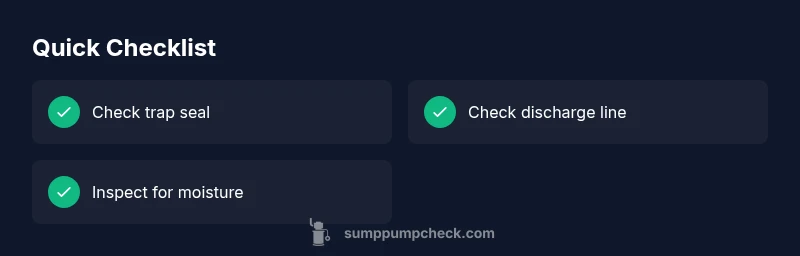
- Check the trap water level: if the water seal is low or dry, reseal by slowly pouring water into the trap until it creates a steady seal.
- Verify the discharge line: ensure it’s free of obstructions, points away from the foundation, and not routed into a gutter or drain.
- Inspect the sump cover and seals: a cracked lid or loose gasket can let odors escape.
- Look for mold and dampness on walls, floor, and around the sump area; address moisture issues promptly.
- Listen for sump pump cycling: frequent cycling or abnormal sounds may indicate pump or check-valve problems.
Diagnostic approach: symptom to diagnosis
The symptom here is a noticeable odor near the sump area. Start by classifying the odor: sewer-like, rotten eggs, moldy, or chemical. Sewer-like smells commonly point to a dry trap or sewer gas, while rotten-egg odors suggest hydrogen sulfide from stagnation. Moldy scents indicate damp conditions and poor ventilation. If the smell intensifies after a pump cycle or rainfall, drainage or backflow issues are likely involved. A methodical approach helps distinguish problems you can fix yourself from issues needing a professional. Sump Pump Check analysis shows that the interplay between trap seals, pit cleanliness, and discharge integrity consistently explains most odor scenarios. If odors persist after completing basic steps, consider professional inspection for potential sewer gas leaks or vent blockages.
STEP-BY-STEP: Fixes for the Most Common Cause
- Power down and safety check – unplug the sump pump and ensure the area is dry, then inspect for any obvious electrical hazards. Tip: never reach into a running unit; wait for the unit to be fully powered down.
- Refill and reseal the trap – carefully pour water into the floor drain trap to restore the seal. Tip: use clean water and observe the water level to ensure a proper seal.
- Clean the sump pit – remove sediment, debris, and biofilm from the pit walls and grate. Tip: wear gloves and eye protection to avoid contact with potentially contaminated material.
- Inspect the discharge line and check valve – ensure the line is free of obstructions, not kinked, and the check valve operates smoothly. Tip: pour a small amount of water into the sump to test valve function.
- Dryness and humidity control – address any signs of dampness with dehumidification and improved ventilation. Tip: set a humidity target around 40–50% if feasible.
- Re-test and monitor – reconnect power, run a test cycle, and observe whether the odor diminishes. If odor persists, record symptoms and consider professional evaluation. Tip: document odors correlated with rainfall or heavy use to aid diagnosis.
estimatedTime":"60-90 minutes"],
tipsList4nd5d4q4k1
tipsList2nd4k1
Steps
Estimated time: 60-90 minutes
- 1
Power down and safety check
Unplug the sump pump and ensure the area is dry before touching any components. This reduces the risk of shock and makes inspection safe.
Tip: Always assume electrical components can be live even if the area looks dry. - 2
Inspect and reseal the drain trap
Locate the floor drain that ties into the sump system. If the trap is dry, slowly pour clean water until the trap seal forms and remains steady.
Tip: Use distilled water if possible to avoid mineral buildup. - 3
Clean the sump pit
Remove standing water and loosen debris from the pit floor. Scrub the surfaces with a non-abrasive cleaner and rinse well to prevent biofilm formation.
Tip: Wear gloves, eye protection, and a mask if particles are present. - 4
Check discharge line and valve
Follow the discharge line to ensure it drains away from the foundation and that the check valve seals properly. Clear any clogs you find.
Tip: Perform a small water test to verify the valve holds pressure. - 5
Address moisture and ventilation
Use a dehumidifier and improve air circulation around the basement to reduce dampness that fosters mold and musty odors.
Tip: Aim for humidity around 40–50% if feasible. - 6
Test run and monitor
Plug the pump back in and run a test cycle. Note whether the odor diminishes and observe for any abnormal operation.
Tip: Keep a log of odor strength and pump behavior for future reference.
Diagnosis: Basement smells near sump area
Possible Causes
- highDry or faulty drain trap
- highStagnant sump pit with organic buildup
- mediumDischarge line issues or misrouting
- lowSewer backup or sewer gas entry
- lowMold or mildew from damp conditions
Fixes
- easyReseal the drain trap by adding water to restore the water seal
- easyClean the sump pit to remove debris and biofilm
- easyInspect and clear the discharge line and check valve
- mediumConsult a licensed plumber for sewer gas or venting problems
- easyAddress moisture and ventilation to prevent mold growth
FAQ
Why does my basement smell like sewer near the sump pump?
Sewer-like odors near the sump pump are typically caused by a dry drain trap, a stagnant sump pit, or a mis-sealed discharge line. Mold and dampness can worsen odors. A systematic check helps identify and fix the exact source.
Sewer odors near the sump pump usually come from a dry trap, a stagnant pit, or an issue with the discharge line.
Can mold cause a sump pump odor in a basement?
Yes. Damp basements foster mold growth, which can produce musty odors that are intensified by nearby water and humidity. Address moisture, clean affected areas, and improve ventilation.
Yes, mold can create musty smells in damp basements.
Is it safe to pour water into the trap to seal it?
Yes, adding water helps reseal a dry trap and block sewer gas. Use clean water and ensure the seal remains steady after replenishment.
Pour water into the trap to re-seal it, but do it carefully and observe the seal.
When should I call a plumber?
If sewer gas persists after resealing the trap, if you suspect a main line backup, or if you cannot locate the odor source, contact a licensed plumber for a detailed inspection.
Call a plumber if sewer gas is suspected or odors persist after basic fixes.
Can a blocked discharge line cause basement smells?
Yes. A clogged discharge line can trap odors in the pit or push gases back into the basement. Clearing the line and checking the valve helps.
A blocked discharge line can cause odors to linger in the basement.
Watch Video
Top Takeaways
- Inspect and reseal the trap to stop sewer gas ingress
- Keep the sump pit clean and free of debris
- Ensure the discharge line is clear and directed away from the home
- Address moisture to prevent mold and recurring odors