Smelly Sump Pump Troubleshooting: Fast, Safe Fixes
A practical, urgent troubleshooting guide to fix a smelly sump pump odor, diagnose causes, clean safely, and prevent basement odors.


The most likely cause of a smelly sump pump is odor-causing bacteria and organic buildup in the pit, or a clogged discharge that traps anaerobic water. Start with a quick pit cleaning and fresh water flush, then sanitize the pit and inspect the discharge path. If the odor persists, move to deeper cleaning and professional help as needed.
Understanding the Odor: Why a Sump Pit Smells
Odors from a smelly sump pump often start in the pit where water sits and bacteria bloom. When organic matter accumulates, it creates a biofilm that releases sulfurous or rotten-egg smells as water moves through the system. Poor ventilation, standing water, or damp pit walls can intensify the scent. In home basements, odors quickly become noticeable because the sump pit is a closed space with limited airflow. Addressing the root cause means looking beyond the pump itself to the pit environment, the discharge path, and how the system handles sewage or water from drains. By understanding how odor forms, you can build an effective, repeatable maintenance routine that reduces future smells and keeps your basement comfortable.
Common Causes of Smelly Sump Pumps
Smells in a sump pump setup typically come from three main sources: (1) biofilm and bacteria growing in the standing water, especially if the pit isn’t emptied regularly; (2) organic debris and sludge that accumulate in the pit, elbow joints, and pump housing, which ferment and release odorous gases; and (3) issues with the discharge line or venting that trap gases or allow backflow from the sewer line during heavy rain. Each cause requires a slightly different remedy, but all start with a controlled cleaning and a careful inspection of the system components. Regular maintenance dramatically reduces odor risk and prolongs pump life. As highlighted by the Sump Pump Check analysis, routine upkeep helps minimize odor-related complaints and keeps basements drier and more comfortable.
Immediate Quick Checks You Can Do Right Now
If you notice a smell, perform these checks before diving into deeper cleaning:
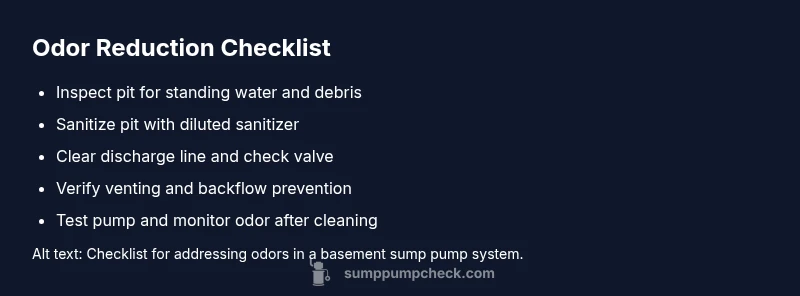
- Inspect the sump pit for standing water, sediment, or visible debris.
- Check the discharge line for clogs or kinks that block flow.
- Look at the check valve and venting path to ensure they are clear and correctly installed.
- Sniff near the discharge outlet; if the odor worsens when the pump runs, backflow or sewer gases could be involved.
- Ensure the area around the sump is well-ventilated during any cleaning. These checks are quick, low-risk steps that can reveal the most common odor drivers. If odor persists after these steps, move to a thorough cleaning and sanitizing routine.
Cleaning and Odor-Prevention Maintenance
A methodical cleaning routine can dramatically reduce smelly sump pump issues. Start by draining the pit and removing loose debris, then scrub the pit with a non-abrasive brush and a sanitizer or diluted chlorine solution, following label instructions. Rinse thoroughly with clean water and allow the pit to dry completely before refilling with water for testing. Clean all accessible surfaces of the pump and discharge pipe, paying special attention to corners where biofilm hides. After cleaning, reinstall any components securely and run the pump to observe whether the odor subsides. To prevent future smells, establish a regular maintenance cadence — quarterly cleanings plus an annual professional inspection help maintain odor control and system performance.
Drainage, Venting, and Backflow: Critical Pathways
Odors can travel through discharge piping if there is backflow or inadequate venting. Inspect the discharge pipe for blockages, ensure the check valve is functioning, and verify that the venting path (if present) is open and properly routed to prevent sewer gases from entering the living space. In some homes, a clogged sewer line during heavy rain can push foul gases back into the sump system. Correct venting and backflow prevention are essential for long-term odor control and for protecting your indoor air quality. If odors persist despite cleaning, review these components with a plumber to ensure code-compliant venting and drainage.
Safety First: Handling Chemicals and Electrical Components
Always power down the sump pump and wear suitable personal protective equipment when cleaning or inspecting. Use cleaning agents exactly as labeled and ensure the area is well-ventilated. Never mix cleaners with ammonia or bleach in a closed sump pit, as dangerous gases can form. Keep any electrical connections dry and respect the shut-off switch and power cord. If you’re unsure about wiring or pump integrity, stop and consult a licensed professional. Safety should govern every step of odor remediation and maintenance.
Prevention Habits: Create a Maintenance Schedule
Prevention is the best cure for a smelly sump pump. Create a basic maintenance calendar: quarterly cleanouts of the pit, annual checks of the discharge line and check valve, and a simple odor check after heavy rainfall. Keeping a maintenance log helps you notice trends and plan preventive actions. Consider installing a backup pump and a perimeter drainage check if odors recur during wet seasons. Strong, consistent upkeep minimizes odors and protects your home’s basement environment.
Verifying Odor Is Gone: Testing and Documentation
After completing cleaning and maintenance, run the pump and observe for several cycles to ensure odors do not return. Check the pit for residual dampness, inspect the discharge area for fresh water flow, and confirm that no new odors emerge during operation. Document the results in your maintenance log, noting date, steps taken, and any components replaced. If the odor remains, re-evaluate the pit’s sanitation, the drainage system, and venting with a professional.
Steps
Estimated time: 45-60 minutes
- 1
Power down and prep
Shut off power to the sump pump at the dedicated switch or circuit breaker. Remove the cover and put on protective gloves and eye protection. Gather cleaning supplies and a bucket for waste water before you begin.
Tip: Label the breaker or switch to prevent accidental re-energizing during work. - 2
Remove water and debris
Carefully scoop out standing water and remove any visible debris from the pit. Vacuum or towel dry to minimize splashing. This step reduces odor-carrying materials and prepares for effective cleaning.
Tip: Use a wet/dry vacuum if available for rapid water removal and to reduce mess. - 3
Scrub and sanitize the pit
Scrub the pit walls and bottom with a non-abrasive brush and a sanitizer or diluted bleach solution per label directions. Rinse thoroughly with clean water and repeat if necessary. Let the pit dry completely before refilling.
Tip: Ventilate the space well during sanitizing to avoid inhaling fumes. - 4
Inspect the discharge path and valve
Check for clogs or buildup in the discharge line and confirm the check valve works. Clear any obstructions and ensure the line is sloped correctly for drainage. Reinstall components securely.
Tip: Test the discharge by briefly pouring water to observe proper flow and valve function. - 5
Reassemble and test the system
Reconnect the pump, restore power, and run the unit for multiple cycles. Observe whether odors persist and monitor water movement in the discharge area. Confirm proper operation and absence of new odors.
Tip: Keep a log of test results and any changes to the setup for future reference. - 6
If odor remains, seek professional help
Persistent odors may indicate deeper bacterial contamination or sewer gas issues. Contact a licensed plumber, especially if you suspect sewer backflow or venting problems.
Tip: Document all steps taken so the pro can quickly assess the situation.
Diagnosis: Basement sump pit emits strong, foul odor or odor returns after cleaning
Possible Causes
- highOdor-causing bacteria and biofilm in standing water
- mediumAnaerobic sludge or hydrogen sulfide production from decaying matter
- lowBackflow or contamination from sewer/septic due to blocked discharge or faulty venting
Fixes
- easyDrain the pit and scrub with a sanitizer, then rinse thoroughly and allow to dry completely
- easyRefill with clean water and sanitize the pit with a diluted bleach solution per label, then flush
- mediumInspect and clean the discharge line and check valve; ensure proper venting and no backflow
- hardIf odor persists after cleaning and venting, contact a licensed plumber for bacterial remediation or system check
FAQ
Why does my sump pump smell after rainfall?
Heavy rainfall can push sewer gases back into the sump system or flood the pit with debris. Odor can also form if the system isn’t vented properly or if the pit contains stagnant water. Addressing venting, cleaning the pit, and clearing blockages usually resolves these odors.
Rain can push gases into the sump system or flood the pit with debris, creating odors. Clean and vent properly to fix it.
Can cleaning the sump pit fix the smell?
Yes, thorough cleaning and sanitizing the pit often eliminates odors. If the smell returns, check the discharge line and venting for backflow. Regular maintenance reduces recurrence.
Yes, cleaning the pit can fix it. If it comes back, check the discharge and venting, and keep up with maintenance.
Is it safe to use bleach in the sump pit?
Bleach can be effective when used properly, but always dilute according to label instructions and ensure good ventilation. Never mix with certain cleaners, and avoid overuse that could damage components.
Bleach can help if diluted and used with ventilation. Don’t mix cleaners or overuse.
When should I call a professional?
Call a professional if odors persist after cleaning, there is suspected sewer backflow, or venting and drainage appear faulty. A pro can assess bacterial remediation needs and verify code-compliant venting.
Call a pro if the odor persists or you suspect backflow or venting issues.
What maintenance helps prevent odors long term?
Regular pit cleanouts, periodic inspection of the discharge line and valve, and ensuring proper ventilation greatly reduce odor risk. Maintain a simple log and perform these checks especially after heavy rainfall.
Keep up with cleanouts, inspect discharge components, and ensure venting to prevent odors.
Could a clogged discharge cause smells?
Yes. A clogged discharge line can cause wastewater to back up or stagnate, leading to odors. Clear blockages and verify the slope and valve function to fix the issue.
A clogged discharge can cause smells—clear it and check the setup.
Watch Video
Top Takeaways
- Act quickly at first sign of odor to limit buildup.
- Regular maintenance reduces odor risk and protects the system.
- Inspect discharge and venting to prevent backflow.
- Call a pro if odors persist after cleaning.