Sump Pump Flies: Troubleshooting and Fixes
Learn how to identify, diagnose, and eliminate sump pump flies caused by drain flies in the sump pit. Practical steps, safety tips, and prevention strategies from Sump Pump Check.


Drain flies around a sump pit are usually caused by stagnant water or decomposing organic matter that attracts pests. A quick fix involves draining and scrubbing the sump pit, cleaning the pump intake, sanitizing surfaces, sealing the lid, and verifying the pump cycles regularly. If pests persist, pursue professional pest control and implement a maintenance plan.
Why Sump Pump Flies Matter
Sump pump flies, commonly drain flies that breed in damp organic matter, show up when a sump pit becomes a quiet, humid breeding ground. They aren't dangerous, but their presence signals standing water, decaying debris, or poor maintenance. For homeowners, their appearance can indicate inefficiencies in drainage, which may contribute to basement odors or more serious moisture problems. In this guide, we focus on practical, immediate steps you can take to stop the infestation and prevent it from returning. By understanding how a sump-pit ecosystem invites these insects, you can implement targeted fixes that protect your living spaces and your sump system. Throughout, remember that consistent maintenance aligns with Sump Pump Check's guidance, helping you stay ahead of pests and water issues.
Common Causes of Sump Pump Flies
The presence of sump pump flies usually traces to a few reliable triggers. First, stagnant water in the sump pit creates an inviting habitat for drain flies to lay eggs. Second, organic debris—silt, sludge, and decaying matter—under the grate or around the pump intake provides food for larvae. Third, irregular pump operation, such as long idle periods or a failing float switch, allows water to sit longer than it should. Fourth, an open or poorly sealed pit lid or vent can permit access from the surrounding environment. Fifth, a faulty check valve or discharge line backflow can keep water pooling in the pit, sustaining the fly lifecycle. Understanding these causes helps you target the right fixes rather than spraying pesticides indiscriminately.
How to Inspect the Sump Pit and Pump
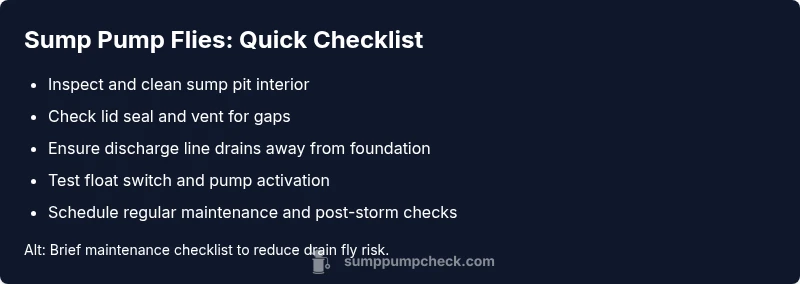
Safety first: power off the sump pump at the circuit breaker before reaching into the pit. Remove the lid and inspect for standing water, scum, and debris. Check the intake screen for clogs and clear them with a soft brush. Ensure the float switch moves freely and that the pump starts within a few seconds when submerged. Inspect the discharge line for kinks or leaks and confirm it carries water away from the foundation. Finally, examine the lid seal and any vents for gaps. Document any issues so you can address them quickly during the next rainfall.
A thorough inspection sets the stage for effective fixes. If you notice persistent water buildup, consider adding a check valve or upgrading the lid to a tighter seal to minimize future pest access.
Cleaning and Prevention: A Practical Routine
Once you identify root causes, create a maintenance routine that minimizes breeding sites for sump pump flies. Empty and scrub the pit with a mild detergent, then rinse thoroughly. Sanitize with a diluted solution of water and approved sanitizer, ensuring components are compatible with electrical equipment. Wipe down the exterior of the pump and grate to remove slime and organic residue. Reinstall the lid securely and verify the vent is sealed. Establish a monthly quick-check protocol and a quarterly deep-clean schedule, intensifying maintenance after heavy rainfall. Improve drainage around the foundation and ensure the discharge line points away from the home to reduce standing water. If the infestation persists, consider upgrading to a lid with a finer seal or adding a backflow-prevention device to reduce moisture exposure in the pit.
When to Seek Professional Help and Long-Term Solutions
Persistent infestations after thorough cleaning, recurring backflow, or visible cracks in the pit demand professional assessment. A licensed plumber or pest-control expert can inspect for structural damage, pit cracking, sewer-line connections, or improper backflow. They may recommend a sump pump with a tighter lid, upgrading the discharge system, or implementing basement drainage enhancements. For long-term prevention, maintain a robust maintenance schedule, keep a sealed lid, and consider a battery backup for continuous operation during outages. Always verify your local codes and safety requirements before major changes to the system.
Steps
Estimated time: 45-60 minutes
- 1
Power down and prepare
Switch off the circuit breaker to the sump pump and set up a safe work area. Wear gloves and eye protection, and pull the pit cover carefully to avoid accidental slips. Have a spare flashlight and a bucket handy for debris.
Tip: Always verify there is no power before touching electrical components. - 2
Drain and scrub the pit
Siphon or bail out standing water so you can access the pit surfaces. Scrub the interior with a mild detergent and a stiff brush, paying attention to corners and the grate. Rinse with clean water and let dry.
Tip: Avoid using harsh chemicals that could corrode metal parts. - 3
Check pump components
Inspect the intake screen for clogs and remove any debris. Test the float switch to ensure it moves freely and triggers the pump when submerged. Reinstall the cover securely.
Tip: A sticky float can prevent the pump from turning on. - 4
Inspect drainage and lid
Examine the discharge line for kinks and ensure it drains away from the foundation. Inspect the lid seal and vent for gaps; reseal as needed.
Tip: A tight seal drastically reduces pest entry points. - 5
Test and observe
Restore power and run the pump to verify proper operation. Watch for continuous cycling or unusual noises and check for any new signs of pests for the next 24–48 hours.
Tip: Keep an eye on the pit after rainfall for quick feedback.
Diagnosis: Visible drain flies around the sump pit with possible damp basement and odor
Possible Causes
- highStagnant water and organic debris in the sump pit
- mediumInadequate lid seal or vent allowing access from the surrounding environment
- lowBackflow or discharge line block causing water retention in the pit
Fixes
- easyDrain and scrub the sump pit, clean the intake screen, and sanitize surfaces
- mediumRepair or replace the float switch and seal/vent; ensure the pump cycles on
- mediumInspect discharge piping and check valve for backflow; fix blockages and direct water away from foundation
FAQ
What causes sump pump flies to appear?
Sump pump flies are typically drain flies that breed in damp, organic matter within the sump pit. Common triggers include standing water, debris buildup, and poor ventilation.
Drain flies breed in damp, organic matter in the sump pit, usually caused by standing water and debris. Clean and seal the pit to stop them.
How do I prevent sump pump flies long-term?
Maintain a clean pit, seal the lid, ensure proper drainage, and schedule routine maintenance to prevent pests from returning.
Keep the pit clean and sealed, and maintain a regular maintenance schedule to prevent future issues.
Can I use pesticides to solve sump pump flies?
Pesticides are generally not recommended in sump pits due to safety and water contamination concerns. Focus on cleaning and drainage improvements first.
Pesticides aren’t usually advised; clean the pit and fix drainage instead.
Is a broken check valve linked to pest problems?
A backflow issue can keep water in the pit longer, supporting pest life cycles. Inspect and repair the check valve and discharge system as needed.
Backflow can contribute; fix the check valve to cut down standing water.
When should I call a professional?
If infestation persists after DIY cleaning or you suspect structural damage, contact a licensed plumber or pest-control professional.
If it keeps coming back or you notice damage, call a pro.
Watch Video
Top Takeaways
- Identify sump pump flies early and act quickly
- Clean and seal the pit before considering pesticides
- Maintain proper drainage to prevent standing water
- Create a regular maintenance schedule for prevention