Split Sump Pump Cover Troubleshooting Guide
Urgent, practical guide for diagnosing and fixing a split sump pump cover. Learn quick checks, safety steps, and a step-by-step repair plan to prevent leaks and protect your sump pump system.


Split sump pump cover problems are typically caused by age, impact, or a loose fit. Quick fix: reseat the cover, clean the gasket, and tighten the latches; if the cover is cracked, replace it rather than attempting a patch. According to Sump Pump Check, addressing cover damage early saves you from expensive repairs and preserves the pump’s efficiency. Before you touch anything, power down the outlet and prepare the area for safe work.
Understanding the split sump pump cover and why it fails
The split sump pump cover is designed to keep debris out and reduce splash while the pump runs. Over time, UV exposure, temperature swings, and physical impacts from items dropped near the pit can crack or pry apart a two-piece lid. When a cover splits, debris can fall into the pit, moisture can reach electrical components, and the float switch may misread water levels. The result is more clogs, nuisance alarms, and unnecessary wear on the pump. According to Sump Pump Check, addressing cover damage early saves you from expensive repairs and preserves the pump’s efficiency. Before you touch anything, unplug the outlet, clear the area, and inspect for visible cracks so you know what you’re dealing with.
Common causes of split covers and misfits
Split covers happen for several reasons. Aging plastics become brittle, especially in basements with temperature swings. Physical impacts from moving equipment or heavy objects near the pit can pry the halves apart. Improper storage or incorrect size selection during replacement can leave a gap. A poor seal around the gasket allows moisture to wick between halves, accelerating further cracking. The most frequent scenario is a cover that started as a loose fit and then split under normal pump cycling. Keeping the cover clean, aligned, and free of debris helps extend its life. Sump Pump Check notes that a well-fitted, intact cover reduces noise and ensures the float switch operates without interference.
How to inspect the cover and pit for damage
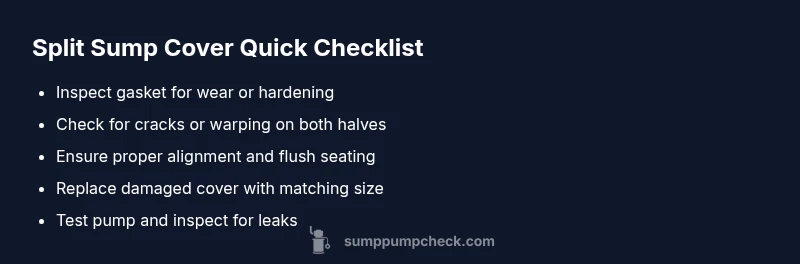
Start by turning off power to the sump pump and removing any tools from the pit area. Visually inspect both halves for cracks, warping, or missing clips. Check the gasket for tears or stiffening; a hardened gasket will not seal properly. Make sure the two halves align evenly and sit flat against the pit rim. Look for signs of moisture or rust around the pump head, which can indicate a leak behind the cover. If the split is narrow and the gasket is still pliable, you may seal the joint with an appropriate silicone, but only after confirming there are no electrical hazards. Document all damage you find to guide replacement decisions.
Safety considerations and what to check first
Always disable the power at the breaker before handling the sump pit. Use a dry, clean towel to protect your hands and a flashlight to inspect deep corners. Wear gloves to avoid sharp edges on old metal components. Do not lean heavy objects over the open pit and never work on a live electrical connection. If you smell or suspect a gas or fuel leak nearby, evacuate and contact a professional. When in doubt, treat any cover damage as a safety issue rather than a cosmetic one.
Replacement vs repair: making the right call
If the split is beyond a simple crack or the gasket shows wear, replacement is usually the safer and more cost-effective route. Epoxy or adhesive is not a long-term solution for a split cover, and a mis-seated or ill-fitting cover can compromise the entire sump system. When you replace, choose a cover that matches the original fit and has a gasket suitable for your climate. If you choose repair, a small crack can be sealed, but ensure the seal remains flexible and that the repair does not interfere with the float switch or alarm sensor.
Preventive maintenance: extending cover life
Regularly inspect the lid after heavy storms or basement floods, and reseal any gaps promptly. Keep the pit clean of dirt and sediment and check for corrosion around the pump base. Replace damaged clamps or fasteners to maintain a tight seal. Consider upgrading to a two-piece cover with a reliable gasket to facilitate cleaning and reduce the chance of future splits. Finally, document maintenance dates to track wear and establish a predictable replacement cycle.
Steps
Estimated time: 40-60 minutes
- 1
Power down and prep the area
Turn off the sump pump circuit at the breaker and unplug the pump if possible. Clear the area around the pit and lay down towels to catch any drips. This step minimizes electrical risk and keeps the work area dry.
Tip: Always verify power is off by testing the outlet with the device before touching anything. - 2
Remove the damaged cover
Gently lift or unclip the halves and move them aside. Note how the halves align for reassembly, and take a quick photo for reference. Keep track of all clips and fasteners as you remove them.
Tip: Keep track of small parts so nothing gets lost during disassembly. - 3
Inspect gasket and halves
Look for cracks, tears, and stiff seals on the gasket. Check both halves for warping or missing clips. If you see deep cracks or bent rims, plan for replacement rather than repair.
Tip: Mark the crack areas with a pencil to guide your decision on repair vs replacement. - 4
Clean and dry surfaces
Wipe all contact surfaces with a mild soap solution and a clean cloth. Rinse and dry completely to ensure a good seal when reassembling. Remove any debris from the pit rim that could prevent a flush fit.
Tip: Avoid harsh solvents that can degrade the plastic. - 5
Realign halves and reseat gasket
Position the halves evenly and press the gasket into place. Reattach clips or fasteners and confirm a uniform, flush fit around the rim. The goal is a stable, leak-free seal.
Tip: Listen for a soft click as fasteners engage; a loose fit can lead to leaks. - 6
Test run and monitor
Reconnect power and run the sump pump for several minutes. Observe for leaks around the rim and verify the float switch operates without obstruction. If you notice leaks or misreads, recheck alignment or plan a replacement.
Tip: Keep a towel nearby for any incidental splashes during testing.
Diagnosis: Split sump pump cover is cracked or mis-seated, causing leaks or debris entry
Possible Causes
- highAging plastic and UV exposure
- mediumImpact damage from nearby objects or heavy items
- lowImproper fit or misalignment after cleaning or replacement
Fixes
- easyReplace with a compatible cover or ensure a proper gasket seal
- easyClean and re-seat halves, tighten latches, and verify alignment
- mediumConsult a professional if there is structural damage or electrical concerns
FAQ
Why would a split sump pump cover crack or separate?
Cracks form from aging plastic, UV exposure, and impact. A split lid can allow debris to enter and may trigger alarms. Replace if structural integrity is compromised.
Cracks come from age, sun exposure, or impact.
Can I repair a split sump pump cover instead of replacing it?
Small cracks can sometimes be sealed with a flexible epoxy, but a split where halves no longer seal should be replaced for reliability.
Small cracks can be sealed, but replacement is safer.
How do I replace a split sump pump cover?
Identify the cover size, remove the old one, clean the pit lip, and install the new cover with the gasket; test for leaks.
Find the right size, remove the old cover, and install the new one.
Is it safe to DIY sump pump cover repair?
DIY can be safe if you shut off power, wear protective gear, and avoid working near live wiring. If you suspect electrical damage or complicated parts, call a pro.
Yes, with power off and caution; call a pro if in doubt.
How can I prevent future splits in the cover?
Inspect annually, avoid forcing fit, choose a durable gasket, and keep the pit area clear of heavy items.
Keep it clean, check the gasket, and handle gently.
Watch Video
Top Takeaways
- Inspect cracks before every heavy rain.
- Replace damaged cover promptly to prevent leaks.
- Ensure gasket seals properly for accurate readings.
- Maintain a simple maintenance log for the sump area.