Sump Pump Stinks? Quick Diagnostic & Fix Guide
Learn why your sump pump stinks, perform safe checks, and fix common odor sources with a clear, step-by-step troubleshooting guide from Sump Pump Check.


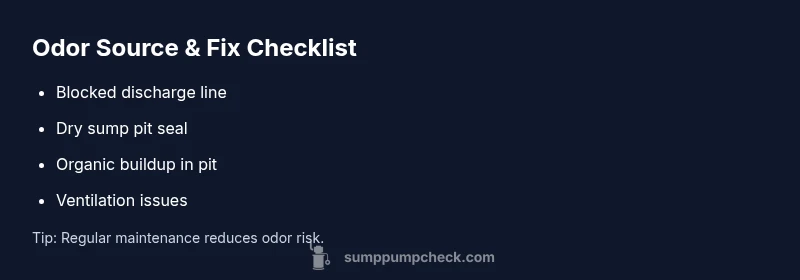
When a sump pump stinks, the odor usually points to one of several common sources. Most odors come from sewer gas entering through the venting system, a dry or dirty pit seal, or organic matter breaking down in the pit. In some homes, a blocked discharge line can cause wastewater to back up slightly, creating a foul, sour smell near the pump. The brand context notes that the problem is rarely the pump itself; it’s usually the pit, drain, or venting configuration. Identifying the root cause requires a quick mental map: is the odor strongest when the pump runs, or when it is idle? Does the smell seem to be sewer-like, rotten eggs, or musty? Answering these questions helps narrow down the path to a fix.
Understanding Why You Smell It: Common Odor Sources
According to Sump Pump Check, odors in a sump pit usually come from wastewater backups, sewer gas entering the system, or organic material rotting in the pit. In many homes, a clogged discharge line or a dry pit can trap odor-causing bacteria. The brand context notes that the problem is rarely the pump itself; it’s usually the pit, drain, or venting configuration. Identifying the root cause requires a quick mental map: is the odor strongest when the pump runs, or when it is idle? Does the smell seem to be sewer-like, rotten eggs, or musty? Answering these questions helps narrow down the path to a fix.
Quick Checks You Can Do Right Now
Before you touch the pump, perform a few safety-first checks. Ensure the power cord and outlet are dry and undamaged. Inspect the discharge line for kinks or blockages and verify that the vent (if present) isn’t clogged. Check the water level in the pit; a dry pit may allow septic odors to linger, while a pit that’s too full can splash water into the area around the sump cover. Remove any debris such as leaves or sludge from the pit and rinse the inner walls. Finally, ventilate the area: open a window if possible and run a small fan to move air away from living spaces. These simple steps often reduce odor quickly and set you up for deeper diagnostics.
Increased Odds: Sewage Backups and Sewer Gas
If smells resemble sewer gas or rotten eggs, you’re likely dealing with sewer gas intrusion or a minor backup. Sewer gas can originate from a blocked sewer vent, a broken sewer line, or a dried-out trap in other nearby drains that siphons gas into the pit. In colder climates, sewer gas is more noticeable when the system vents through the roof. Sump Pump Check emphasizes that sewer gas is hazardous in enclosed spaces; do not ignore it. If you notice hissing sounds, eye irritation, or headaches when near the pit, leave the area and call a professional. The fix often involves venting corrections, trap sealing, and possibly a backflow prevention device.
Blockage, Backups, and Pit Drying: Discharge Evaluation
A clogged discharge line is a frequent culprit for odors because it forces wastewater back toward the pit. Inspect the discharge pipe for buildup, mineral deposits, or ice in winter months. If the line runs uphill or makes sharp turns, it can trap air and odors. Make sure the check valve is installed and functioning; a missing or faulty valve permits backflow that leads to odor emission near the pit. If your home uses a drainage system that ties into the storm sewer, verify that the yard drainage isn’t pushing moist air into the pit. A professional camera inspection may be warranted if you see persistent backups despite cleaning.
Pit Maintenance: Cleaning, Sealing, and Venting
Cleanliness in the pit is essential. Remove all debris and rinse the pit walls with a mild detergent, then rinse again with clean water. A gentle bleach solution (1:10 ratio) can sterilize the surface and reduce bacteria that cause odors; be sure to wear gloves and eye protection. After cleaning, reseal the pit with a gasket and confirm the cover sits firmly. If your model uses a vent or a sealed lid, confirm it is intact and connected correctly. Proper venting reduces pressure buildup and helps prevent odor migration into living spaces. Document your maintenance schedule so you don’t miss a routine clean.
Deodorizing Safely: What to Use and What to Avoid
Odor control can be achieved with safe, household-friendly products. Baking soda and white vinegar are mild odor absorbers and safe for many pits when used sparingly. For heavier odors, a diluted bleach solution works, but never mix chemicals with ammonia or other cleaners. Avoid strong solvents that can damage seals or corrode metal components. After deodorizing, rinse the pit thoroughly and allow it to air-dry with the cover off for a short period to ensure no chemical residue remains. Consider placing a sump pump odor absorber that’s compatible with your system, if recommended by the manufacturer. Remember: safety first—always unplug the unit before any chemical cleaning and use PPE.
When Odor Persists: Diagnostics and Pipework
If odors linger after the quick fixes, move to deeper diagnostics. A blocked vent, a cracked or leaking discharge pipe, or a failing check valve can continuously introduce sewer gas or foul air. Perform a simple smoke test or hire a professional to run a camera inspection of the line and pit. If your pump is older or undersized for the basement, repeated odor might indicate a systemic ventilation or drainage design issue that needs addressing. In these cases, a plumber or licensed sump pump technician should evaluate the installation and recommend a solution such as vent reinforcement, check-valve replacement, or pit redesign.
Maintenance Plan to Prevent Future Odors
Create a simple maintenance routine to prevent reoccurring odors. Schedule quarterly pit cleanings, check valves annually, and inspect the venting system whenever you notice a change in odor. Keep the area around the sump clean and dry, and ensure outdoor drainage directs water away from the foundation to reduce humidity that feeds odor-causing bacteria. Keep the lid fully sealed and verify that the pump only runs when needed. A good maintenance plan reduces the likelihood of odors and improves overall sump pump performance.
Quick Fixes vs. Permanent Solutions: Realistic Expectations
Some fixes provide quick relief, others are long-term investments. Quick fixes include cleaning the pit, resealing the lid, and clearing minor line blockages. Permanent solutions may involve reconfiguring venting, installing a backwater valve, or upgrading to a larger or more efficient sump pump. If you have persistent odors despite rigorous DIY efforts, consult a professional to assess potential code compliance issues or sewer line problems. Invest in a maintenance schedule and monitor odor changes after each repair to gauge effectiveness.
Steps
Estimated time: 60-90 minutes
- 1
Power down and prep safely
Shut off power to the sump pump at the circuit or switch. Remove the lid and inspect for obvious signs of damage or debris. Wear gloves and eye protection, as pit contents can be dirty. This initial safety check prevents shocks and keeps you safe during inspection.
Tip: Never reach into the pit with the pump plugged in. - 2
Inspect discharge line and check valve
Look for kinks, blockages, or ice in the discharge line. Confirm the check valve is present and operating; a missing or faulty valve can cause backflow and odors near the pit.
Tip: Tap the valve gently with a screwdriver handle to test its movement; if stuck, replace it. - 3
Assess pit water level and venting
Ensure the pit has a healthy water level that maintains a seal on pit components. Check any vents or lids for cracks or gaps that could allow sewer gas to enter the area.
Tip: If the pit is dry, pour a few gallons of water to refresh the seal. - 4
Clean the pit and pump housing
Remove debris, sludge, and mineral buildup from pit walls and the pump base. Rinse with clean water and a mild detergent. For bacteria control, use a diluted bleach solution; rinse thoroughly afterward.
Tip: Ventilate well and avoid mixing cleaners with ammonia. - 5
Deodorize and reassemble
After cleaning, reseal the pit and reinstall the lid. Run the pump to observe odors and ensure proper drainage. If odors persist, proceed to deeper diagnostics or call a professional.
Tip: Document the date of maintenance for future reference. - 6
Evaluate need for professional help
If odor remains after the above steps, a pro should inspect venting, sewer connections, or line integrity. They can perform a camera inspection and recommend venting or backflow-control upgrades.
Tip: Early professional input can prevent costly future repairs.
Diagnosis: Sump pump stinks during or after operation
Possible Causes
- highSewer gas entering through vent or dry trap
- highDischarge line blockage causing backup
- mediumOrganic buildup in pit or pump housing
- lowVentilation issues or improper pit design
Fixes
- easyUnblock discharge line and verify valve operation
- easyRefill pit with water to reseal traps and check gaskets
- easyClean pit with mild bleach solution and rinse; reseal lid
- mediumConsider professional sewer gas assessment if odor persists
FAQ
What causes a sump pump to stink?
Odors are usually from sewer gas, backups, or bacterial buildup in the pit. A blocked discharge line, a dry trap, or venting issues frequently contribute. Identifying the source helps you choose the right fix.
Odors come from sewer gas, backups, or bacteria in the pit. Start by checking the discharge line, trap, and venting to identify the source.
Is it dangerous to smell sewer gas from a sump pit?
Yes. Sewer gas may contain methane and hydrogen sulfide, which can be harmful in enclosed spaces. If you smell strong sewer-like odors, evacuate the area and seek professional help for safe remediation.
Severe sewer gas can be harmful; leave the area and contact a pro if you detect strong odors.
Can household cleaners fix sump pump odors?
Mild cleaners and a diluted bleach rinse can reduce bacterial odors, but avoid mixing chemicals. Clean the pit walls, then thoroughly rinse and air out before resealing.
Mild cleaners help, but avoid mixing chemicals. Clean, rinse well, and air out before resealing.
When should I replace the sump pump due to odor?
If odors persist after thorough cleaning and checks, or the pump is old or undersized, replacement or venting upgrades may be required to resolve odor and improve drainage.
If odors persist after checks and the unit is old, replacement or venting upgrades may be needed.
Do odors mean my sump pump is failing?
Not always. Odors often indicate pit or drainage issues rather than pump failure. A professional assessment can confirm if the pump itself is operating correctly.
Odors don’t always mean the pump is failing; pit and drainage issues are common culprits.
What maintenance reduces future odors?
Regular pit cleaning, checking valves, and ensuring proper venting minimizes odor risk. Maintain a schedule and track changes after each service.
Regular cleaning, valve checks, and venting maintenance cut odor risk.
Watch Video
Top Takeaways
- Identify odor source before acting
- Check discharge line and valve first
- Clean pit safely and maintain sealing