How to Tell If Your Sump Pump Is Clogged: Quick Troubleshooting Guide
Urgent, practical guide to diagnose and fix sump pump clogs. Learn signs, a step-by-step diagnostic flow, safe fixes, and prevention tips to protect your basement from flooding.


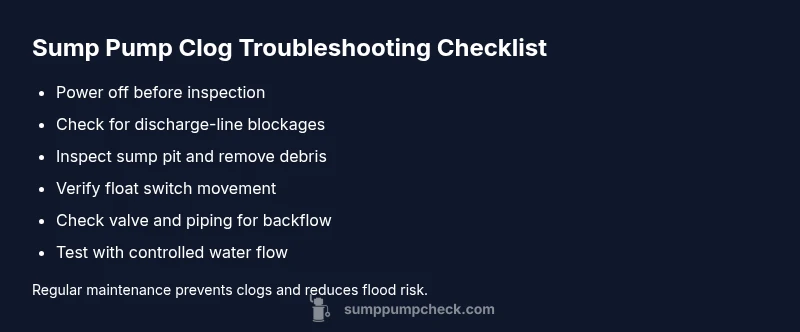
Most sump pump clogs stem from the discharge line or the impeller. The quickest fix is to disconnect power, visually inspect the basin, clear debris from the inlet and discharge path, and test the pump with a controlled water flow. If water still drains slowly, proceed to a deeper diagnostic using the flow-check steps below.
What a clogged sump pump looks like and why it happens
If you’re wondering how to tell if sump pump is clogged, start by understanding the symptoms. According to Sump Pump Check, many homeowners underestimate how quickly clogs form in the discharge line and impeller due to debris, sediment, or mineral build-up. A clogged unit often presents as slowed drainage, a pumping effort that seems excessive, or the basin filling faster than the pump empties it. In basements, a clog may be triggered by roots in the discharge pipe, leaves and dirt in the sump pit, or a failing check valve that traps water. Being able to recognize these visual cues helps you act fast and prevent basement flooding.
Key signs include water pooling around the discharge area, the pump running for long periods without fully clearing the pit, unusual noises, and backups that occur after a rain event. If your discharge line is blocked, water will back up into the pit or overflow into the sump pit. Before you call a pro, you can rule out simple culprits like loose hose connections, a kinked discharge pipe, or a clogged check valve. This section lays out practical steps to identify and confirm a clog in plain terms.
Common signs your sump pump is clogged
Look for telltale indicators that point toward a clog. A pump that runs almost continuously, yet fails to move water, is a red flag. Slow drainage or a basin that refills quickly after each cycle is another sign. Visible debris in the sump pit, a heavy whispering or grinding sound, or water backing up into the basement during a rainstorm all hint at a blockage. The float switch may not rise properly if debris or slime prevents it from moving. If your check valve sticks, water can flow backward, fooling you into thinking the pump is weak. Remember, sometimes the issue isn’t the pump at all but the discharge line or piping. This block also notes that, as noted by Sump Pump Check, most clog-related issues originate in the discharge path and can be resolved with quick checks before replacing equipment.
Check the simplest, most common causes first
Start with quick, low-effort checks you can do without special tools. Inspect the power source: ensure the outlet has power and the GFCI or breaker hasn't tripped. Inspect the sump pit for an accumulation of debris. Clear leaves, sand, or mud from the inlet screen. Check the discharge piping for kinks, sagging, or a collapsed hose. Examine the check valve near the discharge outlet for corrosion or sediment buildup. Also look at the float switch; it should travel smoothly and shut off when the water rises. If any of these are off, you’ve likely identified the culprit and can fix it quickly.
A step-by-step diagnostic flow you can follow
This diagnostic flow helps you go from symptom to diagnosis to solution in a structured way:
- Symptom: Water collects in the sump basin or water backs up during heavy rain.
- Diagnosis: Identify whether debris, obstruction, or a faulty float is the culprit.
- Solution: Clear the line, clean the impeller, or adjust the float as needed. If the issue persists, proceed to more detailed checks below.
If the pump runs but water drainage is slow, you may be dealing with a discharge-line blockage or a stuck float. Following the flow below ensures you cover the most common, fixable causes first and reduces unnecessary part replacements.
How to fix the most common clog: the drain line and impeller
Fixing the two most frequent culprits—drain line blockage and impeller debris—resolves many clogs without replacing the pump. Start by powering off the pump and removing the lid. Inspect the discharge line for kinks or crushes and clear any visible debris. Next, remove the pump inlet screen and gently remove debris or sediment from the impeller area. Reassemble, then perform a controlled water test to confirm flow. If water still backs up, move to testing the float switch and check valve.
Safety, prevention, and when to call a pro
Always prioritize safety. Wear gloves and eye protection when handling the sump basin, and ensure electricity is disconnected before touching any wiring. Do not attempt complex disassembly if you are unsure—water and electricity are a dangerous mix. To prevent clogs, schedule regular inspections of the discharge line, keep the basin clean, replace a failing check valve, and consider a monthly maintenance routine during wet seasons. If you encounter persistent issues or notice electrical hotspots, contact a licensed plumber or sump-pump specialist for a professional assessment.
Steps
Estimated time: 45-60 minutes
- 1
Power off and secure the area
Turn off the sump pump at the breaker and unplug the unit. Wear protective gloves and safety glasses before touching any components. Remove the sump lid carefully to expose the basin.
Tip: Never service a live electrical appliance near water. - 2
Check the discharge line for blockages
Inspect the discharge pipe for kinks, clogs, or ice buildup. Use a garden hose or hand to gently flush the line from the pump outward to clear obstructions.
Tip: Work from the pump outward to avoid pushing debris back toward the basin. - 3
Clean the basin and impeller area
Remove debris from the sump pit and lift out any tangled material around the impeller. Gently rotate the impeller by hand to ensure it moves freely.
Tip: Take care not to bend or break the impeller blades. - 4
Test and adjust the float switch
Make sure the float arm moves smoothly and rises with water level. If it sticks, adjust its position or replace if necessary. Reassemble the lid.
Tip: A misaligned float switch can prevent the pump from shutting off. - 5
Inspect the check valve and piping
Look for corrosion, sediment, or cracks in the check valve. Clean or replace as needed and ensure the valve seals properly to prevent backflow.
Tip: A faulty check valve can mask an otherwise healthy pump. - 6
Run a controlled water test
Reconnect power, slowly run water into the sump to simulate rainfall, and observe pump operation. Confirm steady drainage and proper shutoff.
Tip: Document results for future reference and maintenance planning.
Diagnosis: Water in the basement during rain or heavy showers; pump runs but drains slowly or not at all.
Possible Causes
- highDischarge line blockage or kinks
- highImpeller jam or debris in the pump
- mediumFloat switch stuck or misadjusted
- mediumPower supply issues (tripped breaker or GFCI)
- lowCheck valve failure causing backflow
Fixes
- easyClear the discharge line and remove any visible debris
- easyInspect and clean the sump basin and impeller area
- easyInspect, adjust, or replace the float switch if needed
- easyReset breakers or test the electrical outlet supplying the pump
- easyInspect the check valve and piping for backflow or blockage
FAQ
What are the most common signs of a clogged sump pump?
Common signs include the pump running continuously without moving water, slow drainage, water backing up in the basement during rain, unusual noises, and debris in the sump pit. Checking the discharge line and the float switch can help confirm the clog before replacing parts.
You’ll usually notice continuous running, slow drainage, or water backing up after rain. Check the discharge line and float switch to confirm a clog before replacing parts.
Can a clogged sump pump cause basement flooding?
Yes. A clog can prevent water from being pumped out efficiently, allowing water to rise in the sump pit and potentially flood the basement during heavy rainfall.
Yes. A clog can stop the pump from draining water fast enough, leading to basement flooding in heavy rain.
How often should I inspect and clean my sump pump to prevent clogs?
Inspect and clean the sump pump every 6-12 months, and perform a quick test after major storms to ensure reliability.
Inspect every 6 to 12 months and test after big storms to stay ready.
Is it safe to run a sump pump if it’s clogged?
Running a clogged pump can cause overheating or electrical hazards. Power off, inspect, and clear obstructions before restoring operation.
No. It can overheat or become unsafe; turn it off and inspect first.
When should I replace a sump pump instead of repairing it?
Consider replacement if the impeller or motor shows persistent failure, if the pump is frequently clogging despite maintenance, or if it's more than 8-10 years old.
If it keeps clogging or is old and failing, replacement is often the better option.
Watch Video
Top Takeaways
- Identify the discharge path first to locate clogs
- Clear the line and debris before evaluating the pump itself
- Test in a controlled way after each fix
- Regular maintenance prevents future clogs
- Call a pro if electrical or persistent issues arise