How to Tell If Your Sump Pump Is Air Locked
Diagnose and fix air locks in your sump pump with a step-by-step guide. Learn symptoms, safe checks, diagnostic flow, and prevention tips to avoid future air locks.


According to Sump Pump Check, an air lock in a sump pump is usually caused by a trapped air column in the discharge or suction path. The quickest fix is to bleed the line, reseat the check valve, and confirm the pit has adequate water. If discharge remains blocked, follow the diagnostic flow for safe, thorough troubleshooting.
What is an air lock and why it matters
An air lock is a pocket of trapped air in the sump pump's discharge or suction path that prevents water from moving freely. In practical terms, an air lock reduces discharge capacity, causes the pump to run without effectively clearing the pit, or even create air spurts in the pipe. Air locks most often happen after a period of inactivity, a long dry spell, or when the discharge line has been disturbed during maintenance. According to Sump Pump Check, air locks are a common, fixable problem that homeowners can address with a methodical approach. Understanding how air moves in the system helps you decide whether you need to bleed air, reseat fittings, or check the ventilation. The key idea is to restore a continuous water column from the pit through the discharge, so the pump can push water out efficiently. If your system uses a check valve or a backflow preventer, misalignment can also trap air and cause intermittent discharge.
Signs your sump pump might be air locked
Common symptoms include a weak or inconsistent discharge, air bubbles in the line, the pump running but water remaining in the pit, unusual noise from the discharge pipe, or a sudden change in discharge rate after a disturbance in the system. If you observe these signs, you may be dealing with an air lock rather than a stuck impeller or a clogged line. How to tell if sump pump is air locked often depends on whether the problem follows a discharge pathway or a suction issue. According to Sump Pump Check, continued discharge of air without effective water movement is a strong hint of an air lock that requires a careful bleed and check of fittings to restore a free water column.
Safety first: disconnect power and prepare tools
Before you touch anything, switch off the sump pump at the breaker and unplug the unit. Have a bucket, towels, adjustable wrenches, and safety gloves ready. Avoid working in a wet area or with wet hands around electrical outlets. If you have any doubt about the wiring or water access, stop and call a professional. Safety is non-negotiable, and following standard electrical precautions protects you and the home. This is particularly important when you plan to interact with the discharge line, check valve, or pit cover.
Quick checks you can perform before disassembly
Start with non-invasive checks to rule out obvious issues. Ensure the power is disconnected, verify the pit has water to prime the pump, inspect the float switch for freedom of movement, and look for visible blockages in the intake screen. Check the discharge line for kinks, cracks, or obstructions. Confirm the check valve orientation and seating at the pipe entrance. If you notice corrosion or loose joints, address them carefully after turning off power. These steps help you gauge whether you’re facing an air lock or a separate mechanical problem.
The diagnostic flow for air-locked sump pumps
Symptoms → probable causes → fixes. If the pump runs but discharge is weak or non-existent, suspect an air lock in the line or a mis-seated valve. If water appears to back up or gurgle, examine the check valve and possible leaks. If there’s steam or noticeable heat coming from the discharge, stop and verify the power supply and wiring with a professional. Follow the flow: bleed air, reseat fittings, test discharge, and observe performance across several cycles.
Step-by-step fix: bleeding air from the discharge line
- Reconfirm power is off and the area is dry. 2. Loosen a union or bleed-cap on the discharge line (if present) and have a towel ready to catch any escaping water. 3. Gently loosen until air escapes with water, then retighten securely. 4. Check that the line is pitched away from the foundation and reconnected fully. 5. Reconnect power and run the pump to observe discharge. 6. If air bubbles continue, proceed to the next step. Pro tip: never force fittings; a small, steady bleed is safer than a wrench-tight effort.
Step-by-step fix: check valve, seals, and intake seating
- Locate the check valve in the discharge line and inspect its seat for debris or corrosion. 2. Remove and reseat the valve if needed, ensuring it points in the correct direction for water flow. 3. Inspect gaskets and seals around the pump housing for cracks or wear; replace if necessary. 4. Inspect the sump pit intake screen; clear any debris blocking water entry. 5. Reassemble, re-test with power on, and watch for a steady, unobstructed discharge. Tip: a loose valve can reintroduce air into the line.
Prevention and long-term maintenance to avoid air locks
Regularly inspect the discharge line for clogs, leaks, and proper slope. Keep the sump pit clean and ensure the float switch moves freely. Check the check valve annually and replace worn seals. Consider a backup pump for reliability in heavy rainfall or power outages. By scheduling routine maintenance, you reduce the chance of future air locks and extend the pump’s life.
Steps
Estimated time: 30-60 minutes
- 1
Power down and prep
Verify the pump is off at the breaker and unplug the unit. Put on gloves and lay towels to absorb water. This prevents shocks and reduces mess as you begin checks.
Tip: Never work on electrical equipment while standing in water. - 2
Inspect for obvious blockages
Check the sump pit intake screen and the visible portions of the discharge line for debris, leaves, or sediment. Remove obvious obstructions to restore water flow.
Tip: Use a flashlight to spot hidden debris in dim basements. - 3
Bleed air from the discharge line
Carefully loosen a discharge line fitting or a bleed cap to release trapped air. Allow water to flow out until a steady stream replaces air bubbles. Retighten securely.
Tip: Do not force fittings; a slow bleed is safer. - 4
Check valve and fittings
Inspect the check valve orientation and seating. Reseat or replace if you see corrosion, cracks, or improper direction of flow.
Tip: A misoriented valve can reintroduce air into the system. - 5
Test the pump after reseating
Reconnect power and run the pump for several cycles. Confirm consistent discharge without air spurts and ensure the water level in the pit drops normally.
Tip: Record observations to compare with future tests. - 6
Final inspection and cleanup
Recheck all connections, tighten fasteners, and ensure the area is dry. Keep a maintenance log for future reference.
Tip: Set reminders for annual valve and pipe checks.
Diagnosis: Sump pump runs but water is not being discharged or discharge is weak
Possible Causes
- highAir lock in discharge line
- mediumClogged or blocked discharge pipe
- lowFailed check valve or loose fittings
Fixes
- easyBleed air from the discharge line and reseat the check valve
- easyUnblock and straighten the discharge pipe; re-secure joints
- mediumInspect and reseat the check valve and replace worn seals
FAQ
What causes an air lock in a sump pump?
An air lock happens when air becomes trapped in the discharge or suction path, preventing water from flowing. It often follows maintenance, movement of pipes, or dry periods when air pockets form. Bleeding the line and reseating fittings typically resolves it.
Air locks happen when air gets trapped in the pipe. Bleed the line and reseat fittings to restore water flow.
How can I tell if my sump pump is air locked versus clogged?
Air lock shows sudden loss of discharge with air bubbles and a pump that cycles without moving water. A clog usually causes a complete lack of flow or a sluggish discharge due to debris. Perform the quick checks: screen, line, and valve, then bleed if air is suspected.
If you see air in the line but water isn’t moving, that’s likely an air lock; a clog blocks water flow entirely.
Is it safe to bleed air from the discharge line myself?
Yes, as long as you cut power first and use gloves. Slowly release air from the line through a bleed point or cap, keeping towels handy to catch water. If you smell burning plastics or see wear, stop and call a professional.
Yes, with power off and careful handling. If anything looks damaged, call a pro.
What maintenance prevents air locks from returning?
Regularly inspect the discharge pipe, valve, and pit screen. Ensure proper line pitch and that the pit stays clean. Schedule an annual check of the valve and seals to prevent air from forming pockets.
Keep the line clean and checked every year to prevent air pockets from forming.
When should I replace a sump pump due to air lock issues?
If the pump frequently loses prime or fails to discharge after testing, or if the impeller or seals show wear, replacement may be more cost-effective than repeated repairs.
If it keeps failing after fixes, it might be time to replace the unit.
Watch Video
Top Takeaways
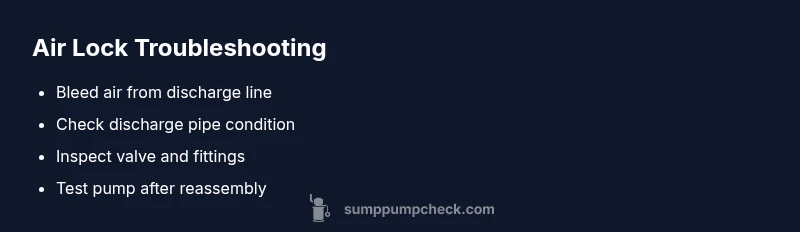
- Bleed air from discharge line as first fix
- Check valve seating and pipes for air leaks
- Regular maintenance reduces air-lock risk
- Test after any adjustment to confirm proper discharge