Check Valve Leaking Sump Pump: Urgent Troubleshooting Guide
Urgent guide to diagnose and fix a leaking check valve on your sump pump. Learn common causes, safety steps, and a clear fix plan to prevent basement flooding in 2026.


A leaking check valve is usually caused by a worn valve seat or a failed seal. Begin by confirming correct orientation and tightening fittings, then test with water flow and observe for leaks near the discharge. If leaks persist, replace the valve for a reliable seal.
What a check valve does and why a leak matters
A sump pump system relies on a check valve to keep water moving in the correct direction—out toward the discharge line—and to prevent backflow into the sump pit when the pump stops. When the valve seats properly, you won’t see water traveling backward. A check valve leaking sump pump disrupts this one-way flow, reducing efficiency and potentially backing water into the pit or basement. According to Sump Pump Check, leaks in check valves are a common sump-pump problem homeowners encounter in 2026, often after heavy rains or rapid temperature changes. Leaks can also cause noise and backpressure in the discharge line, leading to unnecessary cycling. The good news is that many leaks are fixable with basic tools and careful attention. This section sets you up with a safe, methodical diagnostic and repair plan you can perform as a DIY, with guidance on when to call a professional.
Common signs of a leaking check valve
"Backflow" is the most telltale sign: water appears to travel back into the pit or out of the discharge line after the pump shuts off. You might hear gurgling or a fluttering sound in the discharge pipe, especially during or after rain events. Damp spots along the valve body, a misty discharge, or a faint odor near the valve can indicate seepage. If the valve was installed incorrectly, such as the arrow pointing the wrong way, leaks may appear after pump operation. Sump Pump Check analysis shows that many homeowners confuse a valve leak with a failing pump, leading to unnecessary replacements. Document symptoms with photos and timestamps to help troubleshoot and compare with later tests.
Immediate safety steps before you start
Safety first: unplug the sump pump and switch off the circuit at the breaker before touching any components. Drain the sump pit safely to avoid splashing; wear eye protection and gloves. Keep children and pets away from the work area, and never work near standing water around electrical outlets. Gather tools: bucket, adjustable wrench, pliers, Teflon tape, replacement check valve, flashlight. Ensure the area is dry and well-lit, and follow local codes. If you’re unsure at any point, pause and contact a licensed plumber or electrician. This approach minimizes electric shock risk while letting you work methodically.
Quick checks you can perform to narrow down the leak
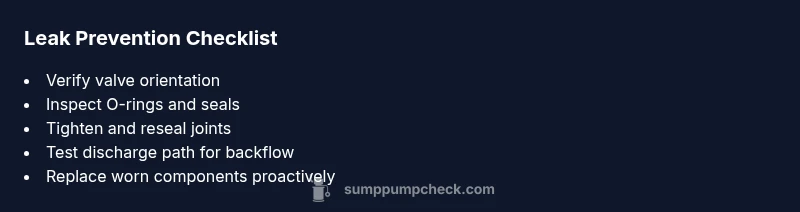
Start with simple physical checks: verify the valve orientation and ensure the flow arrow points toward the discharge. Tighten all fittings, re-seat the valve if needed, and inspect the O-ring or gasket for cracks. A quick water test helps: slowly pour water into the pit and watch for backflow as the pump cycles. If backflow persists after reseating, the valve is likely defective. Don’t overlook the discharge piping, clamps, or elbows—loose parts can mimic valve leaks. Sump Pump Check reminds homeowners that many leaks originate from joints or fittings rather than the valve core itself, so inspect the entire discharge path.
Diagnostic-flow overview (how symptoms translate to fixes)
Symptoms such as visible backflow or discharge leakage lead to a high-lidelity diagnosis: worn valve seat or improper installation are the top culprits, followed by cracked piping or loose clamps. The approved sequence is to confirm orientation, test with water, inspect the seat and gasket, and then replace the valve if needed. By isolating the valve from the discharge line during testing, you can confirm whether the leak persists. If the discharge line or clamps are faulty, repair those components to restore a leak-free system. Always test after any adjustment to verify a successful fix.
Step-by-step fix for the most common cause (valve replacement overview)
- Power down and prep: unplug the sump pump and verify the circuit is off. 2) Remove the pump to access the check valve. 3) Detach the old valve and inspect the seat and gasket for wear or damage. 4) Install the new valve with the correct orientation (arrow toward discharge) and snug fittings. 5) Reattach the discharge piping, apply Teflon tape where needed, and tighten clamps. 6) Restore power and test the system with water to confirm no backflow. 7) Clean up and monitor for leaks over the next 24–48 hours. Tip: take photos during each stage to document what you did for future reference.
Prevention and maintenance to avoid future leaks
Create a simple maintenance routine: inspect the valve annually, ensure fittings stay tight, and keep the discharge line clear of debris. Use corrosion-resistant valves and quality O-rings, and replace aging components before failure. Maintain the pit’s water level and check for signs of backflow after heavy rain. A small investment in proactive care reduces the risk of basement flooding in 2026 and beyond. Pro tip: schedule a yearly test after winter thaw to catch temperature-related issues early.
When to call a professional
If you’re unsure about electrical safety, or if the leak persists after a valve replacement, consult a licensed plumber. A pro can verify integration with the sump-pump system, check for hidden cracks in the discharge piping, and ensure the pump and venting are correctly configured to prevent future failures. Quick professional help can save time and prevent costly water damage.
Steps
Estimated time: 45-90 minutes
- 1
Power down and prep area
Unplug the sump pump and switch off the circuit at the breaker. Remove any standing water from the pit and lay out towels or a pan to catch spills. This keeps you safe as you inspect components.
Tip: Never work on the system while it’s plugged in; electrical safety first. - 2
Access the valve
Move the pump aside to reach the check valve. If the valve is part of a tight coupling, you may need to loosen clamps and disconnect piping. Take a quick photo before removal to document orientation.
Tip: Photos help ensure you install the new valve in the correct direction. - 3
Remove old valve and inspect seating
Carefully detach the old valve and examine the seat and gasket for wear, cracks, or deformation. If the seat is pitted or the gasket is brittle, replacement is likely necessary.
Tip: Check both ends for residue that may hinder a proper seal. - 4
Install new valve with correct orientation
Install the replacement valve with the correct orientation (arrow toward the discharge). Tighten fittings securely, using Teflon tape on threaded joints if required.
Tip: A snug but not over-tightened fit prevents leaks without damaging threads. - 5
Reconnect discharge piping
Reconnect the discharge pipe, reseat clamps, and ensure the line is clear and sloped away from the pit. Ensure any joints are clean and dry before final tightening.
Tip: A clean connection reduces the chance of future leaks. - 6
Test the system
Plug the unit back in and run the pump with a small amount of water in the pit. Observe for backflow or leaks at the valve and along the discharge path.
Tip: If you see any dripping, recheck fittings or replace the valve again.
Diagnosis: Water backs up into discharge or sump pit when the pump runs
Possible Causes
- highWorn or damaged check valve seat and seal
- mediumImproper installation or orientation of the check valve
- lowCracked or loose discharge piping allowing backflow
Fixes
- easyReplace the check valve with a new unit and ensure correct seating orientation
- easyReorient valve and tighten fittings; apply Teflon tape where needed
- mediumInspect and replace damaged discharge piping or clamps
FAQ
How do I tell if my check valve is leaking?
Look for backflow when the pump stops, damp areas near the valve, gurgling sounds, or water in the pit after operation. Also verify the valve orientation and inspect the O-ring for wear.
You’re likely dealing with a leak if water flows back into the pit after the pump stops or you hear gurgling near the discharge.
Can a leaking check valve cause water in the basement?
Yes. A leak can allow water to back up into the sump or basement if the check valve fails to seal properly. This is a common cause of basement water problems during heavy rainfall.
Yes—that backflow can lead to basement water if the valve isn’t sealing.
Do I need to replace the entire sump pump if the check valve leaks?
Usually not. Replacing the valve is often enough. A leaking valve can be fixed with a replacement valve or re-seating if installed incorrectly.
Not usually—the valve replacement is typically sufficient.
What is the difference between a check valve and a float switch?
A check valve prevents backflow in the discharge line, while a float switch regulates when the pump turns on and off. They serve different functions in the sump system.
A check valve stops backflow; a float switch controls pump operation.
How often should I inspect the check valve?
Inspect during annual sump-pump maintenance or after major weather events. Look for signs of wear, leaks, or misalignment and replace as needed.
Check your valve once a year and after big storms.
Is it safe to DIY check valve replacement?
If you’re comfortable with basic plumbing and electrical safety, DIY can be safe. Follow steps carefully, unplug the unit, and test thoroughly. If unsure, hire a professional.
If you’re comfortable with plumbing basics, you can do it yourself, but don’t hesitate to call a pro if you’re unsure.
Watch Video
Top Takeaways
- Replace worn check valves instead of replacing the entire pump
- Shut off power before any repair and test afterward
- Confirm correct valve orientation to prevent backflow
- Inspect discharge piping for leaks or loose clamps
- Regular maintenance reduces basement flood risk