Broken Sump Pump Flooded Basement: Troubleshooting Guide
Urgent, practical troubleshooting for a broken sump pump causing basement flooding. Quick checks, step-by-step fixes, safety tips, and when to call a pro.


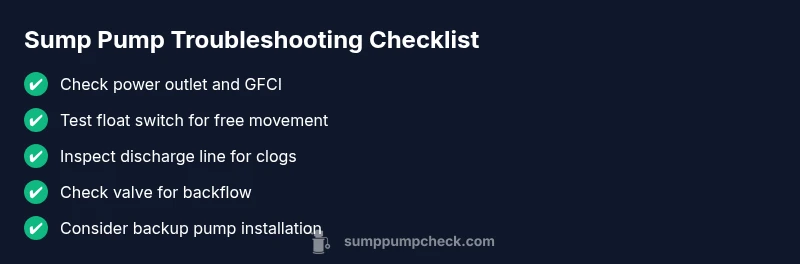
According to Sump Pump Check, most basement floods from a broken sump pump occur when the unit can’t keep up with incoming water. Start with a quick check: confirm power at the outlet, test the float switch for binding, and inspect the discharge hose for clogs or kinks. If water continues to rise, switch to a backup pump or call a pro for a deeper diagnosis.
Problem overview
When a sump pump fails or operates improperly, a basement can flood quickly, turning a manageable water event into a costly emergency. The phrase “broken sump pump flooded basement” isn’t just alarmist—it's a real risk homeowners face after heavy rainfall, rapid snowmelt, or a high-water table. In many cases, the flood results from a pump that won’t start, won’t run long enough, or won’t move water effectively. In these situations, water can rise in minutes, threatening stored belongings, foundations, and electrical systems. According to Sump Pump Check, maintaining a functioning sump pump is a cornerstone of reliable basement drainage. This guide walks you through practical, urgent troubleshooting steps you can perform safely, followed by a clear plan to restore pumping while minimizing re-flood risk. You’ll learn how to identify the most common failure modes and how to pursue fixes with the right balance of speed and safety.
Steps
Estimated time: 60-90 minutes
- 1
Power down and safety check
Before touching anything, unplug the sump pump or switch off the circuit at the breaker. Verify you’re not standing in water with wet hands or on a damp surface. This minimizes the risk of electric shock while you inspect the pump and pit.
Tip: If you smell burning plastic or see arcing, stop and call a licensed electrician or plumber immediately. - 2
Inspect the sump pump and float switch
Remove any debris from the pump inlet and sump area. Manually lift the float to confirm the switch engages and the pump starts. If the pump doesn’t start on power, the issue may be electrical or internal.
Tip: Avoid forcing the float; a stuck switch is often caused by sediment or a misaligned float rod. - 3
Check the discharge path
Trace the discharge line from the sump to the exterior. Look for clogs, kinks, or a frozen line. Ensure the line runs downhill and ends with a proper outlet to divert water away from your foundation.
Tip: A misrouted line can cause backpressure that stops the pump from evacuating water efficiently. - 4
Test with power restored
Reconnect power and run the pump while observing water removal. If water continues to accumulate, the problem may be a faulty pump or an undersized unit for the inflow rate.
Tip: Take note of the pump’s cycling pattern; frequent on/off cycling can shorten pump life. - 5
Consider a backup option
If the main pump shows signs of failure or you can’t restore operation quickly, switch to a backup pump or portable generator as a temporary measure. This reduces ongoing flood risk while you plan a permanent fix.
Tip: Backups are a smart investment in flood-prone areas. - 6
Plan for professional sizing and replacement
If tests indicate a failing pump, arrange for replacement with a model appropriately sized for your basement’s square footage and expected inflow. A pro can confirm wet well dimensions, discharge capacity, and proper check valve installation.
Tip: Incorrect sizing or improper check valve installation can cause future floods.
Diagnosis: Basement water rising around sump pit after heavy rain
Possible Causes
- highPower issue (outlet dead, tripped breaker, or GFCI trip)
- highStuck or damaged float switch preventing pump from cycling
- mediumClogged or disconnected discharge line or kinked hose
- mediumDamaged impeller or worn motor reducing pump head
- lowBackflow through discharge line or failed check valve causing water to re-enter pit
Fixes
- easyCheck the outlet, test the GFCI, and reset any tripped breakers; ensure the pump is plugged in and receiving power
- easyInspect the float switch: free it from debris, ensure it moves without obstruction, and verify it rises and falls freely
- easyClear the discharge line of any debris, kinks, or blockages and confirm proper slope away from the pit
- mediumTest the impeller and clean the pump’s interior; if worn, consider professional service or replacement
- hardIf the pump is failed or undersized, install a backup pump or battery backup and consult a pro for sizing
FAQ
What are the first signs my sump pump is failing?
Common signs include frequent beeping from the sump pit, the pump not turning on, frequent cycling, or water pooling around the pit after rainfall. If you notice any of these, begin safety checks and testing.
Look for alarm sounds or water around the pit. If you hear beeps or see water, start testing the pump and power right away.
Is a backup sump pump necessary for every home?
A backup sump pump is highly recommended in flood-prone areas or where power outages are common. It provides an extra layer of protection when the primary pump fails or during an outage.
If your area floods often or power outages are common, a backup pump is a smart safeguard.
Can I fix a broken sump pump myself?
Simple checks like power, outlet, and float switch can be done by homeowners. More complex issues like impeller wear or electrical faults typically require a professional.
Basic checks are doable for homeowners, but serious repairs should be handled by a professional to avoid shocks or further damage.
How often should I test my sump pump?
Test your pump at least quarterly and after major rainfall or snowmelt. Regular testing helps catch issues before they lead to floods.
Test it every few months and after big rain events to stay ahead of problems.
What maintenance prevents basement flooding?
Regularly clean the pit, inspect and replace worn parts, test the float and check valve, and ensure discharge lines are clear. A proactive maintenance schedule reduces flood risk.
Keep the system clean and the parts in good shape to prevent surprises during heavy rain.
Watch Video
Top Takeaways
- Start with safety: power off before inspection
- Test float and discharge path to identify quick fixes
- Backups reduce flood risk in high-water scenarios
- Upgrade to proper-sized pump for long-term prevention