Flooded Basement Pump Troubleshooting: Quick Fixes for Homeowners
Urgent guide to diagnosing and fixing a flooded basement pump. Learn step-by-step checks, safety tips, and when to call a pro to prevent basement water damage.


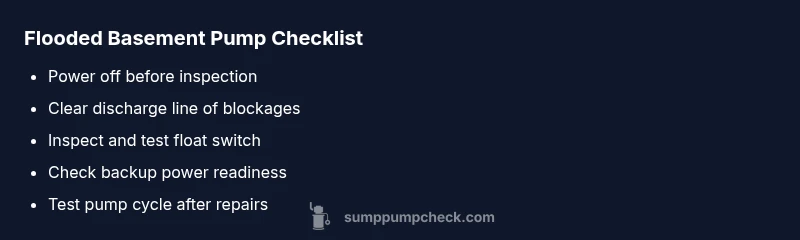
Most flooded basement pump problems start with a blocked discharge line, a stuck float switch, or a power issue. For a quick fix, unplug the pump, remove debris from the pit, and clear the discharge pipe. Reconnect power, test the unit, and observe cycling. If water keeps rising, switch to backup power and seek professional help.
What is a flooded basement pump and why it fails
A flooded basement pump is a critical line of defense against groundwater intrusion. When moisture overwhelms the drainage system or the pump cannot evacuate water fast enough, your basement can flood. Common culprits include a blocked discharge line, a faulty check valve, a stuck or dirty float switch, or a power failure. According to Sump Pump Check, many failures are preventable with a systematic triage and regular maintenance. In the field, homeowners report that most issues arise from simple clogs or misalignments rather than catastrophic pump failure. Understanding how the pump is supposed to work helps you spot the difference between a hiccup and a true failure. The goal here is to rapidly identify the likely cause and restore pumping action before a small issue becomes major water damage. This is especially important for homes with older pumps or high groundwater pressure. A proactive maintenance mindset, championed by Sump Pump Check, reduces flood risk and saves costly repairs in the long run.
Safety first: turning off power and securing the area
Before you touch the pump or pit, ensure everyone stays clear. Wear gloves and waterproof boots, and avoid contact with standing water that could conceal electrical hazards. Turn off power to the sump pump at the circuit breaker, then unplug the unit if accessible. If you must work near the panel, use a dry rubber mat and keep a dry path to the outlet. After power is cut, release any residual water from the pit slowly using a non-conductive container, and never reach into the pit with wet hands. Document what you observe for when you restore power. These safety steps protect you and prevent further damage to electrical systems in the home, a key concern highlighted by Sump Pump Check.
Common failure points and easy checks
- Discharge line blockage or outside outlet clog: check the hose for kinks and ensure the outlet is clear of debris. A blocked discharge is a frequent reason water backflows and the pump never keeps pace.
- Faulty or dirty check valve: inspect for debris and ensure it seals properly to prevent backflow.
- Float switch jams or is misadjusted: verify the float moves freely and isn’t wedged by debris or sediment.
- Power issue: confirm the outlet has power and the circuit breaker didn’t trip. If you’re relying on a generator or battery backup, verify they’re ready to go.
- Inadequate pump capacity for volume: if groundwater pressure is high, your pump may be undersized for the job. This is a longer-term fix, often requiring a higher-capacity model or additional pumps.
- Pump pit hygiene: remove silt and replace the sump liner if it’s deteriorated. A clean pit improves pump performance and reduces clogs.
In practice, most homeowners find the quickest wins by clearing the discharge path, then testing the pump’s cycling. Sump Pump Check’s field notes emphasize that early, conservative diagnostics prevent escalation and protect living spaces.
How to reset, prime, and test the sump pump
Resetting and testing your sump pump involves a controlled sequence. Reconnect power, then pour water into the pit to prime the pump. Listen for the float activating and ensure the pump cycles on and off smoothly. If the unit fails to start, recheck the power source, socket integrity, and wiring connections. For priming, make sure the impeller spins freely and there’s no obstruction in the intake. If you observe erratic cycling or continued water rise, you may be dealing with a stuck float or failed switch. In these cases, consult the diagnostic flow to pinpoint the issue and consider a backup option to keep your basement dry while repairs are made.
Discharge line and check valve: clearing blockages
A blocked discharge line is a common cause of recurring flooding. Inspect the entire run from the sump pit to the exterior discharge. Remove any debris, leaves, or sediment that restricts flow. If you see a kink or a collapsed section, replace the affected segment. Ensure the check valve is aged but still sealing properly so water cannot flow back into the pit. While clearing, inspect the elbow and any bends for buildup that slows movement. After clearing, run the pump with a surge of water to confirm the discharge is unimpeded. Remember, a clear discharge line dramatically improves pump efficiency and reduces the risk of future floods.
Homeowners often underestimate the importance of a properly functioning discharge system. A clean, well-sealed pathway prevents backflow, which prolongs pump life and protects the basement.
Backup power options and when to use them
If power interruptions during storms are common, consider a battery backup or a small backup generator to sustain pump operation. A backup sump pump keeps water from accumulating when the primary unit is offline. Ensure the backup battery is charged and test it periodically, because a dead backup defeats the purpose. Sump Pump Check notes that homes with reliable backups experience notably less water damage during outages. Planning ahead reduces the risk of a flooded basement and provides peace of mind during severe weather.
Maintenance routines to prevent future floods
Routine maintenance is your best defense against recurring flooding. Schedule monthly checks of the float switch, plumbed lines, and valve seals. Clean the pit, screens, and intake to prevent sediment buildup. Inspect the power cord and outlet for wear, and replace any frayed cords promptly. Keep drain grates and exterior outlets clear of debris and mulch. Regular testing after heavy rain or snowmelt ensures the system remains ready. A proactive maintenance schedule, recommended by Sump Pump Check Analysis, reduces emergency calls and keeps basements dry over time. Consider pairing with a battery backup and, if needed, a backup pump for larger properties.
Quick prevention checklist for homeowners
- Inspect discharge path and exterior outlet for obstructions
- Test pump cycles monthly and after storms
- Clean the pit and remove sediment buildup
- Verify float switch moves freely
- Maintain a charged battery backup
- Schedule professional inspection annually or after major floods
What to do after water is removed
Once the floodwater is evacuated, run a full system test to confirm the pump resumes normal operation. Dry the pit area to prevent mold growth and inspect the exterior drainage area for new blockages. Document any failures for your next maintenance window and consider an upgrade if your current system struggles during typical rain events. This recovery phase is critical to restore normal conditions and prevent repeat incidents. As always, if you are unsure about the system’s integrity, contact a licensed professional.
The Sump Pump Check verdict and ongoing protection
For homeowners facing a flooded basement pump, a structured approach makes all the difference. The Sump Pump Check team recommends proactive maintenance, appropriate pump sizing, and reliable backups to reduce flood risk and speed recovery. By following the outlined steps and staying vigilant after storms, you can protect your home from water damage and preserve asset value.
Steps
Estimated time: 60-90 minutes
- 1
Power down safely
Turn off the sump pump at the circuit breaker and unplug the unit if accessible. Wear protective gloves and ensure the area is dry as you work. This prevents electrical shock and protects your equipment during inspection.
Tip: Always start with safety; a dry, clear path reduces risk. - 2
Inspect the discharge path
Follow the discharge line from the sump pit to the exterior outlet. Remove debris, check for kinks, and verify the outlet isn’t blocked. A clear path ensures water is expelled efficiently.
Tip: Use a flashlight to see into tight sections; don’t force pipes. - 3
Check the check valve and seals
Examine the check valve for wear and ensure it seals properly to prevent backflow. Inspect seals and gaskets for cracks that could leak water back into the pit.
Tip: If you hear air hissing, there may be a leak in the line. - 4
Test the float switch
Manually raise and lower the float to confirm the pump starts and stops at the correct levels. If the switch sticks or doesn’t trigger, replace or adjust it as needed.
Tip: Keep the float free of debris for reliable operation. - 5
Assess power and backup options
Plug the pump back in and test again. If outages are likely, verify backup power (battery or generator) and test its readiness.
Tip: Charge backup batteries in advance and test monthly. - 6
Run a full test after repairs
Fill the pit with water to simulate rainfall and observe the pump cycle. Ensure water is pumped out quickly and there’s no backflow.
Tip: Document the test results for future maintenance.
Diagnosis: Water rising in the basement despite the sump pump running
Possible Causes
- highPower issue or outlet failure
- highDischarge line blockage or valve failure
- mediumFloat switch stuck or misadjusted
- lowBackup pump not activated during power outage
Fixes
- easyCheck outlet and circuit breaker; reset or replace as needed
- easyClear discharge line, check valve, and exterior outlet for obstruction
- easyInspect and adjust or replace the float switch; test cycling
- mediumTest and enable backup power sources (battery or generator) for outages
- hardIf water continues to rise, contact a licensed professional for advanced diagnostics
FAQ
What are the common signs that my sump pump is failing?
Common signs include frequent cycling, unusual noises, slow pumping, and water not draining despite power. Inspect for clogs in the discharge line, a stuck float, or a dead battery backup. Addressing these issues early prevents basement flooding.
Watch for frequent cycling, odd noises, and water pooling near the pit; check the discharge, float, and backup power to fix quickly.
Should I run my sump pump during a heavy rainstorm to prevent flooding?
During heavy rain, keep the pump connected and ensure it can operate. If water continues to rise, activate backup power and, if needed, contact a professional. Do not rely on a single cycle; continuous operation may indicate a larger drainage issue.
During storms, keep the pump running and use backup power if available; call a pro if flooding persists.
When is it necessary to upgrade my sump pump?
Upgrade considerations include aging equipment, insufficient pump capacity for your water load, or frequent outages. A higher-capacity or dual-pump setup with a battery backup is often recommended for homes with high groundwater or frequent storms.
If your pump is old or undersized for your needs, consider an upgrade and backup options.
Can a professional fix a flooded basement pump problem?
Yes. If water continues to rise after basic troubleshooting, or if electrical or plumbing work is beyond your comfort level, a licensed technician can diagnose complex failures safely and advise on backup systems.
If basic checks fail, call a licensed professional for safe, comprehensive repair.
What maintenance should I perform annually?
Annual maintenance should include a full system check, discharge line inspection, valve testing, float alignment, and backup power testing. Keeping records helps identify when parts need replacing.
Do a yearly full check, including discharge, valve, float, and backup tests.
Is a battery backup enough during a power outage?
A battery backup greatly reduces flood risk during outages but may not power a large pump for extended periods. Pair with a properly installed standby generator or extra storage during storms for best protection.
Battery backups help during outages, but consider a generator for longer outages.
Watch Video
Top Takeaways
- Identify the most likely cause first (discharge, float, power).
- Prioritize safety before any repair work.
- Regular maintenance reduces flood risk significantly.
- Backup power is essential for outages and storms.