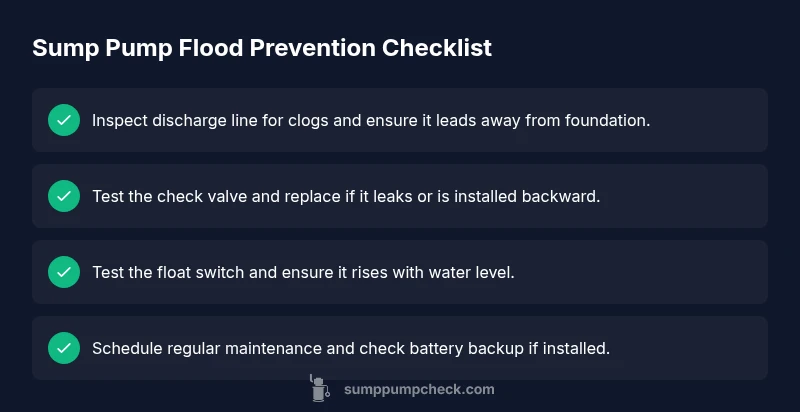
Can a Sump Pump Cause Flooding? Troubleshooting Guide
Discover how a sump pump can cause flooding and learn practical troubleshooting steps to diagnose, fix, and prevent basement floods. Practical guidance from Sump Pump Check.


Most basement flooding related to a sump pump happens because of backflow, a blocked discharge line, or a failing float switch. Quick fix: inspect the discharge for clogs, confirm the check valve is installed and not leaking, test the float, and verify the pump powers on during a rain event. If flooding continues, consult a licensed professional.
How a sump pump can contribute to flooding
A sump pump is designed to protect your home from water intrusion, but a failure or misconfiguration can cause or worsen a flood. According to Sump Pump Check, the most common triggers are discharge line blockages or backflow, a float switch that sticks or fails to rise, and a check valve that leaks. When any of these issues occur, water can back up toward the sump pit or overwhelm the pump during heavy rain, leading to basement flooding.
Typical symptoms to watch include water pooling around the discharge outlet, a pump that runs continuously without draining the pit, and damp or musty smells that indicate lingering moisture. In some cases, the pit fills with water even though the pump is on, signaling a breakdown in the automatic cycling. The good news is that many issues are fixable with routine maintenance and simple repairs, and addressing the root cause quickly can prevent a full-blown flood.
Common Causes of Flooding Linked to Sump Pumps
Even when installed correctly, sump pumps can fail to prevent flooding if certain components wear out or are mismatched to your home. Sump Pump Check analysis shows that the top culprits are discharge line blockages or backflow through a faulty check valve, a float switch that sticks or fails to trigger, and inadequate pump capacity for fast-rising water. Additionally, power interruptions due to GFCI tripping or a dead backup battery can leave the system inactive when water levels surge. Understanding these failure modes helps you pinpoint the right fix and avoid unnecessary replacements.
Other contributing factors include improper installation, where the discharge directs water toward the foundation or into combined drainage lines, and seasonal debris that clogs intakes. Maintenance gaps—such as infrequent cleaning or neglecting the backup battery—are common culprits that reduce system reliability during storms. By recognizing these patterns, you can schedule targeted fixes before a flood occurs.
Quick Checks You Can Do Right Now
- Inspect the discharge line for clogs or kinks and ensure the outlet is directed away from the foundation.
- Check the check valve for leaks and confirm its orientation so water cannot flow back into the pit.
- Test the float switch by pouring water into the sump pit until the pump activates, then verify it shuts off when water drops.
- Confirm the pump has power; check the GFCI outlet, breaker, and the cord for damage.
- Look for debris around the pit that might hinder the float or impeller.
- If you have a battery backup, ensure it is charged and ready.
These checks are quick to perform and can prevent minor issues from becoming floods.
How to Read Your Sump Pump Signals
Sump pumps provide signals through their behavior. A pump that never starts, runs continuously, or cycles irregularly often points to a mechanical fault or control issue. Listen for unusual buzzing, grinding, or motor overheating, which can indicate impeller jams or worn bearings. Water around electrical components or the unit itself can signal safety issues. Regularly reviewing these signals helps you catch problems before rain events overwhelm the system.
Maintenance Practices to Prevent Future Flooding
Preventive maintenance is your best defense against basement floods. Schedule quarterly inspections of the discharge line, check valve, float switch, and electrical connections. Clean the sump pit to remove sediment and debris that can impede float movement or pump operation. Replace worn seals and consider upgrading to a higher-capacity pump or a backup system if you’ve experienced floods during storms. Document maintenance tasks so you can track wear and plan replacements in advance.
Steps
Estimated time: 60-90 minutes
- 1
Check discharge line for clogs
Shut off power if you must handle the line, then detach the discharge line at the outlet and inspect for leaves, sediment, or ice. Clear blockages with a long flexible brush or pipe cleaner. Reconnect securely and run water through the line to confirm unobstructed flow.
Tip: Have a bucket and towels ready for any residual water. - 2
Inspect and fix the check valve
Locate the check valve on the discharge pipe and verify it opens freely in the correct direction. If it sticks or leaks, replace it with a new corrosion-resistant model and seal joints with plumber’s tape.
Tip: Ensure the valve is oriented to prevent backward flow from external water. - 3
Test the float switch
Pour water into the sump pit slowly to raise the water level until the float activates the pump. Observe that the pump stops when the water recedes. If it fails to trigger or turns on too late, adjust or replace the float assembly.
Tip: Make sure debris isn’t binding the float arm. - 4
Check the power supply
Ensure the outlet is grounded and protected by a GFCI if required. Inspect the cord for wear, test the breaker, and verify that the pump’s plug is fully seated.
Tip: Never work on electrical components with wet hands or standing water nearby. - 5
Test during a simulated rain event
Pour small amounts of water into the pit to mimic rainfall. Confirm the pump starts promptly and empties the pit efficiently, and that there’s no backflow into the sump basin.
Tip: If the test fails, do not operate during actual rain until fixed. - 6
Plan for capacity or backup
If repeated floods occur, evaluate whether the current pump size matches your basement area and rainfall statistics. Consider upgrading or installing a battery backup to cover power outages.
Tip: A backup system can prevent floods during storms or outages.
Diagnosis: Basement floods during heavy rain even though sump pump runs
Possible Causes
- highDischarge line blocked or backflow due to a faulty check valve
- highFloat switch stuck or failing to trigger
- mediumInsufficient pump capacity or power loss
- mediumCheck valve leaking/backflow into pit
Fixes
- easyClear discharge line debris and test the check valve for proper operation
- easyReplace or reseat a faulty float switch and verify float height
- easyVerify power supply, reset GFCI/breaker, and inspect the pump cord
- hardUpgrade to higher-capacity pump or install a battery backup
FAQ
Can a sump pump cause flooding even if it’s running correctly?
Yes. A running pump can still fail to prevent flooding if discharge is blocked, a check valve leaks, or water is backflowing into the pit. Regular checks help catch these issues before they cause a flood.
Yes—running doesn't guarantee no flood if discharge or valve problems exist.
What is backflow and how do I prevent it?
Backflow happens when water returns to the sump pit or basement because the discharge path allows water to travel in the wrong direction. A properly installed check valve and correct discharge routing prevent backflow.
Backflow is water coming back toward the pump; install a check valve to stop it.
How often should I test my sump pump?
Test your sump pump at least every three months and before the rainy season. Regular testing confirms the pump starts reliably and the discharge remains clear.
Test it quarterly and before storms to ensure reliability.
Is a backup sump pump worth it?
A backup sump pump helps you stay dry during power outages or primary pump failures. It’s highly recommended in areas with frequent heavy rain or flood risk.
Yes, a backup system provides crucial protection during outages.
Can clogging affect basement drainage even if the pump runs?
Yes. A clogged discharge or pit can prevent water from leaving, causing the basement to flood despite the pump running.
Clogs can stop drainage and cause flooding even when the pump works.
What safety steps should I take before maintenance?
Turn off the power at the breaker, wear rubber gloves, and avoid contact with standing water. If you’re unsure, hire a pro rather than risk electrocution.
Turn off power first and call a pro if in doubt.
Watch Video
Top Takeaways
- Identify root causes (discharge, float, valve) before replacing parts
- Regular maintenance reduces flood risk
- Consider a backup pump for power outages
- Upgrade capacity if storms are frequent or rainfall is heavy