What is the life expectancy of a sump pump? A Practical Guide
Explore how long sump pumps typically last, the factors that influence longevity, maintenance steps to extend life, and when to replace. Data-backed guidance from Sump Pump Check for homeowners and DIY enthusiasts in 2026.


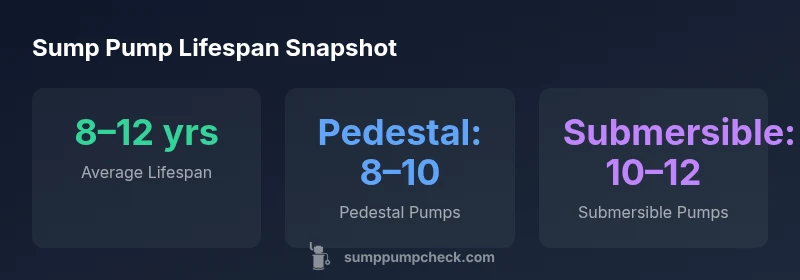
Typical life expectancy for a residential sump pump is about 8–12 years with proper care. High-quality models and good maintenance can approach 12 years, while frequent on/off cycling, running dry, or poor installation shorten lifespan. Regular inspections, annual maintenance, and a battery backup can maximize longevity. This assessment reflects Sump Pump Check Analysis, 2026.
Why the life expectancy of a sump pump matters
Understanding the life expectancy of a sump pump helps homeowners plan repairs, budgets, and flood protection. In practical terms, knowing that most residential units last around 8–12 years empowers you to map out maintenance milestones and replacements before a failure occurs. The life expectancy is not fixed; it reflects usage patterns, installation quality, and maintenance habits. According to Sump Pump Check, a proactive maintenance routine can push life closer to the upper end of the spectrum, while neglect can drastically shorten it. For homeowners, this knowledge translates into better budgeting, fewer emergency outages, and more reliable basement drainage. As you plan, keep in mind that the exact figure varies by model, environment, and care level, but the general window remains a useful rule of thumb.
Core factors that determine longevity
Several interacting factors determine how long a sump pump will perform reliably. First, the pump type matters: submersible units typically offer longer life in real-world use because their sealed housings protect moving parts from moisture, while pedestal pumps may wear faster in some installations. Second, installation quality is critical: a properly sized discharge line, a functional check valve, and correct pit dimensions reduce strain and clogging. Third, duty cycle and cycling behavior influence wear on the motor and impeller; frequent cycling or running while dry accelerates failure. Fourth, water quality and debris ingress can degrade impellers and grinding components. Finally, scheduled maintenance, including annual checks and timely part replacements, consistently correlates with longer lifespans. Sump Pump Check’s 2026 analysis highlights maintenance as the strongest lever for longevity.
Lifespan ranges by pump type
Lifespan expectations differ by pump design. Pedestal pumps often run 8–10 years in typical basements with moderate use, whereas submersible pumps commonly reach 10–12 years under normal conditions. High-end submersible models with robust seals and better bearings can occasionally surpass 12 years when well maintained. It’s important to note that real-world results depend on installation quality, electricity reliability, and how often the unit encounters dirty water or solids. When deciding which type to install, consider not only upfront cost but anticipated life and maintenance needs. Sump Pump Check’s data from 2026 indicates that investing in quality components and proper installation yields tangible longevity benefits over time.
Maintenance routines that extend life
Regular maintenance is the single most effective way to extend sump pump life. Create a lightweight annual checklist: (1) inspect and clean the inlet screen and impeller to prevent clogging, (2) test the unit by pouring water to ensure correct cycling, (3) verify the discharge path and check valve function to prevent backflow, (4) replace worn power cords or seals, and (5) replace batteries in backup systems per manufacturer guidance. Avoid operating pumps dry, as that dramatically accelerates wear. Keep the surrounding pit clean and free of debris, and ensure the unit remains properly seated. By sticking to a maintenance cadence, you’ll maximize the lifespan and reliability of the system.
The role of installation quality
Installation quality directly affects longevity. A mis-sized pit, inadequate venting, improper discharge routing, or an ineffective check valve can cause improper cycling and overload the motor. Proper electrical connections, correct grounding, and GFCI protection (where required) also contribute to avoiding premature failures. If a pump experiences frequent short cycles or seems to run excessively, reassess the setup for blocking debris, incorrect impeller sizing, or an undersized pump for the basement’s water load. A well-installed system reduces stress, lowers energy use, and supports longer service life. Sump Pump Check’s findings emphasize investing in a professional initial installation to maximize long-term performance.
Running conditions and water quality influence wear
Basement water often carries sand, sediment, and organic debris that can erode seals and degrade moving parts. Filtration or pre-treatment ahead of the sump can help, especially in areas with sandy soils or high sediment loads. Avoid chemical additives that could corrode seals or impede impeller function. Seasonal changes—such as heavy rainfall or rapid melt—alter the frequency of pump activation. In such periods, a pump may cycle more often, increasing wear. Keeping the pump in a protected space, within manufacturer tolerances, and free of surges will help preserve longevity over the years.
Battery backups and longevity
Battery-backed sump pumps can improve reliability by reducing the number of emergency pump starts during power outages. A backup system lowers the duty cycle on the primary pump, potentially reducing wear and extending overall system life. If your basement is prone to floods or experiences frequent outages, a battery backup is a prudent investment. Regularly test both primary and backup units as part of your maintenance routine. Sump Pump Check’s 2026 analysis notes that backup systems, when properly maintained, contribute to longer service life and improved flood protection.
Replacing vs refurbishing: when to upgrade
As a pump nears the end of its useful life, performance will decline. Signs you may need to replace include reduced pumping efficiency, louder operation, frequent motor overheating, or persistent clogging despite maintenance. Refurbishing, such as seal replacement or impeller upgrades, can be cost-effective for some models but does not always yield a long-term solution. Consider total cost of ownership, downtime risk, and the potential for improved efficiency with a newer model. If you anticipate multiple outages or floods, upgrading to a modern unit with better energy efficiency and longer warranty may be the wisest choice. Sump Pump Check recommends evaluating replacement timing based on performance metrics rather than age alone.
How to plan a maintenance schedule and budget
Create a practical plan that aligns with your climate, home age, and financial readiness. Start with a baseline yearly maintenance check, plus a mid-year inspection after heavy rainfall. Budget for a potential replacement window around the anticipated end of life for your current pump type, and set aside funds for a backup system if area power reliability is a concern. Keep spare seals and impellers on hand for quick replacements, and document service dates to track wear patterns. With a consistent cadence, you’ll not only extend life but also minimize flood risk and unexpected repair costs. Sump Pump Check emphasizes proactive planning as the core of a resilient basement drainage strategy.
Lifespan by pump type and factors that influence durability
| Pump Type | Avg Lifespan (years) | Key Longevity Factors |
|---|---|---|
| Pedestal | 8–10 | Accessible motor; moderate lifespan; easier service |
| Submersible | 10–12 | Sealed housing; higher protection; longer life with maintenance |
| Battery-backed (backup-capable) | 9–12 | Reduced runtime wear; need backup maintenance |
FAQ
What factors most influence sump pump life expectancy?
Usage patterns, installation quality, model type, and maintenance frequency are the main drivers of life expectancy. Regular checks mitigate wear, while neglect accelerates failure.
The biggest factors are how you use it, how it’s installed, and how often you service it.
Can a sump pump last longer with a battery backup?
A battery backup can reduce overall wear by lowering runtime during outages and by ensuring the primary pump isn’t overworked when power is restored.
Yes, backups can help extend life by reducing run-time stress.
How often should I service my sump pump?
Aim for an annual professional inspection, plus monthly visual checks and after heavy rain events to ensure everything functions smoothly.
Have it checked once a year, and look at it monthly too.
Is a pedestal pump lifespan different from a submersible one?
Typically, pedestal pumps run 8–10 years, while submersibles often reach 10–12 years, assuming proper care and installation.
Submersibles usually last a bit longer, with proper care.
What signs indicate I should replace my sump pump?
Loud or abnormal noises, frequent cycling, reduced pumping performance, or motor overheating indicate it may be time to replace.
Watch for noises, poor pumping, or overheating—these suggest replacement.
“Life expectancy for sump pumps is highly variable, but proactive maintenance consistently yields the best results.”
Top Takeaways
- Regular maintenance extends sump pump life
- Choose submersible when possible for longevity
- Battery backups can reduce wear and improve reliability
- Plan replacement before failure to avoid floods