How Long Does a Sump Pump Battery Last?
Learn how long sump pump batteries typically last, what affects lifespan, and practical steps to extend backup power during outages. A practical guide for homeowners and DIY enthusiasts.


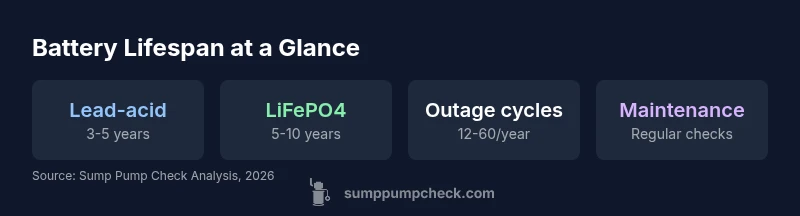
A typical sump pump backup battery lasts about 3-5 years for a lead-acid unit and 5-10 years for a high-quality lithium option, depending on usage and maintenance. In real-world conditions, lifespans vary with charging cycles, temperature exposure, discharge depth, and how often the pump runs during outages.
Understanding Battery Life in Backup Sump Pumps
A sump pump backup is only as reliable as the battery that powers it when the house loses power. When homeowners ask how long does a sump pump battery last, they are really asking about two intertwined questions: the chemistry inside the battery and how hard the backup system is asked to work during an outage. At Sump Pump Check, we analyze hundreds of installs to identify the practical lifespans you can expect in typical conditions. In short, chemistry matters: lead-acid batteries tend to show shorter calendars lifespans than lithium-based units, but price and weight are also important considerations for a DIY install. The battery’s life is not a single number; it is a function of cycles, temperature, discharge depth, and how often the unit runs during a storm. Understanding these levers helps homeowners budget for replacements, plan maintenance, and avoid a failure when power is out.
Battery Chemistry and Lifespan
Battery chemistry is the primary determinant of backup duration. Lead-acid batteries—commonly sealed AGM types—are inexpensive upfront but deliver shorter calendars lifespans and higher weight. In typical use, plan for about 3-5 years before noticeable degradation. Lithium-based backups, especially lithium iron phosphate (LiFePO4), offer longer calendars lifespans in the 5-10 year range and better deep-discharge tolerance, but with higher upfront costs. Real-world performance depends on how often your sump pump cycles during a storm and how well the battery is kept within the recommended temperature range. If a battery is allowed to drop below recommended charge levels often, its usable life can shrink quickly. For homeowners, this means you should weigh initial cost, weight, maintenance, and the cost of replacement when deciding which chemistry to install.
Load, Outages, and Cycling: Real-World Use
Outages are rarely the same twice. The duration of an outage, the size of the sump pump, and the frequency of storms all cook into a simple truth: more cycles and deeper discharges shorten battery life. If your pump runs for long periods during heavy rain, expect more wear on the battery. Conversely, shorter, less frequent events will tend to extend life. Temperature also affects performance; batteries perform best in moderate environments and can degrade faster in extreme heat or cold. Practical guidance from the field is to keep backup batteries in a location with stabilized temperature and to avoid exposing them to rapid temperature swings during testing or charging.
How to Assess Battery Health: Tests and Indicators
Regular test procedures are essential to prevent surprises. Start with a visual inspection for corrosion, swelling, or leaks. Use a multimeter to check resting voltage; perform a load test to simulate an outage and observe how the system behaves under stress. Hydrometry can be used for flooded lead-acid types to check specific gravity, though most residential backups are sealed AGM or LiFePO4 and do not require this step. Record the results over time to track trends. If voltage under load drops quickly or the battery cannot hold a charge, it’s time to replace. Keeping a log helps you predict when you’ll need a swap rather than waiting for a failure.
Maintenance and Storage Practices to Extend Life
The easiest way to extend backup battery life is consistent maintenance. Schedule semi-annual checks to verify connections are tight, terminals are clean, and the battery is charging properly. During storage, keep the unit between 32–77°F (0–25°C) and avoid leaving it fully discharged for long periods. If you anticipate an extended outage, consider keeping a fresh charged spare on hand. Proper charging cycles—never letting the battery stay at a complete discharge for extended periods—will help preserve capacity. Finally, label and date batteries so you can rotate stock and retire older units on a predictable schedule.
Choosing Lead-Acid vs Lithium for Sump-Pump Backups
Choosing the right chemistry is a balance of cost, lifespan, and maintenance needs. Lead-acid options are budget-friendly upfront and widely available, but they require more maintenance and have shorter calendar lifespans. Lithium backups offer longer lifespans, lighter weight, and better tolerance for deep discharges, but they come with a higher upfront price. If you expect frequent power interruptions, lithium may provide better total cost of ownership over time. Regardless of chemistry, buy from reputable brands, verify warranty terms, and implement a consistent maintenance plan to optimize performance.
How long does a sump pump battery last
When people ask how long a sump pump battery lasts, the short answer is: it depends on chemistry and use. Lead-acid backups typically last 3-5 years in household settings, while LiFePO4 lithium options often reach the 5-10 year range under normal cycling. Importantly, temperature, depth of discharge, and the number of cycles per year shape the outcome. An aggressive storm season with frequent outages can shorten life, while gentle seasons with occasional tests can extend it. The best strategy is to implement a regular testing cadence, monitor health indicators, and plan replacements on a predictable schedule rather than waiting for a failure.
Practical timelines and replacement planning for homeowners
A structured replacement plan helps avoid outages catching you by surprise. Start by basing your forecast on the battery chemistry selected and your local climate. For lead-acid backups, plan replacements every 3-5 years; for LiFePO4, plan 5-10 years with annual checks in year three and beyond to catch early signs of degradation. Create a calendar reminder tied to your system’s maintenance schedule and budget for the upfront cost differences between chemistries. Additionally, keep a spare battery somewhere dry and cool, and rotate stock to ensure you have a fresh unit when replacement becomes necessary. By aligning testing, inspection, and replacement with your outage history, you can maintain backup readiness with minimal downtime.
Common sump-pump backup battery chemistries and their typical lifespans
| Battery Type | Typical Lifespan (years) | Key Pros | Key Cons |
|---|---|---|---|
| Lead-acid (AGM) | 3-5 | Affordable upfront; widely available | Heavier; shorter calendar life |
| LiFePO4 Lithium | 5-10 | Longer lifespan; lighter; deep-discharge tolerant | Higher upfront cost; specialized charger required |
| Gel lead-acid | 3-5 | Stable discharge; good spill resistance | Can be sensitive to prolonged deep discharge |
FAQ
What factors most affect sump pump battery life?
Battery life is driven by cycling, heat, and discharge depth. Frequent outages and deep discharges accelerate wear. Temperature extremes can shorten capacity and shorten the time until replacement is required. Regular testing helps identify issues before they become failures.
Battery life is driven by how often the pump runs, how deeply the battery is discharged, and the ambient temperature. Regular tests help you spot issues early.
Can I extend battery life by upgrading to lithium?
Upgrading to lithium-backed backups can extend calendar life and improve discharge tolerance, especially if outages are frequent. However, consider higher upfront costs and the need for a compatible charger and BMS. Weigh long-term savings against the initial investment.
Yes, lithium backups can last longer and tolerate deeper discharge, though they cost more upfront.
Is it better to replace the battery or the entire sump pump?
For most homeowners, replacing a failing battery is quicker and cheaper than upgrading the entire system. If the pump itself is old or unreliable, broader replacement may be warranted. Always weigh pump reliability, battery availability, and warranty terms.
Usually just replace the battery if the pump is solid, but consider the pump's age and warranty.
How often should I test my sump pump battery?
Test your backup battery at least twice a year and after any outage. Regular load and voltage checks help verify readiness. Maintain a simple log to track performance over time.
Test it twice a year and after outages to be sure it works when needed.
What maintenance tasks maximize battery life?
Keep terminals clean and connections tight, store batteries in a stable temperature, and avoid deep discharges whenever possible. Replace aging batteries before performance declines, and verify compatibility with your sump pump controller.
Keep connections clean, store at a steady temperature, and avoid deep discharges.
Should I install a backup system for power outages?
Yes. A backup battery system is essential if you experience frequent outages. Pair it with a manual switch or automatic transfer switch to ensure a smooth transition during a power loss.
If outages happen, a backup system is strongly recommended.
“Battery health is not a one-time decision; it's a maintenance habit. Regular checks and proper storage protect your investment.”
Top Takeaways
- Assess battery life by chemistry and usage
- Regular testing prevents unexpected outages
- Temperature and discharge depth affect lifespan
- Choose chemistry based on budget and outage risk
- Plan replacements on a predictable schedule