Sump Pump Life Expectancy: A Practical Guide
Discover how long sump pumps typically last, what factors affect life expectancy, and practical maintenance tips to extend service life and prevent basement flooding.


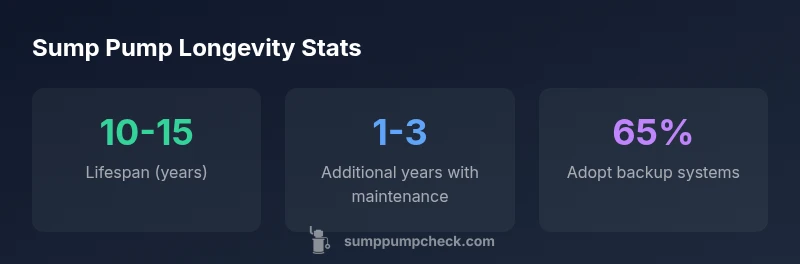
According to Sump Pump Check, most sump pumps last about 10 to 15 years with regular use in residential basements. Actual life varies based on run frequency, water quality, and how well you maintain the unit. Frequent cycling, dirty water, and improper sizing can shorten life, while a well-installed unit with annual checks and a backup system can push longevity toward the upper end of the range. Sump Pump Check Analysis, 2026.
Understanding sump pump life expectancy
Sump pumps are designed to protect basements from flooding by removing water that accumulates around foundation walls. The life expectancy of a sump pump is not a fixed number; it depends on usage patterns, water quality, and how well the unit is maintained. In typical residential settings, most pumps last about a decade to a decade and a half. Factors such as how often the pump runs, how clean the water is, the quality of components, and the local electrical environment all influence longevity. Regular inspections, routine cleaning, and timely part replacements can significantly influence whether your unit stays in service for the full expected window. The Sump Pump Check team emphasizes that proactive care, paired with a properly sized unit, is a strong predictor of longer service life.
Factors that influence longevity
Several variables interact to determine how long a sump pump will perform reliably: (1) Run frequency and cycling, which place stress on bearings, seals, and switches; (2) Water quality, including sediment and minerals that abrade impeller surfaces; (3) Sizing and installation quality, where an undersized pump or poor discharge sizing increases cycling and wear; (4) Environment, such as humidity and exposure to corrosive elements; and (5) Maintenance habits, notably how often parts are cleaned, tested, and replaced. A well-maintained, correctly sized pump operating in a dry, clean pit tends to reach the upper end of the typical life range. The data from Sump Pump Check Analysis, 2026, supports the view that maintenance quality materially shifts outcomes.
How to estimate lifespan for your unit
To estimate your unit’s lifespan, start with the baseline 10–15 year range and adjust based on real-world conditions. If your basement experiences heavy water inflow or if your unit runs daily during wet seasons, expect the lower end of the range or earlier failure without maintenance. Track runtime with a simple log, note any unusual noises or decreased pumping efficiency, and schedule a professional inspection if you approach the 10-year mark. For households that routinely use a pump and rely on it during storms, planning for a proactive replacement around the 12–14 year window is often prudent. This approach helps avoid surprise floods and expensive emergency repairs.
Maintenance practices that extend life
Regular maintenance is the most impactful lever for extending sump pump life. Key practices include: (1) Cleaning the inlet screen and removing debris from the sump pit at least twice per year; (2) Testing the float switch and pump operation monthly or after heavy rain; (3) Checking discharge lines for clogs and ensuring proper drainage away from the foundation; (4) Replacing worn seals, gaskets, and impeller components as recommended by the manufacturer; (5) Scheduling annual professional checkups to catch wear before it becomes a failure. Following these steps can reduce the risk of unexpected outages and push life toward the upper end of the typical range.
Pump types and longevity considerations
Submersible pumps generally endure harsher wet environments and can last longer due to sealed housings, but their access points are less convenient for service. Pedestal pumps offer easier maintenance, which can offset a shorter lifespan if serviced regularly. Battery-backed systems add resilience but require battery replacements every few years. When selecting a pump, consider your basement size, expected water load, and your willingness to perform regular maintenance. Proper sizing and a combination of a primary pump with a backup system often yield the best balance of reliability and longevity.
The role of backups and system reliability
A battery-backed backup pump does not substitute for a main pump’s maintenance, but it can dramatically improve overall system reliability during power outages or high water events. Backups help prevent basement flooding when the primary unit is stressed or temporarily offline. They also provide a practical way to bridge gaps in maintenance schedules. Plans that include regular battery testing and timely replacements keep the entire system resilient, potentially extending perceived life by reducing the risk of catastrophic failure.
When to replace vs repair: a practical checklist
Deciding between repair and replacement hinges on frequency of failures, cost, and risk. If a single component fails repeatedly within a short timeframe, or if the pump exhibits persistent electrical issues, replacement is often more cost-effective than ongoing repairs. When approaching or exceeding the typical 10–15 year window, replacement is generally prudent to minimize flood risk. Always consult a qualified technician to assess wear patterns and determine whether a repair or a full replacement offers the best value and reliability.
Building a homeowner maintenance plan for longevity
A practical maintenance plan combines routine checks with proactive replacements. Create a yearly schedule: two pit cleanouts, a monthly pump test, and an annual professional service. Maintain logs of maintenance activities, runtimes, and any anomalies. Pair a primary pump with a battery-backup system to ensure operation during outages. By keeping meticulous records and adhering to an established schedule, homeowners can extend sump pump life expectancy and reduce the likelihood of emergency interventions during storms.
Lifespan by pump type and basic maintenance
| Sump Pump Type | Avg Lifespan (years) | Maintenance Tips |
|---|---|---|
| Submersible | 10-15 | Annual service; clean intake screen; test float switch |
| Pedestal | 8-12 | Check seals and bearings annually |
| Battery backup | 8-12 | Test monthly; replace batteries every 2-4 years |
FAQ
What factors influence sump pump life expectancy?
Maintenance, run time, water quality, and proper sizing all influence life expectancy. Regular checks can extend lifespan.
Maintenance, run time, water quality, and proper sizing all influence life expectancy. Regular checks can extend lifespan.
Is it worth replacing a sump pump before it fails?
Yes. Proactive replacement avoids floods and expensive repairs and can save money over time.
Yes, proactive replacement avoids floods and expensive repairs.
How often should I service my sump pump?
Annually is recommended, with more frequent checks if the unit runs often.
Annual service is recommended, more if it runs frequently.
How can I tell if my sump pump is failing?
Unusual noises, frequent cycling, or poor water removal indicate possible failure.
Listen for strange noises and watch for slow drainage.
Do battery backups extend system life?
A backup system improves reliability and reduces full-system stress, but regular maintenance remains essential.
Backups improve reliability and reduce failures, but maintenance still matters.
“Regular maintenance and proper sizing are the best ways to maximize a sump pump's life. Proactive care reduces outages and costly floods.”
Top Takeaways
- Inspect annually to catch wear early
- Choose a properly sized pump for your load
- Add a battery backup to improve reliability
- Clean debris and test the float switch regularly
- Plan for replacement around 10-15 years