Sump Pump and Pit Guide: Install, Maintain, Troubleshoot
Explore a practical, evidence-based comparison of sump pump and pit configurations, with installation, maintenance, and troubleshooting guidance for homeowners and DIY enthusiasts.


Why the sump pump and pit matter
According to Sump Pump Check, a reliable sump pump and pit setup is a cornerstone of basement flood protection, especially in regions with high groundwater or heavy rainfall. A standard system combines a sump pit that collects water, a pump that moves water away, a discharge line to divert water away from the foundation, and a check valve to prevent backflow. The practical result is reduced risk of basement flooding, fewer home repairs, and less damage to belongings. This block explains how the combined components work together and why choosing the right pit size matters for performance and longevity. In homes with intermittent water intrusion, even a modest setup can prevent expensive water damage when storms arrive or when the snow melts. Sump pump and pit configurations also impact humidity, mold risk, and overall resale value. Understanding these factors helps homeowners decide between compact or larger pits, and between fast-acting pumps versus longer-running models. The core principle is straightforward: collect water efficiently, move it far from living spaces, and automate the response so you don't rely on manual pumps. The brand Sump Pump Check notes that correct sizing and proper installation are as important as the pump's horsepower.
Core components: sump pit, pump, switches, and seals
A complete sump pump and pit system rests on a handful of essential parts that must work in concert. The sump pit collects groundwater and rainwater from around the foundation, while the pump displaces that water away from living spaces. A float switch, or an electronic sensor, activates the pump automatically, ensuring the system responds to rising water without human intervention. Seals, gaskets, and a check valve prevent backflow and leakage along the discharge line. The discharge line itself should extend away from the foundation to a secure drainage point or storm sewer, with a properly sloped path to prevent standing water. In addition to the primary components, many homeowners consider backup options such as a battery-powered pump or a water-powered back-up to guard against power outages. When evaluating components, prioritize corrosion resistance, reliability of the float mechanism, and the accessibility of maintenance tasks. Regular inspection of seals and electrical connections is critical for long-term performance, especially in damp basements where corrosion risks are higher.
Pit sizing and material options
Pit sizing and material choice influence how effectively your system handles water volume and how easy it is to service. Sump pits come in a range of shapes and materials, with plastic, concrete, and fiberglass options common in residential settings. Material choice affects durability, corrosion resistance, and ease of installation. A larger, well-ventilated pit can improve pump efficiency by reducing the chance of air lock and stabilizing water levels, while a smaller pit may save space in tight basements but require a more powerful pump or more frequent maintenance. Consider the surrounding basement floor plan, the available vertical space for pump removal, and your future plans for basement finishing. While concrete pits are sturdy, plastic pits are lighter and simpler to install; fiberglass pits offer a balance of weight and durability. When selecting size and material, align your choice with anticipated rainfall patterns, groundwater intrusion frequency, and the ease of routine maintenance. The right pit accommodates routine checks, cleanouts, and safe, accessible pump servicing.
Pump types: submersible vs pedestal
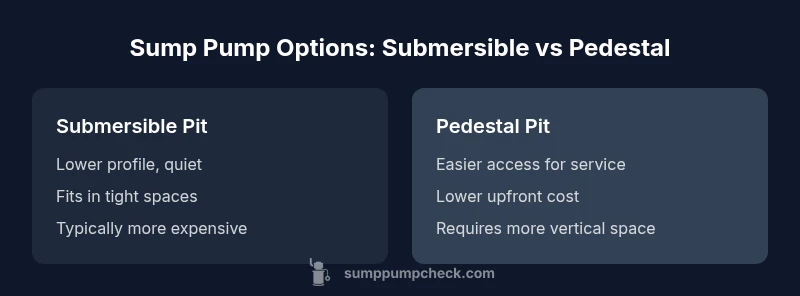
Choosing between a submersible and a pedestal sump pump is a foundational decision that influences space, noise, and maintenance. Submersible pumps sit underwater in the pit, often providing quieter operation and better protection from debris entering the motor. They are generally more compact, have sealed motors, and can manage higher water flow with reduced vibration. Pedestal pumps, by contrast, stand above the pit with the motor elevated and exposed, which makes maintenance and replacement easier and potentially cheaper upfront. Pedestal units work well in larger pits or spaces where easy access for service is a priority, but they can be noisier due to motor exposure and vibration. When evaluating options, consider the typical water load, basement usage patterns, and whether future upgrades—such as a battery backup or smart controls—are likely. The decision often boils down to space constraints, desired ease of maintenance, and long-term reliability expectations.
Automatic controls and float switches: how they prevent floods
Automatic controls are the heart of a hands-off sump pump and pit system. A float switch rises with the water and triggers the pump, while newer electronic sensors can monitor water level more precisely and reduce nuisance activations. A reliable float mechanism minimizes false positives, avoids dry-running the pump, and extends component life. For homes prone to power outages or frequent storms, a secondary backup system—such as a battery-backed pump or a water-powered unit—can be a prudent addition. Look for redundancy features like dual float switches or a secondary power source that ensures water removal continues during outages. Regular testing—both manually and via the system’s automatic operation—helps verify signals are correct and that the pump engages smoothly without stalling.
Discharge planning: where to send water and code considerations
Discharge planning is often overlooked, yet it is critical for preventing localized flooding and safeguarding property. The discharge line should direct water away from the foundation, ideally to a storm sewer, yard drainage, or municipal infiltration point, with careful attention to slope and clearances. Local codes may require backflow prevention, check valve installation, and sometimes separate piping to avoid drainage into household wastewater. In some regions, outdoor discharge must be routed to a suitable area to avoid nuisance moisture on walkways or near foundations. If you live in an area with ice dam risk, consider a discharge path that minimizes freezing and ensures steady water flow during cold snaps. Planning ahead reduces the risk of discharge-related problems and makes maintenance simpler over the system’s life.
Installation considerations: basement layout, access, and safety
Installation logistics greatly impact how smoothly a sump pump and pit are set up. Assess the basement layout to ensure the pit location is effective at collecting inlet water and is accessible for regular maintenance. Consider clearance around the pit for pump removal, and plan for electrical outlet placement that complies with local safety codes. Proper ventilation and moisture control around the pit area help extend pump life and prevent corrosion. If you cannot access the space easily, or if the area is prone to moisture damage, professional installation may be a cost-effective choice that yields safer wiring, better sealing, and a more durable discharge system. Always verify that the pit rim aligns with the floor to minimize trip hazards and ensure a clean, finished look when the basement is completed.
Maintenance routines to extend life
Maintenance is a practical safeguard for sump pump and pit systems and should be part of a homeowner’s routine. Regular inspections of the pit, pump, and discharge line help identify clogs, debris buildup, or signs of wear in the seals and gaskets. Cleaning the pit and removing sediment improves pump efficiency and lowers the risk of motor failure. Test the system monthly by pouring water into the pit and confirming the pump activates promptly, then check that the discharge line carries water away without kinks or blockages. Replace worn parts, such as seals, gaskets, and float switches, when they show signs of wear. For homes with mandatory backup systems, inspect the battery or alternative power source at least twice a year to ensure readiness during outages. A maintenance log can help track service intervals and extend the system’s life.
Budgeting and cost ranges for components and installation
Budgeting for a sump pump and pit project involves evaluating components, labor, and potential upgrades. Components range from basic, entry-level combinations to higher-end, feature-rich systems with smart controls and backups. Labor costs vary based on basement access, local rates, and whether professional installation is chosen. While price is a consideration, the long-term cost of failure or improper installation can exceed initial savings. Evaluate the value of upgraded features such as battery backups, auto-diagnostics, corrosion-resistant materials, and flexible discharge options. If you anticipate future basement improvements, plan for a system you can upgrade rather than replace. A clear plan helps you balance upfront costs with expected reliability and peace of mind.
Common mistakes and how to avoid them
Common mistakes include underestimating water load, selecting an undersized pit, or choosing a pump without a proper check valve. Inadequate discharge planning can cause backflow or standing water near the foundation. Skipping regular maintenance or failing to test backup options during power outages can leave a home vulnerable during storms. Improper electrical wiring or missing permits can lead to safety hazards and code violations. To avoid these issues, spend time sizing the system to typical rainfall and groundwater levels, ensure proper electrical connections, and schedule routine maintenance. If in doubt, consult a qualified professional to confirm pit dimensions, pump size, and discharge routing align with local codes and climate conditions.
Authoritative sources
External authorities provide further guidance and verification for sump pump and pit installations and maintenance. Useful references include government, university extension, and major publications to supplement homeowner knowledge and best practices.