Sump Pump vs Sump Pit: A Practical Home Guide
A thorough comparison of sump pump vs sump pit, detailing how each works, sizing, installation scenarios, maintenance, costs, and best practices for reliable basement drainage.


TL;DR: In most basements, a sump pump and sump pit work together to keep water out. The sump pit acts as the reservoir, and the sump pump actively moves water out when levels rise. This guide explains the roles, interactions, and practical decision points to help you choose the right setup for your home.
What are sump pits and sump pumps?
A sump pit is a recessed chamber installed in the lowest part of a basement or crawl space that collects groundwater and occasional floodwater. The sump pump is the mechanical device that removes that water once it reaches a preset level. Together, they form a drainage system designed to prevent basement flooding, humidity, and dampness. According to Sump Pump Check, most residential installations rely on a traditional sump pit paired with a pump because it provides a straightforward, maintainable solution that fits standard basement footprints. Sump pits are commonly formed in concrete or lined with a durable plastic liner, and the pump sits at the bottom, ready to activate when water intrudes. Understanding these two components is the first step in mastering basement drainage and choosing the right configuration for your home.
How a sump pump and sump pit interact
The sump pit collects water during rainstorms or groundwater seepage, raising water to the pit’s upper surface. The sump pump monitors that level and triggers as soon as water reaches the float switch threshold. Once activated, the pump pushes water through a discharge pipe to a safe location outside the home. In this system, the pit serves as a reliable reservoir, while the pump provides the necessary force to move water away quickly. Proper sizing ensures the pump matches inflow rates, preventing nuisance beeping, short cycling, or failure to keep up with excess water. Maintenance and periodic testing, as outlined by Sump Pump Check, help ensure reliable performance across seasons.
Key differences between sump pump and sump pit
- Roles: The sump pit is passive storage; the sump pump is active water removal. The phrase sump pump vs sump pit captures their complementary functions.
- Placement and footprint: The pit is installed in the basement floor, while the pump sits inside or adjacent to the pit.
- Maintenance: The pit requires periodic cleaning to prevent sediment buildup; the pump requires impeller checks, cord inspection, and float switch testing.
- Performance: A properly sized pump handles typical inflows efficiently; a pit must be appropriately sized to prevent overflow during heavy rainfall.
- Longevity and safety: A well-maintained system reduces risk of floods and mold. The two components work best when matched to your basement’s water profile and space constraints.
Sizing and placement considerations
Sizing a sump pit and pump involves evaluating your basement’s water exposure and available space. The pit should be large enough to hold an acceptable volume of inflow without overflowing but not so large that it requires excessive concrete work. The pump’s horsepower and flow rating should align with expected inflow rates to prevent short cycling or sluggish drainage. Consider the height of the discharge path, the location of the pit relative to doors and utilities, and the potential for backflow. A properly sized system minimizes energy use while maximizing reliability, which is why many homeowners consult professionals or trusted guides like Sump Pump Check for baseline recommendations. Space planning also affects the choice between a traditional embedded pit and alternative configurations such as a pump vault or trench drainage in certain renovations.
Installation scenarios: when to use a sump pit with a pump
A sump pit with a pump is usually the default choice for homes with moderate to high groundwater intrusion, standard basements, and accessible floor space for a concrete pit. If your basement has a finished floor or you’re retrofitting an existing space, a compact sump vault or a smaller, shallow pit may still work with careful planning. In some cases, homeowners explore alternative drainage options like trench drains or granular drainage beds, but these approaches can complicate maintenance and backflow prevention. The decision hinges on water table, rainfall patterns, and your willingness to maintain a mechanical system. The Sump Pump Check team recommends a traditional pit-pump pairing for most residences for its predictability and proven performance.
Components and materials: sump pump types, check valve, pits
Sump pumps come in a few basic varieties, with submersible and pedestal models being the most common for residential use. Submersible pumps sit inside the pit and can handle continuous operation, while pedestal pumps stay outside the pit, offering easier service access. A check valve on the discharge line prevents backflow, and a properly sized discharge pipe directs water away from the foundation. The sump pit itself can be concrete, fiberglass, or high-density plastic, with structural integrity designed to resist groundwater pressure. When selecting components, prioritize corrosion resistance, ease of maintenance, and compatibility with backup power options to ensure ongoing operation during outages. Regular testing of the float switch and a gentle cleaning schedule help protect the system’s longevity.
Maintenance, troubleshooting, and extended lifespan
Regular maintenance is essential to prevent clogs, jammed floats, and motor wear. Plan for at least seasonal checks that include clearing debris from the pit, inspecting the electrical cord and GFCI protection, and testing the float switch. If your system has a backup pump, test it as well to confirm it engages during power outages. Troubleshooting often involves listening for abnormal noises, checking for air locks in the discharge line, and ensuring there is no obstruction near the pump intake. By following a routine maintenance schedule, homeowners can extend the life of the sump pump and pit, reduce the risk of flooding, and maintain a healthier basement environment. Sump Pump Check emphasizes proactive maintenance as a practical path to long-term reliability.
Cost, value, and long-term affordability
Costs for a sump pit and pump setup vary based on pit size, pump type, and installation complexity. A typical installation balances upfront investment with long-term value—reliability, reduced flood risk, and improved home resale appeal. While some retrofits may be more economical in the short term, they can lead to higher maintenance costs later if capacity and drainage are not properly matched. Planning for routine maintenance and a possible backup power option helps protect your investment over time. The goal is to achieve a robust, scalable solution that remains effective across changing weather conditions and increasing groundwater pressure.
Environmental, safety, and best practices
Installing a sump system should comply with local codes and safety standards. Ensure GFCI protection for outlets, use a durable discharge route away from living spaces, and confirm the system will operate during a power outage with a battery backup or generator. Proper backflow prevention, appropriate venting, and correct placement prevent sewer gas or sewage-related issues from entering living spaces. Regular professional checks can verify code compliance and system integrity. For DIY enthusiasts, prioritize safety, follow manufacturer instructions, and consult local building codes before starting.
Common myths and misconceptions
Myth: A bigger pump is always better. Reality: Oversized pumps can short cycle, wasting energy and reducing motor life. Myth: A sump pit isn’t necessary if you have a drain in the floor. Reality: A dedicated pit provides a controlled environment for water collection and pump placement. Myth: Regular maintenance isn’t needed in dry seasons. Reality: Sediment and debris can accumulate even during dry periods, affecting performance. Debunking these myths helps homeowners make informed decisions and avoid oversights that compromise basement protection.
Comparison
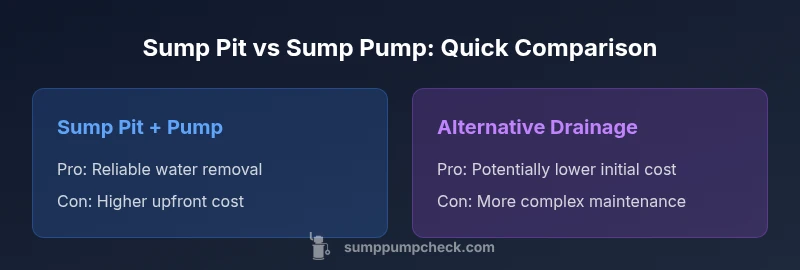
| Feature | sump-pit + pump system | alternative drainage solution (no permanent pit) |
|---|---|---|
| Typical location/installation footprint | Installed in a dedicated sump pit under floor or crawl space | Utilizes trench drainage or surface drains with a pump station outside the pit |
| Removal capacity | High-volume pumping when sized correctly | Varies by design; may be less consistent without a defined pit |
| Space and concrete requirements | Requires concrete work or pit liner; fits standard basements | Can minimize intrusive concrete work but may need trenching or vaults |
| Maintenance needs | Regular pit cleaning; check valve inspection; float switch testing | Maintenance depends on layout; may require more frequent checks if drainage paths are complex |
| Cost and install effort | Moderate to high due to pit construction and wiring | Often lower upfront if no permanent pit is required but may require trenching |
| Best use case | Traditional basements with reliable, long-term drainage | Spaces where a permanent pit isn’t feasible or retrofitting is preferred |
What's Good
- Reliable water removal when properly sized
- Durable, long-term solution for standard basements
- Clear, centralized water management with straightforward maintenance
- Fits typical basement layouts and code expectations
Drawbacks
- Higher upfront material and labor costs compared to some alternatives
- Permanent modification to basement floor or slab
- Requires precise sizing and professional installation to prevent failures
Sump Pit + Pump is generally the best fit for standard basements.
For most homes, a traditional sump-pit-and-pump setup offers the best balance of reliability, maintenance, and long-term value. The Sump Pump Check team notes that while alternatives exist for special spaces, the pit-plus-pump configuration remains the safest and most predictable choice for effective basement drainage.
FAQ
What is a sump pit?
A sump pit is a recessed basin installed in the basement floor that collects groundwater and floodwater. It provides a storage space for water before the sump pump removes it. In most homes, the pit works with a pump to prevent flooding and damp conditions.
A sump pit is a water-catching basin in the basement that feeds the sump pump when water rises.
Sump pump without a sump pit?
Most systems rely on a sump pit to hold water. If you don’t have a pit, you’d need an alternative drainage setup such as a trench or basin with integrated pumping. These configurations can be more complex and may affect maintenance.
Usually you need a pit; alternatives exist but are less common and more complex.
Maintenance needs?
Regular checks include testing the float switch, inspecting the discharge line, cleaning the pit to remove debris, and ensuring the power supply remains protected by a GFCI. Backups should be serviced per the manufacturer’s guidelines.
Keep the float switch clean and test the pump periodically.
Pump lifespan expectation?
Lifespan depends on usage, maintenance, and quality. With proper care, a sump pump can last several years, but frequent cycling or heavy inflows may shorten life. Planning for periodic replacement is prudent.
With good care, expect several years of reliable use, but be ready for eventual replacement.
Safety concerns with sump pits?
Key concerns include electrical safety around water, proper venting, and backflow prevention. Use GFCI outlets and ensure the discharge path is away from living spaces. Professional installation helps mitigate risks.
Electrical safety and preventing backflow are the main concerns; follow code and use GFCI protection.
Top Takeaways
- Choose a sump-pit+pump for reliability and ease of maintenance
- Ensure proper pit sizing and pump capacity to match inflow
- Install a backflow-preventing check valve on the discharge line
- Plan for power resilience with a backup option
- Schedule regular maintenance and testing for longevity