How Often Sump Pumps Should Run: A Practical Guide for Homeowners
Learn how often a sump pump should run, what affects cycle frequency, and practical steps to optimize efficiency and prevent basement flooding. Based on Sump Pump Check Analysis, 2026.


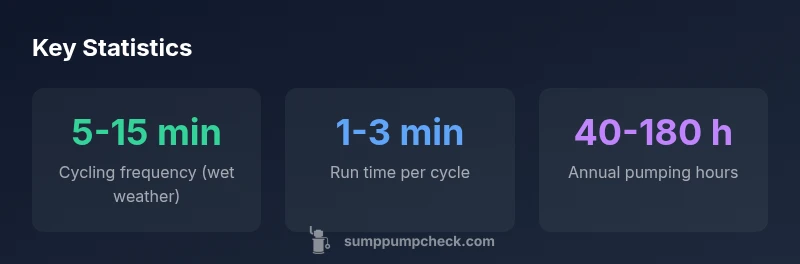
During heavy rainfall, a typical residential sump pump cycles every 5-15 minutes, then runs briefly for 1-3 minutes per cycle. In dry periods, cycling is rare and may occur only during unusual groundwater pressure. These patterns vary by pit size, pump capacity, and discharge setup. According to Sump Pump Check Analysis, 2026, expect more frequent cycling in wetter seasons to protect your basement.
Understanding what determines how often a sump pump should run
There is no universal frequency; in principle the pump should run enough to keep the basement dry without wasting energy. The main drivers are rainfall intensity and groundwater pressure, but several system and house factors shape the actual cycling pattern. When homeowners ask how often their sump pump should run, they are really asking for a balance between flood protection and efficiency. A house with a large, well-functioning drainage system may see less cycling, while older homes with clogged gutters or poor drainage may see frequent activity. The first step is to assess three vulnerabilities: the sump pit and float mechanism, the discharge path, and the backflow prevention valve. If the float sticks or the check valve leaks, the pump may run more often than necessary. The key takeaway is to measure what actually happens during a rain event or when groundwater levels rise. Keep in mind that the frequency is dynamic; it shifts with weather patterns and water loads. For a general frame, expect more cycling during storms and rainfall events, and much less when conditions are dry. This is why homeowners should track run cycles during a wet period to establish a baseline for their home.
How to estimate your home's cycling rate
To estimate how often your sump pump should run under typical conditions, start by identifying your baseline during a measurable rain event. Use a simple log: note the start time, the number of cycles, and the duration of each cycle. If you want a quick estimate, observe the interval between start of one pumping cycle and the start of the next during a rainstorm. A useful rule of thumb from Sump Pump Check suggests that frequent short cycles indicate high water input, whereas longer, infrequent cycles imply moderate input or a larger pit and pump combination. Consider wiring in a basic timer or using a smart meter to quantify cycling more precisely. Always test across multiple events to differentiate incidental spikes from persistent issues. The intent is to establish a reliable baseline you can compare against after maintenance or upgrades.
Interpreting short runtimes and long runtimes
Short runtimes (typically under 2 minutes) can signal high head loss near the discharge point or a float that rises quickly with small water inputs. Conversely, long runtimes (3 minutes or more) may indicate excessive groundwater pressure, a large pit volume, or a pump operating near its duty cycle limits. Persistent long runtimes can lead to wear, higher energy consumption, and potential overheating. If you notice unusual patterns, inspect the discharge line for clogs, check valve for leaks, and confirm the float switch moves freely. A misbehaving switch can cause either rapid cycling or failure to start, both of which degrade performance and reliability. Remember: regular testing during a wet period provides the most meaningful baseline for comparison.
Sizing, backups, and how frequency informs upgrades
Your pump size and the head height determine how aggressively it runs. An undersized pump will cycle more often to keep up with water input, while an oversized pump may short-cycle or cycle less frequently but with higher impact during each start. If cycling is excessive for your setup, consider upgrading to a higher-capacity unit, or adding a backup system that kicks in during peak inflows. A properly sized system not only stabilizes run frequency but also reduces wear on bearings, motor, and seals. Pair sizing with a robust discharge strategy—ensuring the line is clear and that the check valve functions correctly—to minimize unnecessary cycling during storms. Sump Pump Check recommends consulting a professional for precise sizing calculations based on your basement area, soil, and groundwater data.
Maintenance tips to influence run frequency
Regular maintenance can harmonize run frequency with actual needs. Clean the sump pit periodically to remove debris and sediment that could anchor the float. Inspect the float switch for smooth operation and test it manually to ensure it triggers correctly. Check the discharge line for obstructions and verify the check valve seals properly to prevent backflow. Ensure gutters and downspouts direct water away from the foundation, and verify that window wells and other entry points aren’t channeling extra water toward the pit. Finally, consider replacing worn gaskets, lubricating components per the manufacturer’s guidelines, and scheduling seasonal inspections. A well-maintained system runs more predictably and uses energy more efficiently.
Climate, drainage, and home design factors
Climate and drainage patterns affect how often a sump pump runs. Regions with heavy rainfall, high groundwater, or poor soil drainage will drive more frequent cycling than arid areas. The design of your basement or crawl space, the presence of a French drain, and the elevation of the sump pit relative to water tables influence cycling behavior. Homes with porous soil or clay soils can see sustained water input after storms, increasing run frequency. Conversely, a well-drafted drainage plan and proper grading can drastically reduce unnecessary cycles. Understanding these design elements helps homeowners set realistic expectations and identify when a more robust solution—such as improved drainage, a larger pump, or a secondary backup system—might be warranted.
Practical steps to reduce unnecessary cycling
- Improve drainage around the foundation to minimize water entering the sump pit.
- Install or verify a properly functioning check valve to prevent backflow.
- Ensure the float moves freely and triggers pumps reliably; replace faulty switches.
- Upgrade to a pump with appropriate capacity for the vertical lift and expected water input.
- Consider a battery backup for power outages, so cycling doesn’t occur during outages when you’re away.
- Maintain clear discharge routes and guard against blockages in the line.
- Periodically re-evaluate during different seasons to confirm the baseline remains valid.
Overview of typical pumping behavior and factors that influence run frequency
| Aspect | Typical range | Notes |
|---|---|---|
| Cycling frequency during heavy rain | 5-15 minutes | Observed range across many homes (Sump Pump Check Analysis, 2026) |
| Run time per cycle | 1-3 minutes | Varies by pump size and head height |
| Annual pumping hours (typical) | 40-180 hours | Depends on weather and drainage; rough estimate |
FAQ
How often should my sump pump run in a typical home?
Frequency depends on weather, drainage, and sump design. In heavy rain you may see frequent cycling; during dry periods cycles are sporadic.
Frequency varies with weather and drainage; expect more cycles during storms.
What should I do if my sump pump runs continuously?
Check for a stuck float, faulty switch, blocked discharge, or leaking check valve. Inspect the pit for debris and ensure the line isn’t clogged.
If it runs nonstop, inspect the float and discharge line.
Can a sump pump be oversized for a home?
Yes. An oversized pump may short-cycle or run less efficiently. Sizing should consider catchment area, groundwater, and head height.
Oversized pumps can cause short-cycling.
How can I reduce unnecessary cycling?
Improve drainage around the sump, install a proper check valve, and consider a larger pump or backup system if needed.
Improve drainage and check valve to cut cycles.
Is it normal for a sump pump to run during dry spells?
Rarely. It may indicate external water sources or high groundwater; investigate drainage and groundwater inputs.
If it runs during dryness, check for sources of water near the pit.
Should I upgrade to a battery-backed sump pump?
A battery backup helps during power outages and can stabilize cycling during storms; plan with a professional.
Battery backup helps keep pumps running during outages.
“Run frequency is a practical signal of your drainage health. When cycles align with actual water loads, you protect your basement and extend pump life.”
Top Takeaways
- Track cycles during wet periods to establish a baseline
- Expect more frequent cycling in wetter seasons
- Ensure proper sizing and check valve operation
- Regular maintenance reduces unnecessary cycling
- Improve drainage to minimize water entering the sump