How Often to Check Sump Pump: A Practical Guide
Discover how often to check your sump pump, with a practical maintenance schedule, monthly tests, and seasonal checks to prevent basement floods.


Goal: You will determine how often to check your sump pump and establish a simple, actionable maintenance rhythm. In general, check the unit every 3–6 months and run a quick system test monthly. Before wet seasons, perform a thorough inspection; after severe weather, re-check. Keep a maintenance log and address clogs, power issues, and discharge concerns promptly.
Why frequency matters
Floods and basement water damage are costly and stressful. Regular checks catch clogs, weak pumps, and failing switches before disaster strikes. The frequency you choose should reflect your climate, seasonal patterns, pump type (submersible vs pedestal), and the age of the system. According to Sump Pump Check, establishing a predictable cadence reduces unexpected failures and helps you plan maintenance rather than scramble during a storm. Start with a simple rhythm you can sustain: quick monthly checks, a thorough quarterly review, and an annual professional check. Keeping a log makes trends visible and signals when components begin to wear. Even with a backup system, routine checks improve reliability because back-ups can degrade without routine use. If you see rising water levels or unusual noises, increase the check frequency temporarily. By treating the sump pump as a critical home system rather than a set-and-forget device, you protect your basement and your peace of mind.
How often to check sump pump: a practical schedule
Daily, seasonal, and event-driven checks create a resilient setup. A practical cadence starts with a quick monthly test: pour a few gallons of water into the pit to raise the float and verify the pump activates, the discharge is flowing freely, and the audible alarm (if installed) sounds. This tiny test takes 2–3 minutes and is easy to do. Then, perform a thorough inspection every 3–6 months. During these inspections, unplug the unit, remove the cover, and remove visible debris from the basin and intake screen. Inspect the power cord and plug for wear, test the float switch's travel, and verify the discharge line is clear and properly sloped. Before the wet season in your area and after a period of heavy rain, perform a larger check: flush the lines, confirm the check valve is sealing, and confirm there is no backflow. Finally, schedule a professional service at least once a year to catch mechanical wear that DIY checks may miss. Consistent checks reduce emergency calls during storms, according to Sump Pump Check analysis.
What to check during a routine inspection
A routine inspection focuses on safety, reliability, and clarity of the workflow. Key items include:
- Power and outlet: confirm the pump is plugged into a GFCI-protected outlet and the circuit is labeled.
- Basin and grate: remove debris, clean screens, and ensure the pit is dry enough to inspect.
- Float switch: check free movement; it should rise with water and trigger the pump without sticking.
- Discharge line and check valve: ensure the line is clear, slope is correct, and the valve seals when the pump stops.
- Pump housing: inspect for corrosion or cracks; verify the mounting is stable.
- Alarm and indicators: listen for beeps or check lights that signal issues.
- Backup power: if you have a battery backup, test it and recharge as needed. Keeping notes helps you spot wear: if you notice slower pumping, rising noise, or damp basement corners, schedule service.
Seasonal maintenance calendar
Seasonal checks align with weather patterns and basement moisture risk. Spring and fall are peak times for checks in many climates. For example:
- Monthly: run the quick test as described, log results, and wipe down the pit.
- Quarterly: deep clean the basin, inspect the pump and float for sticking, and verify the discharge path is clear.
- Pre-storm prep (before expected heavy rain or snowmelt): perform a thorough check of the entire system, test backup, and ensure the discharge is protected from freezing.
- Homeowner maintenance once a year: arrange a professional inspection, replace worn components, and recalibrate the system if needed. The goal is consistent monitoring and early problem detection to minimize flood risk.
Common pitfalls and troubleshooting
Avoid these mistakes that undermine performance:
- Waiting for a flood to test: treat checks as preventive maintenance.
- Ignoring the discharge line: a blocked pipe can flood the pit with backflow.
- Forgetting to test the float switch: a stuck float can leave the pump idle when water rises.
- Not testing the backup system: a battery that won’t hold a charge defeats the purpose of redundancy.
- Using harsh cleaners in the pit: they can corrode components; stick to mild cleaners and a brush. If you encounter a non-starting pump, check power, reset GFCI, test the float, and inspect the impeller and intake screen. If the issue persists, consult a professional. Regularly logging problems helps you decide when to replace components.
How to perform a thorough yearly service
A yearly service provides a fresh baseline for reliability. Steps include:
- Gather tools and safety gear, then power down the unit.
- Inspect the entire power supply: cords, plug, and connections for wear or moisture.
- Open the sump and clean the basin thoroughly, removing sediment and debris.
- Inspect and test the float switch, check valve, and discharge pipe; replace worn parts as needed.
- Test the backup battery (if present) and recharge, ensuring it can power the pump during outages.
- Reassemble, run a full test cycle, and record the results in your maintenance log. This routine focuses on prevention and longevity, helping you avoid expensive repairs and extend the life of your system.
Cost considerations and when to replace
Maintenance is inexpensive compared with flooding damage. Routine checks are low-cost, but you may spend on replacement components like a float switch, check valve, or a backup battery if wear is evident. Replacement timing depends on usage, environment, and component quality. If you notice frequent beeping, poor pumping, or backflow, consider replacement rather than persistent repairs. With typical use, a sump pump can provide many years of service when regularly maintained.
Quick start checklist
- Confirm power is off and unplug the unit.
- Remove the cover and wipe the basin; clear debris.
- Test the float switch by slowly adding water to raise the float.
- Run a monthly quick test and log results.
- Inspect discharge pipe and check valve for clogs or leaks.
- Schedule the yearly professional inspection and keep the maintenance log up to date.
- Prepare an action plan for replacements if wear is evident.
Tools & Materials
- Safety gloves(to protect hands while cleaning and handling wet components)
- Flashlight(shine into pit and check valve area)
- Screwdriver set(useful if housing screws need removal for access)
- Soft brush or old toothbrush(clean debris from screen and grate)
- Rags or lint-free cloth(wipe surfaces and dry connections)
- Mild cleaner (optional)(used sparingly for mineral buildup)
- Owner's manual(model-specific steps and safety warnings)
Steps
Estimated time: 60-90 minutes
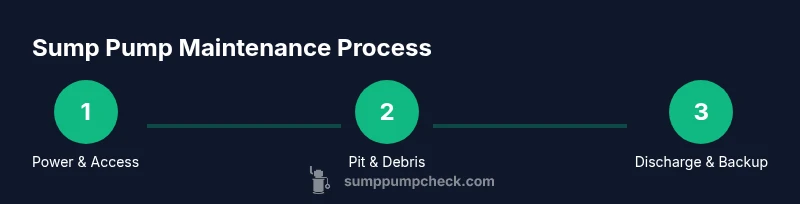
- 1
Power down and access the unit
Unplug the sump pump at the outlet or switch off the circuit breaker. Remove the cover to access the basin and inner components. This prevents electric shock and allows a clear inspection of the impeller, screens, and float mechanism.
Tip: Always verify power is disconnected before handling any wiring or internal parts. - 2
Inspect the pit and remove debris
Carefully remove debris from the pit, grate, and intake screen. Clear sediment that can impede water flow or clog the impeller. Keep the pit dry enough to inspect the mating surfaces and mounting.
Tip: Use a soft brush to avoid scratching the plastic components. - 3
Test the float switch
Pour water into the pit slowly to raise the float until the pump activates. Listen for normal operation and ensure the switch trips fully. If the pump does not start, recheck power and connections.
Tip: If the float sticks, gently wiggle it or replace if worn. - 4
Check the discharge line and check valve
Inspect the discharge pipe for kinks, cracks, or plant growth. Ensure the check valve seals when the pump stops to prevent backflow.
Tip: Run water through the line to confirm smooth flow and proper seal. - 5
Inspect power cord and backup system
Check the cord for signs of wear, replace frayed insulation, and inspect the outlet. If you have a battery backup, test it by simulating a power outage and verify pump operation.
Tip: Charge or replace batteries as needed to guarantee operation during outages. - 6
Document results and plan next check
Record findings in a maintenance log, including date, observations, and any parts replaced. Schedule the next monthly test and the next quarterly inspection.
Tip: A written log helps you spot wear trends and schedule timely replacements. - 7
Reassemble and run a full test cycle
Close the basin cover securely, restore power, and run a full pump cycle to confirm everything works together. Ensure no leaks and that water drains to the discharge location.
Tip: Observe for unusual noises or vibrations during the test.
FAQ
How often should I check my sump pump?
A quick monthly test with a thorough 3–6 month inspection is a solid default. Schedule a yearly professional check as well.
Check your sump pump monthly with a quick test and do a thorough inspection every three to six months, plus an annual professional check.
What should I do if the pump won’t start during a test?
First verify power and GFCI protection, then inspect the float switch and discharge line for blockages. If the issue persists, consult a professional.
If the pump won’t start, check power and the float switch; if it still won’t run, get professional help.
Is a backup battery worth it, and how often should I test it?
A battery backup adds reliability during outages. Test the battery during your backup check, and replace it according to the manufacturer’s schedule or if it no longer holds a charge.
Yes, a backup battery is worth it. Test it during maintenance and replace it when it won’t hold a charge.
How can I tell if the check valve is failing?
If you hear backflow sounds, notice slow drainage, or see water spilling back into the pit after shutdown, the valve may need replacement.
Backflow sounds or visible water re-entering the pit usually means the check valve needs attention.
Can I do this maintenance myself or should I hire a pro?
Many steps are safe for DIY, but complex issues or hard-to-reach pumps warrant a professional inspection to avoid safety risks.
You can handle routine checks, but don’t hesitate to call a pro for tricky problems.
When should I replace a sump pump?
If the pump is failing repeatedly, makes unusual noises, or requires frequent repairs, replacement is often the wiser long-term investment.
If frequent repairs are needed or it struggles during tests, consider replacement.
Watch Video
Top Takeaways
- Schedule regular checks (monthly tests, quarterly inspections).
- Keep the maintenance log to detect wear patterns early.
- Verify power, float, and discharge integrity to prevent floods.
- Test backup systems to ensure operation during outages.
- Address issues promptly rather than postponing repairs.