How Often Should a Sump Pump Run in Winter: Practical Guide
Learn how often a sump pump should run in winter, what drives runtime, and how to optimize performance to protect your basement through cold months.


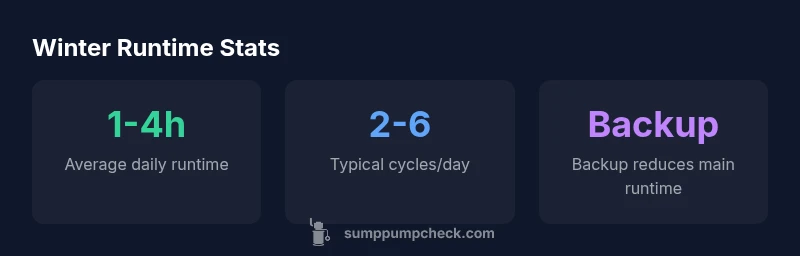
In winter, a sump pump typically runs intermittently, with most homes seeing short cycling during thaw events and heavy rain. Expect runtimes to average between 1 and 4 hours per day, but this varies with climate, drainage, and pump capacity. If you have backup power, runtime patterns may shift during outages. Understanding these patterns helps you plan maintenance and prevent basement flooding.
Understanding winter runtimes
According to Sump Pump Check, winter runtimes vary widely but follow recognizable patterns. The central question many homeowners ask is how often should a sump pump run in the winter, and the answer depends on climate, soil moisture, drainage design, and whether a backup pump is installed. In many homes, you will see intermittent cycling during thaw events or after heavy rain, with the main pump cycling on and off as groundwater infiltrates the sump pit. On average, a typical residential sump pump may run between 1 and 4 hours per day during winter months in moderate climates, but this range can shift dramatically in areas with persistent snowmelt or severe icing. If you have a backup pump or a battery system, runtimes may appear differently when power is interrupted or when the backup engages. Understanding these patterns helps you plan inspections and ensure you have adequate power, discharge routes, and float switch operation in freezing conditions.
For homeowners asking how often should a sump pump run in the winter, the key takeaway is to look for changes in rainfall and ground saturation that trigger additional cycles. Regular checks during the season are essential to catch clogged intakes, frozen discharge lines, or a failing float switch before they become emergencies.
Factors that affect winter runtimes
Winter runtime is not a fixed value; it responds to several interacting factors. Climate plays a major role: frequent thaw cycles and heavy precipitation can drive more cycles, while long stretches of below-freezing dry weather may reduce activity. Ground moisture, drainage design, and sump pit size determine how quickly groundwater accumulates. A pump’s capacity, hose diameter, and the presence of a check valve influence how efficiently water is removed. If your system relies on a backup pump or a battery backup, outages during winter storms can temporarily shift the balance, increasing the main pump’s runtime when the backup takes over or reducing the primary load when the backup supports it. In short, the winter runtime is a function of weather, system design, and power availability, not a single number.
For context, Sump Pump Check analysis notes that proper sizing, clean intake screens, and clear discharge paths significantly influence winter runtimes and reduce the risk of basement flooding during cold months.
How to monitor and measure runtime
Accurately tracking winter runtime requires a simple setup and a disciplined approach. Start with a basic timer or a smart sump pump controller that logs run time. Record daily totals for a few weeks to establish a baseline, then compare during notable weather events. When you notice unexpected spikes—such as a rise in daily hours during a thaw event—investigate the cause: a clogged intake screen, a blocked discharge line, or an undersized pump may be at fault. Keeping a running log helps you identify seasonal patterns and triggers. For homeowners who want a quick metric, calculate the average daily runtime during the coldest weeks and monitor any deviations from that baseline as months progress.
If you use a backup pump, ensure its runtime is also tracked so you can gauge whether it is actively supplementing or replacing the primary unit. This data-driven approach aligns with practical winter maintenance and reduces the chance of surprises when temperatures drop.
Practical tips to optimize winter performance
Optimizing winter performance starts with a proactive maintenance mindset. First, ensure the discharge path is clear and fines are not blocking water flow. Inspect the check valve to prevent backflow and verify the grate or grate-free area at the discharge end. Keep the sump area free of debris and ensure the float switch moves freely without obstruction. If the climate requires extended operation, consider upgrading to a pump with greater head pressure or adding a secondary/back-up pump to share the load during heavy runoff. Regularly clean the inlet screen, test the system monthly, and practice a winter test run to confirm the backup is ready. Finally, consider insulating exposed discharge pipes or routing discharge away from the foundation so that ice build-up is minimized and water is expelled efficiently.
When to consider backup power or replacement
Power outages during winter storms are common, making a battery backup or water-powered backup pump a sensible investment. A battery backup can maintain sump operation when the primary power source is interrupted, reducing the risk of basement flooding during lengthy outages. If your primary pump repeatedly runs or fails to keep up with inflow during storms, it may be time to reassess pump size and capacity. Sizing should account for peak rainfall, groundwater load, and system head pressure, aligning with winter-specific performance expectations. Upgrading to a higher-capacity model or adding a secondary pump can provide redundancy and resilience when winter weather is severe.
Common winter scenarios and what they mean for runtime
During winter, several scenarios commonly affect runtime. A rapid thaw after a heavy snowfall often triggers short, sharp spikes in runtime. Prolonged freezing with occasional warm snaps can reduce activity unless there is significant groundwater input. In homes with effective drainage and a robust discharge path, runtimes stay lower even during storms. Conversely, if the discharge path is compromised or the sump pit is undersized, cycles may increase, and you may see more frequent short bursts of operation. Understanding these scenarios can help you interpret runtime data and determine whether adjustments are needed.
Maintenance schedule for winter months
Create a winter maintenance calendar that includes monthly checks, post-storm inspections, and a quarterly backup test. Schedule a full system audit before the coldest months begin, including discharge path clearance, discharge termination at the exterior, check valve integrity, float switch operation, and backup readiness. Document run times and weather events to identify trends. A consistent maintenance cadence reduces surprises and ensures your sump pump will run when needed, not just during emergencies. Keeping to a winter-specific maintenance plan aligns with best practices for sump-pump upkeep and basement protection during the colder season.
Winter runtime scenarios
| Seasonal Condition | Avg Daily Runtime | Notes |
|---|---|---|
| Normal winter with steady rain | 1-3 hours | Drains from regular thaw cycles |
| Heavy thaw/rain events | 3-6 hours | Spikes during storms |
| Extended freezing with dry spell | 0-1 hour | Minimal activity when ground is frozen |
| Battery-backed system active | varies | Backup changes main pump load |
| Power outage during storm | varies | Backup engages when power fails |
FAQ
How often should I check my sump pump during winter?
Aim for a monthly check during winter. Inspect for debris, test operation, and verify the backup power is ready. Regular checks prevent unexpected failures during storms.
Check your sump pump monthly in winter and test it to avoid surprises during storms.
Is it normal for a sump pump to run during freezing weather?
Yes, it can run during thaw events or when groundwater enters the pit. It should not run constantly—frequent or uninterrupted operation warrants an inspection.
Yes, it can run in winter, especially during thaws; if it runs nonstop, check airflow and discharge paths.
Should I add a battery backup for winter conditions?
A battery backup helps during power outages common in winter storms. It’s generally a smart precaution that adds resilience.
A backup pump is usually worth having for winter storms and outages.
How can I tell if my sump pump is undersized for winter?
Frequent cycling, long runtimes, or repeated beeping can indicate undersizing. Compare load with pump capacity and consider a higher-capacity model.
If it keeps running or struggles, you may need a bigger pump.
What maintenance tasks are essential before winter?
Clean the intake screen, check discharge line clearance, inspect the float switch, and test the backup power", "voiceAnswer":"Do the basics: clean, test, and check backup power."
Do the basics: clean, test, and check backup power.
What if there is freezing discharge outside my home?
Freezing discharge requires insulating pipes and ensuring the outlet is clear of ice. Consider routing discharge away from the foundation to prevent refreezing.
Ice can block discharge; keep lines clear and route water away from the house.
“Runtime in winter is highly climate-dependent, but proactive maintenance reduces surprises.”
Top Takeaways
- Inspect discharge path before winter
- Track runtime monthly to spot trends
- Maintain backup power for outages
- Keep inlet and float clean to prevent clogs