When to service sump pump: timing, signs, and steps for homeowners
Discover when to service sump pump, the signs it needs care, and a practical, step-by-step maintenance plan for homeowners to prevent basement flooding and avoid costly repairs.


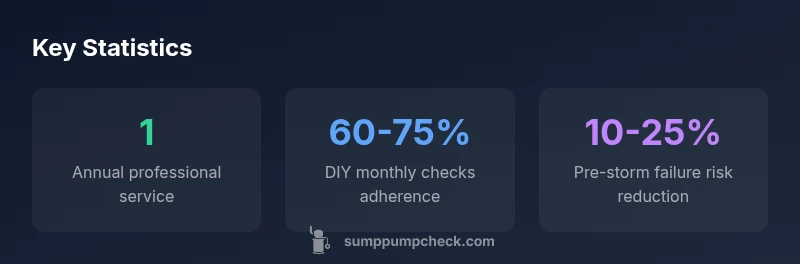
Most homes should schedule professional sump pump service at least once per year, with monthly DIY checks. In areas with heavy rainfall or rising groundwater, an additional pre-storm service is wise. According to Sump Pump Check, proactive maintenance reduces failure risk and costly repairs. Also inspect the discharge line, float switch, and power cord during each visit to ensure safe operation.
Why timing matters for sump pump service
Understanding when to service sump pump is essential for preventing basement floods and unnecessary repairs. The timing of routine maintenance affects reliability, especially in climates with pronounced seasonal rain, rapid snowmelt, or high groundwater. The Sump Pump Check team emphasizes a proactive mindset: a yearly professional check forms the backbone of reliability, while monthly DIY inspections catch developing issues before they escalate. In practice, the goal is to catch wear on bearings, inspect seals, verify the check valve, and confirm the discharge line remains clear. When to service sump pump also depends on usage: a heavily used system, or one powering a large basement, benefits from more frequent attention. By coordinating professional visits with seasonal weather patterns, homeowners can minimize the risk of unexpected failures during storms and keep operating costs in check.
Establishing your baseline: DIY checks and professional visits
Creating a maintenance baseline helps you decide when to service sump pump. Start by documenting the pump’s age, model, and last service date. Establish a monthly DIY inspection routine: listen for odd noises, check for dripping or moisture around the unit, ensure electrical cords are intact, and confirm the float switch moves freely. Maintain a log of observations and any alarms. A professional visit should occur at least once per year, but regions with heavy rainfall or rising groundwater may require an additional pre-storm check. The goal is consistency: predictable service intervals and clear notes make it easier to spot trends and plan future visits. The Sump Pump Check methodology recommends pairing practical DIY checks with annual professional evaluations to optimize performance and extend the pump’s life.
What happens during a professional sump pump service
During a professional service, technicians perform a comprehensive inspection of the device, including motor health, impeller condition, seals, and mounting. They test the discharge line for clogs, verify the backflow preventer or check valve, and ensure the float switch operates smoothly through its entire travel. A service also includes testing the power supply, GFCI protection, and battery backup where applicable. Technicians may seal any minor leaks, lubricate moving parts, and replace worn components with compatible parts. After the visit, you receive a written report detailing findings, recommended repairs, and maintenance actions for the coming year. Relying on licensed professionals for annual service reduces the likelihood of hidden failures and keeps basement water threats manageable.
Monthly DIY maintenance checklist
A practical DIY routine keeps your sump pump in good shape between professional visits. Each month, perform the following: (1) visually inspect the unit for signs of corrosion or leaks; (2) check the discharge line for obstructions and clear any debris; (3) ensure the power cord and outlet are dry and undamaged; (4) manually test the float switch by lifting it to verify the pump starts and stops; (5) listen for unusual sounds that could indicate bearing wear or impeller issues; (6) record observations in your maintenance log. If you notice reduced pumping speed, repeated cycling, or alarms, schedule a professional evaluation sooner rather than later.
Seasonal and regional timing considerations
Seasonal timing is a key factor when planning service. In spring and early summer, snowmelt and heavy rainfall increase water pressure on basements, making pre-season checks highly valuable. In flood-prone areas, more frequent checks may be warranted, especially just before and during rainy seasons. Cold months require attention to freezing discharge and any ice-related blockages. If groundwater levels are rising, you may need more frequent inspections year-round. Local codes and climate data influence the recommended cadence, so align your plan with regional risk profiles and municipal guidance. A structured seasonal schedule helps you stay ahead of potential failures.
Common issues and troubleshooting before a storm
Before a storm, confirm the sump pit remains clean and free of debris that could impede the pump. Check for water around the base of the unit, which may indicate a seal or gasket issue. Verify the battery backup is charged, if you have one, and test the backup pump’s operation. Inspect the check valve to prevent backflow, and ensure the discharge hose is properly secured and directed away from your foundation. If the pump runs but water remains, you may have a blockage or weak pump performance that needs professional attention. Early detection saves energy, reduces noise, and prevents flooding.
Building a maintenance log and budget
A maintenance log helps you track service history, pump age, parts replaced, and any recurring issues. Record key dates, odometer-like usage data (how many storms or cycles), and the outcomes of both DIY checks and professional visits. Budget for annual professional service plus occasional part replacements (like seals, bearings, or valves). By planning ahead, you avoid expensive emergency repairs and extend the life of your sump pump. The log also supports warranty claims and helps you justify upgrades when the current unit nears its expected lifespan.
How to choose a service provider: questions to ask
Choosing the right professional is as important as deciding when to service sump pump. Look for a licensed contractor with experience in residential sump pump systems, ask for references, and request a written maintenance plan. Confirm that they inspect critical components (motor, impeller, seals, check valve, float switch) and provide a clear price estimate. Inquire about battery backup evaluation, backup power options, and any seamless upgrade paths. A trustworthy provider will offer transparent scheduling, comprehensive reports, and practical recommendations tailored to your home’s needs.
Recommended service timeline and checks
| Check Type | Recommended Frequency | What to Inspect | Notes |
|---|---|---|---|
| Professional service | Annual | Motor, seals, check valve, float switch, discharge line | Best done by a licensed tech |
| Monthly DIY check | Monthly | Visual pump condition, logs, alarms, power cord | Keep a running log |
| Pre-storm quick check | Before rainy season | Discharge line, backup battery, alarms | Coordinate with forecast |
FAQ
How often should a sump pump be serviced?
Typically annually by a professional, with monthly DIY checks. If you experience heavy rainfall or high groundwater, adjust cadence accordingly.
Most sump pumps should be serviced once a year by a professional, with monthly DIY checks. In heavy-rain areas, consider additional pre-storm checks.
What signs indicate a sump pump needs service?
Unusual noises, slow water removal, frequent cycling, or alarms indicate it’s time for inspection.
Listen for strange noises, watch for slow drainage, or alarms—these mean the pump likely needs service.
Can I service a sump pump myself?
Basic cleaning and visual checks are feasible, but complex tasks (bearing, electrical) should be handled by a professional.
You can do simple checks, but leave major components to a professional.
What happens during a professional sump pump service?
They test operation, inspect discharge and check valve, verify float switch, seals, and power, and provide a maintenance plan.
Professionals test the pump, inspect valves and wiring, and outline maintenance steps.
Is pre-storm seasonal timing relevant in winter?
Yes. Do a pre-season check before wet weather, especially in regions prone to heavy rain or rapid snowmelt.
Yes—do a pre-season check before the wet season.
“Regular maintenance is the most reliable defense against basement flooding; a simple, consistent schedule reduces surprises.”
Top Takeaways
- Schedule annual professional service as a baseline.
- Do monthly DIY checks to catch issues early.
- Do a pre-storm check before heavy rainfall.
- Maintain a detailed maintenance log for trends and planning.