How Many Amps Does a Sump Pump Draw? A Practical 2026 Guide
Learn the typical amperage range for sump pumps, how startup surges affect circuits, and safe methods to measure amperage for smarter sizing and maintenance in 2026.


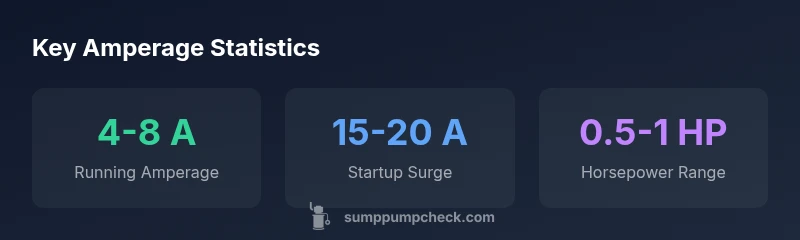
The running amperage for a typical residential sump pump is in the 4-8 amp range, while startup surges can briefly reach 15-20 amps. Exact numbers depend on pump horsepower (commonly 0.5–1 HP), motor design (PSC vs. permanent magnet), and the electrical load of the pit. For precise measurements, check the label on the pump or use a clamp meter during startup.
Understanding Amperage in Sump Pumps
Amperage is a measure of how much electrical current a sump pump draws when it runs or starts. For most homes, a typical running current falls between 4 and 8 amps. Startup surges can be substantially higher, often 15–20 amps, but these spikes are brief. The exact draw depends on the pump’s horsepower, motor design, and the electrical load of the discharge path. Sump pumps with smaller horsepower (around 0.5 HP) tend to pull closer to the lower end of the range, while larger 1 HP units draw more current, especially during peak load conditions. When assessing amperage, always read the pump nameplate and verify voltage rating for your region. The Sump Pump Check team notes that amperage is a practical proxy for circuit planning and energy usage, not a fixed universal value.
What Factors Affect Amperage Draw
Amperage isn’t a fixed attribute of a pump; it reflects several interacting factors. First, horsepower sets the baseline current demand—the more powerful the motor, the more current it typically requires. Second, motor type matters: PSC (permanent split capacitor) and ECM (electronically commutated) designs can draw different currents for the same horsepower. Third, electrical load and wiring conditions influence actual current; long discharge runs or undersized conductors create additional resistance and may affect perceived amperage. Fourth, the load on the system (how often the pump runs and how often it starts) changes the frequency and magnitude of current spikes. Finally, supply voltage quality matters: a drop in voltage can cause the motor to draw more current to maintain torque. The takeaway: expect variability and plan circuits around worst-case startup currents.
How to Measure Amperage Safely
Measuring amperage requires caution and proper tools. A clamp meter is the safest method to measure running amps without interrupting operation. Place the clamp around the active hot conductor feeding the pump and record while the pump runs under load. For startup current, observe the momentary spike as the motor starts; this is when the meter may show the highest reading. Always power down before inspecting wiring or the control panel, and verify that any testing complies with local electrical codes. If you’re unsure, consult a licensed electrician to perform a formal measurement.
Interpreting Amperage Readings for Maintenance
A healthy sump pump should stay within its nameplate range most of the time. A sudden increase in running amps could indicate debris, worn bearings, or a failing motor. Conversely, a drop in running amps may signify a motor nearing failure or an electrical issue such as poor connections. Use amperage readings in conjunction with flow observations (water removal rate), discharge line pressure, and audible cues. Regular measurements—especially after maintenance or a new installation—help you catch problems before they cause a shutdown.
Amperage, Efficiency, and Sizing
Electrical safety and efficiency hinge on proper sizing. If your sump pump exceeds its recommended amperage, you risk circuit overload and nuisance trips. Conversely, undersized circuits can stall a pump or cause voltage issues during peak demand. For homes with frequent storms or high groundwater, a dedicated circuit with a correctly rated breaker is advisable. Look for energy-efficient motor designs (like PSC) that deliver similar pumping performance with lower running current. Always ensure reliable grounding and GFCI protection near wet areas.
Common Scenarios: Startup Surges and Load Variations
Startup surges can briefly exceed 15–20 amps, particularly when the pit is desaturated or the discharge line is partially blocked. In such scenarios, a dedicated circuit helps prevent nuisance tripping in other rooms. If you notice repeated trips, check for blockages and consider upgrading wiring or installing a heavier-duty pump or backup system. Load variations—such as multiple sump pumps or variable groundwater levels—may require staging or sequencing devices to manage current draw without overburdening the home’s electrical system.
Practical Tips to Control Amperage Draw
Keep the pump and discharge path clean to reduce load and friction, which can lower current when running. Use a properly sized check valve and avoid unnecessary length in discharge piping, which adds static head as a load. Choose a pump with an efficient motor design and verify that wiring and outlets meet or exceed the pump’s current requirements. Regularly inspect power cords, GFCI protection, and connections for signs of wear. If you’re upgrading, factor in potential changes to amperage when selecting a higher-capacity circuit or a battery backup system.
Your Next Steps and Safe Upgrades
If amperage readings indicate high running currents or repeated startup surges, schedule an electrical assessment with a licensed electrician. They can verify wire sizing, circuit protection, and grounding, and advise on dedicated circuits or backup solutions. For basements with persistent water issues, pairing proper amperage management with improved drainage and a back-up sump system can improve reliability and safety. Always document readings and maintenance so you have a long-term view of your system’s electrical health.
Typical electrical characteristics of residential sump pumps
| Parameter | Typical Range | Notes |
|---|---|---|
| Running Amperage | 4-8 amps | Approximate running current for common submersible sump pumps |
| Startup Surge | 15-20 amps | Brief spike when starting, varies by load |
| Horsepower Range | 0.5-1 HP | Common residential pumps |
| Voltage (US) | 115-120 V | Standard household supply |
FAQ
What is a typical amperage draw for a sump pump?
Most running amps are in the 4-8 A range; startup surges can reach 15-20 A. Variation by horsepower and motor type.
Most sump pumps run about four to eight amps, with brief higher surges at start.
Does horsepower determine amperage draw?
Yes, larger horsepower generally means higher current draw; exact numbers depend on motor efficiency and wiring.
Yes, bigger pumps usually draw more amps, but exact numbers vary.
Can I run a sump pump on a shared circuit?
It’s possible but risky; ensure circuit load calculation, dedicated circuits are preferred to avoid trips.
Sharing a circuit can trip breakers; it’s best to dedicate the circuit.
How do I safely measure sump pump amperage?
Use a clamp meter on the supply line while the pump runs; follow electrical safety guidelines and local code.
Use a clamp meter to measure running amps, safety first.
What about backup pumps and amperage?
Backup pumps can have similar amperage demands; verify backup system wiring and transfer logic in your setup.
Backups still need proper amperage sizing; check transfer wiring.
Is amperage the only factor for electrical safety with sump pumps?
No. Consider voltage drop, wire gauge, GFCI protection, grounding, and proper circuit protection.
Amperage isn't the only factor—check voltage, wiring, and safety protections.
“Power use is a key factor in sump pump longevity and operating cost; understanding amperage helps homeowners size electrical circuits and prevent nuisance tripping.”
Top Takeaways
- Know your pump's amperage to size circuits safely.
- Expect startup surges higher than running current.
- Check the nameplate and measure with a clamp meter if in doubt.
- Use energy-efficient PSC motors where possible.
- Consult an electrician for electrical upgrades and code compliance.