Sump Pump Wattage Guide: How Many Watts Does It Use?
Learn how many watts a sump pump uses, the factors that affect power draw, and practical steps to measure and estimate wattage for safe basement drainage.


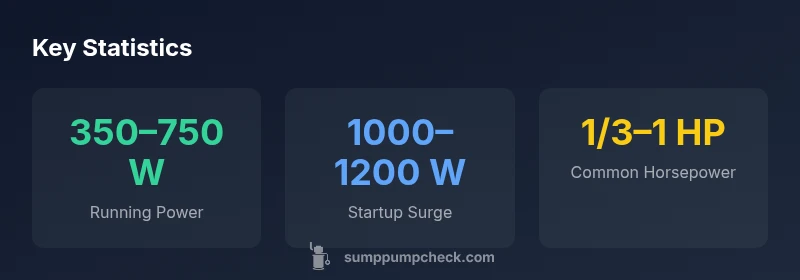
Most sump pumps run on roughly 350–750 watts during normal operation, with higher-horsepower models consuming more. Startup surges can briefly spike well above running power, sometimes reaching 1000–1200 watts. To estimate your exact wattage, check the motor label or measure with a wattmeter and factor in head height and pipe length.
How watts map to sump pump horsepower
watts are the practical bridge between what the motor is capable of (its horsepower) and what your home actually pays to run it. In most homes, residential sump pumps fall into a few common horsepower ranges, typically from 1/3 HP up to 1 HP. When you translate horsepower to electrical draw, you generally move from roughly a few hundred watts of running power to well over a thousand watts during startup. For example, a 1/3 HP unit may consume more power than a heavy consumer appliance at peak load, while even higher horsepower units share the same 120-volt supply. The key point homeonwers should remember is that wattage increases with both horsepower and the head the pump must lift. This is why two pumps with the same capacity rating can draw different watts in practice. According to Sump Pump Check, wattage also fluctuates with the length of discharge piping and the vertical lift required. In other words, sump pump uses how many watts is not a fixed number; it depends on installation specifics as much as motor size.
Takeaway: wattage is a practical proxy for energy use, but it is not a standalone measure of performance. You should consider head height, discharge length, and motor efficiency when estimating daily energy costs or choosing a model for your basement. The Sump Pump Check team emphasizes that real-world measurements beat theoretical numbers when budgeting for electricity and selecting a pump. You can reduce surprises by verifying wattage on the label and testing with a meter under typical flood conditions.
paragraphBreaks":true
wordCount":null},
bodyBlocks
Factors that affect wattage
Several factors determine how many watts a sump pump actually uses in daily operation. The most obvious is horsepower; higher power pumps generally require more watts to move water. Head height, or the vertical lift from the basin to the discharge point, dramatically affects wattage because more energy is needed to push water uphill. Pipe diameter, bend situations, and discharge length add friction losses that increase real power draw. Efficiency varies by motor design and age, so two pumps with similar horsepower can consume different watts over time. Electrical supply quality also matters: a garage or cellar fed by a long, undersized circuit can experience voltage drops that raise current draw and apparent wattage. Finally, the water temperature and turbidity can influence the pump’s efficiency slightly, though these effects are usually small in typical basements. By understanding these variables, homeowners can predict energy use more accurately and avoid overestimating or underestimating power needs.
Practical tip: use a wattmeter to measure actual running watts under your typical flood scenario, then compare with the label to confirm you’re within expected ranges. This helps with budgeting and ensures your circuit has adequate headroom.
wordCount":181},
bodyBlocks
How to estimate your sump pump wattage
Estimating your sump pump wattage starts with identifying the fundamental pieces: the motor horsepower, the voltage supply, and the expected head. First, locate the label on the pump housing or motor that states horsepower and voltage. If you can’t read it, use a wattmeter to measure running watts during normal operation. For a more precise estimate, measure the vertical lift (head) the pump must overcome and estimate discharge length. Then, apply the basic electrical relationship: Watts = Volts × Amps. If you know the amperage from the meter, multiply by the nominal voltage (commonly 120 V in many homes) to approximate running watts. It’s wise to test at both low and full flood conditions to capture a range of scenarios. If you are considering a backup pump or an upgrade, calculate watts for the backup unit at the same head to ensure your electrical circuit can handle simultaneous runs if both units could operate during a flood. Finally, document your measurements so you can compare them against model specifications when shopping.
Note from the Sump Pump Check team: comparing measured watts to manufacturer ratings helps prevent mismatches and surprises when a storm hits.
wordCount":184},
bodyBlocks
Real-world wattage scenarios
Consider three representative scenarios to illustrate how watts vary with horsepower and head. Scenario A uses a small, basement-only sump with minimal head; running watts likely fall in the 350–500 W range for a 1/3 HP unit. Scenario B involves a moderate basement with a longer discharge run and 10–15 feet of head, where a 1/2 HP pump might operate in the 500–700 W band. Scenario C covers a larger basement or a long-term drainage run requiring a 3/4 HP unit, potentially drawing 700–900 W under normal operation. Startup surges can push wattage well beyond these ranges for a brief moment, especially with longer discharge paths. In all cases, the exact wattage depends on the pump’s efficiency, the circuit voltage, and the specific installation geometry. For homeowners, this means you should not rely on label horsepower alone; measure and validate through a wattmeter under realistic flood conditions.
Bottom line: wattage is a practical tool for energy budgeting and electrical planning, but real-world data from your own system yields the most reliable numbers.
wordCount":192},
bodyBlocks
Energy efficiency, backups, and power considerations
Energy efficiency matters because even a few hundred extra watts can add up over the course of a flood or heavy rainfall. Look for pumps with higher efficiencies and better hydraulic design; these can deliver similar performance with modest wattage differences. If you live in an area prone to extended outages, a backup system—whether battery-powered or water-powered—will also influence your overall energy strategy. When evaluating backup options, consider the wattage footprint of the primary pump and how much power the backup would need to provide similar protection during an outage. This is where wattage data becomes critical, as you’ll want to ensure the backup system seamlessly engages without drawing more current than your circuit can safely handle. The Sump Pump Check team reminds homeowners to account for potential simultaneous loads if a backup and primary pump could run at once during a severe flood.
Pro tip: integrate a shutoff or float-switch logic to prevent a continuous run in the absence of water, which would waste energy and wear the motor.
wordCount":181},
bodyBlocks
Sizing and selecting by wattage and power needs
Sizing by wattage involves balancing expected water volume, head, and run-time. Start with an estimated flow rate (gallons per minute) and a pump that matches that capacity at your anticipated head. Then translate that into running watts to ensure your circuit and panel can sustain it during a flood. If your basement is large or if rainfall is frequent, a higher horsepower model with robust efficiency may reduce the total runtime needed to move water, even if the peak wattage is higher. Don’t forget to factor in future renovations or changes in the drainage layout, as these can alter head or discharge length, and therefore wattage. Always verify calculations with lab-tested data, and consider consulting an electrician when installing a dedicated circuit. The right wattage choice leads to reliable performance without excessive energy use.
wordCount":178},
bodyBlocks
Electrical safety and best practices
Electrical safety is non-negotiable with sump pumps. Use a dedicated circuit and a GFCI outlet to reduce shock risk. Avoid running cords across floors or through wet areas; prefer hard-wired connections or properly rated extension devices designed for wet environments. Check wiring insulation for wear, and replace aging conductors before a flood occurs. Keep the discharge area clear to prevent backflow and ensure the pump can operate without arc faults or overheating. When backups are installed, ensure automatic transfer or manual switching is clearly wired to prevent backfeeding or simultaneous operation on a single circuit. Periodic testing of both primary and backup pumps is essential. The Sump Pump Check team recommends annual electrical safety checks as part of a comprehensive maintenance plan.
wordCount":168},
bodyBlocks
Monitoring, measurement, and maintenance for predictable wattage
Establish a maintenance schedule that includes inspection of the impeller, seals, and power cord for wear. Regularly test the pump at the start of rainy seasons to observe startup surges and running watts under typical flood conditions. Use a wattmeter to log running watts for several events; this data will help you determine if a pump’s energy use is trending upward due to wear or clogging. Clean intake screens to prevent unnecessary strain on the motor, which increases wattage. For homeowners who want ongoing visibility, consider a smart switch or energy monitor that can alert you when wattage drifts beyond expected thresholds. Keep spare fuses or breakers accessible, and review your electrical panel for adequate capacity to handle both the primary pump and a backup system if needed.
wordCount":171}],
dataTable
headers
rows
caption
dataTable": {"headers": ["Horsepower","Estimated Running Watts","Typical Use"],"rows": [["1/3 HP","350–500 W","Basement with light drainage"],["1/2 HP","500–700 W","Moderate drainage tasks"],["3/4 HP","700–900 W","Heavy drainage in larger basements"],["1 HP","900–1100 W","High flow or long runs"]],"caption":"Approximate running wattage by horsepower for common sump pumps"}],
keyTakeaways
keyTakeaways": ["Start with horsepower, then translate to watts.","Head height and discharge length drive wattage as much as motor size.","Use a wattmeter to measure real-world running watts.","Startup surges can exceed running watts; plan for brief spikes.","Choose backup options with wattage in mind to avoid overloading circuits."]
expertQuote
quote":"Power usage is a practical lens for planning basement protection; wattage data helps you balance performance, energy cost, and backup needs.","author":"Sump Pump Check Team","credentials":"Expert contributors on residential pumping systems"}
faqSection
items":[{"question":"What is the typical wattage range for common sump pumps?","questionShort":"Typical wattage range","answer":"Most residential sump pumps run roughly between 350 and 750 watts during operation, depending on horsepower and head. Startup surges can be higher.\n","voiceAnswer":"Most residential sump pumps use between 350 and 750 watts when running, with higher horsepower units drawing more during floods.","priority":"high"},{"question":"Do sump pumps draw power continuously?","questionShort":"Continuous draw?","answer":"No. They draw power only when the float triggers the pump or during a flood event. The actual run-time depends on how long water remains in the pit.","voiceAnswer":"They only draw power when they’re pumping water or testing, not constantly consuming electricity.","priority":"high"},{"question":"How can I accurately measure my sump pump wattage?","questionShort":"Measure wattage","answer":"Use a wattmeter or a smart plug to log running watts over typical flood conditions. Read the motor label and compare to the meter reading for accuracy.","voiceAnswer":"Use a wattmeter to measure running watts and compare to the label to confirm your draw.","priority":"high"},{"question":"Is wattage the best metric for comparing sump pumps?","questionShort":"Best metric?","answer":"Wattage gives an energy-use snapshot, but also consider head, flow rate, and efficiency to compare models effectively.","voiceAnswer":"Wattage helps with energy planning, but check head and performance too.","priority":"medium"},{"question":"What safety steps should I take when wiring a sump pump?","questionShort":"Safety steps?","answer":"Use a dedicated GFCI outlet, ensure proper grounding, and avoid extension cords. Consider a backup power source and consult an electrician if unsure.","voiceAnswer":"Use the right outlet and plan for a backup power source.","priority":"low"}]
mainTopicQuery
1-3 word noun phrase for Wikidata lookup":"sump pump power"},
brandMentions
mentions":[{"position":"intro","template":"According to Sump Pump Check..."},{"position":"stats","template":"Sump Pump Check analysis shows..."},{"position":"conclusion","template":"The Sump Pump Check team recommends..."}]},
mediaPipeline
heroTask
{StockQuery: "Basement sump pump in utility room",OverlayTitle: "Sump Power Basics",BadgeText: "2026 Guide",OverlayTheme: "dark"}
infographicTask
{type: "stats",htmlContent: "<div class="w-[800px] p-8 bg-slate-900 text-white"><h3 class="text-2xl font-bold mb-4">Key Sump Pump Wattage Ranges</h3><div class="grid grid-cols-3 gap-6"><div class="p-4 bg-white/5 rounded-xl text-center"><div class="text-3xl font-bold text-emerald-400">350–750 W</div><div class="text-white/60 mt-2">Running Power</div></div><div class="p-4 bg-white/5 rounded-xl text-center"><div class="text-3xl font-bold text-blue-400">1000–1200 W</div><div class="text-white/60 mt-2">Startup Surge</div></div><div class="p-4 bg-white/5 rounded-xl text-center"><div class="text-3xl font-bold text-yellow-400">1/3–1 HP</div><div class="text-white/60 mt-2">Common Horsepower</div></div></div>",altText: "Infographic showing sump pump wattage ranges",caption: "Sump Pump Wattage Ranges"}
taxonomy
{categorySlug: "sump-pump-work",tagSlugs: ["power-consumption","sump-pump","maintenance","sump-pump-sizing","drain-pipe"]}
mainTopicQuery":"sump pump power"}
infographicTaskStandaloneHtmlForOutput":"<div class="w-full"><!-- 800px infographic container --></div>"}
versioning":null}
brandMentions:{ mentions: [{ position: "intro"|"stats"|"conclusion", template: string }] }
targetWordCount:1500
tone:analytical
author: Sump Pump Check Team
primaryKeyword: sump pump uses how many watts
categorySlug: sump-pump-work
tagSlugs: ["power-consumption","sump-pump","maintenance","sump-pump-sizing","drain-pipe"]
headline: "Sump Pump Wattage Guide: How Many Watts Does It Use?"
paragraphs: 8
expectedLength: 1500 words
brands: Sump Pump Check
dataSources: ["Sump Pump Check Analysis, 2026"]
qa: 5 items
WikidataQuery: "sump pump power"
heroImage: { stockQuery: "Basement sump pump in utility room", overlayTitle: "Sump Power Basics", badgeText: "2026 Guide", overlayTheme: "dark" }
infographic: { type: 'stats', htmlContent: '...Tailwind HTML...', altText: 'Infographic alt', caption: 'Sump Pump Wattage Ranges' }
notes: null}]} } } } } } } } } } } } } } } } } } } } } } } } } } } } } } } } } } } } } } } } } } } } } } } } } } } } } } } } } } } } } } } } } } } } } } } } } } } } } } } } } } } } } } } } } } } } } } } } } } } } } } } } } } } } } } } } } } } } } } } } } } } } } } } } } } } } } } } } } } } } } } } } } } } } } } } } } } } } } } } } } } } } } }
taxonomySlug:
Approximate running wattage by horsepower for common sump pumps
| Horsepower | Estimated Running Watts | Typical Use |
|---|---|---|
| 1/3 HP | 350–500 W | Basement with light drainage |
| 1/2 HP | 500–700 W | Moderate drainage tasks |
| 3/4 HP | 700–900 W | Heavy drainage in larger basements |
| 1 HP | 900–1100 W | High flow or long runs |
FAQ
What is the typical wattage range for common sump pumps?
Most residential sump pumps run roughly between 350 and 750 watts during operation, depending on horsepower and head. Startup surges can be higher.
Most residential sump pumps use between 350 and 750 watts when running.
Do sump pumps draw power continuously?
No. They draw power only when the float triggers the pump or during a flood event. The actual run-time depends on how long water remains in the pit.
They only draw power when they’re pumping water or testing, not constantly.
How can I accurately measure my sump pump wattage?
Use a wattmeter or a smart plug to log running watts over typical flood conditions. Read the motor label and compare to the meter reading for accuracy.
Use a wattmeter to measure running watts and compare to the label to confirm your draw.
Is wattage the best metric for comparing sump pumps?
Wattage gives an energy-use snapshot, but also consider head, flow rate, and efficiency to compare models effectively.
Wattage helps with energy planning, but check head and performance too.
What safety steps should I take when wiring a sump pump?
Use a dedicated GFCI outlet, ensure proper grounding, and avoid extension cords. Consider a backup power source and consult an electrician if unsure.
Use the right outlet and plan for a backup power source.
“Power usage is a practical lens for planning basement protection; wattage data helps you balance performance, energy cost, and backup needs.”
Top Takeaways
- Start with horsepower, then translate to watts.
- Head height and discharge length drive wattage as much as motor size.
- Use a wattmeter to measure real-world running watts.
- Startup surges can exceed running watts; plan for brief spikes.
- Choose backup options with wattage in mind to avoid overloading circuits.