How Much Is a Sump Pump Replacement? A Practical Guide
Explore the true cost range for a sump pump replacement, the key drivers behind price, and practical budgeting tips to save on installation, parts, and backup options.


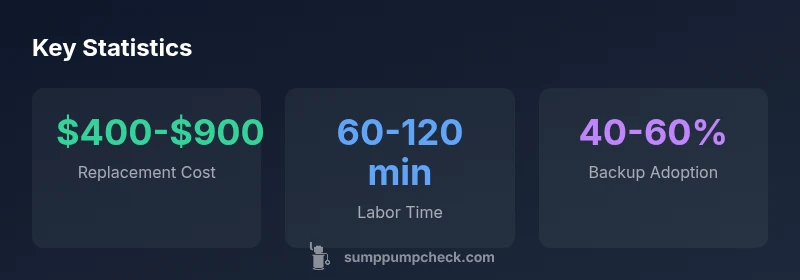
The typical cost to replace a sump pump ranges from about $400 to $1,200, depending on pump type, pit condition, and labor. Expect higher prices if you need a battery-backup model, a new discharge line, or pit adjustments. For most homeowners, professional installation adds 60–120 minutes of labor. This article breaks down cost drivers, installation considerations, and ways to save on a sump pump replacement.
Understanding What Affects Sump Pump Replacement Costs
If you're asking how much is a sump pump replacement, the answer isn't a single figure. Cost varies with pump type, installation circumstances, and the condition of your existing pit and discharge setup. In practical terms, most homeowners see price bands that reflect whether you choose a standard single pump, a model with a battery backup, or a higher-efficiency unit. According to Sump Pump Check, the largest drivers are the pump type, the complexity of pit work, wiring, and any necessary trenching or new discharge piping. A straightforward swap with a basic pump and clean pit is on the lower end of the range, while adding backups, pit modifications, or code-compliant venting pushes costs higher. It's also important to account for local labor rates, which can vary by region and contractor. When budgeting, plan for contingencies such as unexpected pit repairs or accessibility issues behind the sump pit. Finally, keep in mind that while upfront cost matters, the reliability of the installation and the availability of a battery backup can influence long-term value significantly.
Cost Ranges by Pump Type and Features
Cost is strongly influenced by the pump type and any features you choose. A standard, direct-drive submersible pump installed in a typical pit often sits in the lower-middle of the cost spectrum. Choosing a pedestal pump, which sits above ground, can reduce some installation complexity but may not fit every pit. Including a battery backup dramatically increases price due to the controller, charger, wiring, and the backup battery. If you also require a new discharge line or a check valve to prevent backflow, expect a noticeable increase. For many homes, replacing with a high-efficiency model or a pump with smart controls adds a premium but can reduce energy use and improve reliability. Always check for compatibility with your current system and any local code requirements. In short: standard replacement is the baseline; upgrades for backups and enhanced protection add cost.
Labor and Installation: What Adds to the Price
Labor is a major portion of the total. Even with a straightforward replacement, the installer must assess pit integrity, verify a clear discharge path, and ensure electrical safety. If the pit needs cleanout, resurfacing, or enlargement to accommodate a larger pump, labor rises quickly. Additional tasks like installing a new check valve, replacing or upgrading the vent line, or configuring a battery backup require skilled electrical work, which drives up the price. If your basement has limited access or the sump area is wet, crews may charge more for safety and cleanup. Some homes require trenching or rerouting drainage, which can push costs into the higher end of the range. For a fair quote, request a detailed estimate that itemizes pump price, labor rate, travel fee, and any permit or disposal charges.
How to Get an Accurate Quote: Steps for Budgeting
To estimate the project well, start with the current pump model and its condition. Gather notes on pit dimensions, the discharge location, and whether a backup system is desired. Ask for a written estimate that itemizes the pump cost, labor rate, travel fee, and any permit or disposal charges. Request multiple quotes from local contractors to compare. If you want to shield yourself from surprises, ask for a breakdown of optional upgrades and their price ranges. For DIY-minded homeowners, create a scope that outlines disassembly, hauling away the old unit, and reinstallation checks. Tools and materials list, a rough timeline, and a contingency budget will help you stay on track.
Saving Money without Compromising Protection
Smart planning can cut costs without sacrificing performance. Schedule replacements in the off-season when contractors have more availability and may offer lower rates. Replacing only the pump and not the pit, when feasible, reduces material costs. If your current pit is in decent shape, you may save by reusing parts such as the discharge line and check valve, provided they meet code. Look for energy-efficient models with solid warranties and consider whether a battery backup is required for your area's flood risk. A well-timed replacement with optional upgrades—like a controller and alarm—can improve reliability without breaking the bank.
Choosing the Right Pump for Replacement
The best choice depends on your basement environment and flood risk. For frequent flooding, a high-capacity model with a reliable backup may be worth the extra upfront cost. If space is tight, a compact submersible unit may fit better, though you should confirm it can handle your sump pit size. Some homes benefit from a dual-pump setup for redundancy. Check for energy efficiency ratings, noise levels, and warranty terms. Finally, ensure compatible accessories (check valve, lid, and vent) are included or purchased separately. By selecting the right combination, you balance upfront price with long-term protection.
Cost ranges for common sump pump replacement options
| Replacement Type | Estimated Range | What It Includes | Typical Install Time |
|---|---|---|---|
| Standard Sump Pump Replacement | $400-$900 | New pump, basic install, discharge line | 60-90 minutes |
| Sump Pump Replacement with Battery Backup | $800-$1,500 | Pump, backup battery, controller, wiring | 120-180 minutes |
| Upgraded Pit/Check Valve Installation | $900-$1,800 | New pit adjustments, check valve, backflow protection | 120-240 minutes |
FAQ
How long does a sump pump replacement take?
Most replacements take a few hours, depending on pit access, wiring, and any upgrades. A straightforward swap with standard parts is usually completed in 2–4 hours.
Most replacements take a few hours, depending on access and upgrades.
Is a battery backup worth it?
For homes at risk of power outages or heavy rainfall, a battery backup adds protection and can prevent basement flooding during outages, justifying the added cost.
Yes, in flood-prone areas a battery backup is often worth it.
Can I replace a sump pump myself?
DIY replacement is possible for basic setups if you have electrical knowledge and proper safety gear. Electrical connections should be inspected by a licensed pro to meet code.
DIY is possible for simple setups, but electrical work should be checked by a pro.
What maintenance should follow replacement?
Test monthly, clean debris from the intake, inspect the check valve and discharge line, and test the backup system if installed. Schedule annual professional checkups.
Test it monthly and schedule yearly checks.
How do you know if you need replacement vs repair?
If your pump is old (roughly 7–10 years) or failing frequently despite repairs, replacement is usually the better option for reliability and cost over time.
If it's old or failing often, replacement is usually better.
What factors affect replacement cost the most?
Pump type, backup features, pit work, and local labor rates have the biggest impact on total cost.
Pump type and backup features usually drive the price the most.
“A sump pump replacement should be treated as a systems upgrade—quality installation and reliable backup options are essential for protecting your basement.”
Top Takeaways
- Budget for price ranges and contingencies
- Battery backup can affect price but improves protection
- Get multiple quotes to compare labor and parts
- Factor pit work and wiring into the estimate
- Choose a reliable, appropriately sized pump with warranty