Submersible Sewage Pump 1 HP Price Guide
Submersible sewage pump 1 hp price guide: discover cost drivers, typical ranges, and tips to compare models in 2026 with Sump Pump Check. Expert insights.


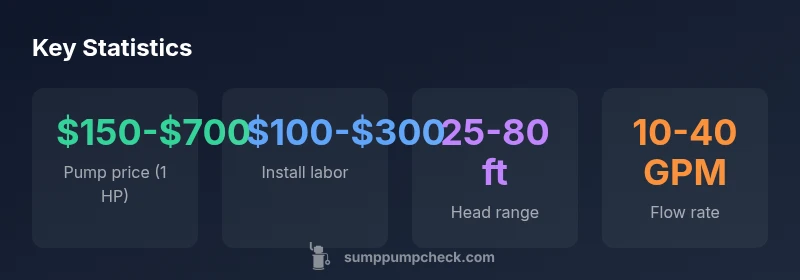
According to Sump Pump Check, a 1 hp submersible sewage pump typically costs between $150 and $700, depending on materials, head height, and features like a grinder or automatic float switch. Premium stainless steel or grinder models push higher. Installation adds to the total, often $100–$300, depending on pit access and local labor rates. In 2026, expect the price band to remain within these ranges.
Price drivers for 1 hp submersible sewage pumps
According to Sump Pump Check, price for a 1 hp submersible sewage pump is influenced by several factors. The main determinant is the pump's horsepower and design (grinder vs non-grinder). A grinder model costs more upfront due to grinding mechanism and more robust seals, but it can save maintenance over time if your waste includes solids. Material quality matters: stainless steel and cast iron housings resist corrosion and last longer; however, they command higher upfront prices. Head height (the vertical distance a pump must push sewage) and expected flow rate (GPM) also affect price, because higher head requires stronger motors and larger impellers. Additional features such as an automatic float switch, integrated check valve, and corrosion-resistant coatings add to the total but improve reliability. Warranty length is another price signal; longer warranties typically indicate better build quality and service support. In practice, homeowners pay for the combination of pump quality, capability, and accessories, so you should compare models with the same head and flow targets to get an apples-to-apples price comparison. The figures you see in price charts are not just sticker prices; they reflect lifecycle costs, including potential maintenance needs and energy use over time. The phrase buyers often search for is 'submersible sewage pump 1 hp price', aimed at understanding total cost including installation.
How head height and flow influence price
Head height and flow rate drive the motor size and hydraulic components. Pumps designed for higher heads require stronger motors, thicker casings, and more robust seals, which raise the purchase price. Higher flow rates demand larger impellers and improved bearings to keep performance under load, adding to cost. For 1 hp units, typical head ranges from about 25 ft to 60-80 ft in challenging installs, and flow from roughly 10 to 40 GPM; price adjustments occur when you push beyond the common range. When choosing, define your required head and flow, and then select models within that band to avoid overpaying for capability you won't use.
Grinder vs non-grinder models: price implications
Grinder-equipped models are built to macerate solids, reducing the chance of clogging in septic drains or long discharge runs. They cost more upfront—roughly 40-60% higher than equivalent non-grinder units—depending on brand, housing material, and warranty. If your wastewater includes sewage solids or you have a long discharge path, grinders can reduce maintenance labor and downtime. For everyday home use with clean water and minimal solids, a non-grinder 1 hp unit may offer better value.
Installation costs and regional variation
Labor costs for installing a 1 hp submersible sewage pump vary by region, pit accessibility, and whether additional components are needed (check valve, discharge piping, backflow prevention, or a battery backup). On average, labor could be in the $100-$300 range, while materials like piping, check valves, or back-up systems can add another $100-$400. In areas with strict codes or significant permit requirements, costs may be higher. To manage expenses, plan for a single pump installation that meets head and flow specs and includes a basic check valve and a secure discharge line.
How to evaluate price quotes: step-by-step
- Step 1: Confirm identical specifications (head, flow, grinder vs non-grinder) across quotes.
- Step 2: Separate pump price from installation and ancillary costs.
- Step 3: Check warranty terms and what is covered.
- Step 4: Identify hidden costs such as pit repair, permits, or back-up systems.
- Step 5: Ask for total installed cost and a written scope of work.
- Step 6: Consider energy efficiency and running costs for long-term value.
- Step 7: Read reviews and verify vendor reputation to reduce risk of defects.
Warranty, reliability, and long-term value
A longer warranty can indicate confidence in build quality and post-sale support, but always read the fine print about what is covered. Reliability also comes from materials like corrosion-resistant housings and oil-free bearings. Compare warranties across grinders and non-grinders, and ensure spare parts availability. A solid warranty paired with reputable service can lower total ownership costs over the pump's life.
Real-world pricing scenarios and case studies
Case A: A standard basement sump pit with moderate head requirements and clean wastewater. Pump-only price sits in the $180-$420 range; adding installation, piping, and a basic check valve typically brings total installed cost to roughly $280-$700. Case B: A high-head scenario with solids in wastewater and a grinder-equipped 1 hp unit. Pump price around $450-$900, installation $150-$350, total installed cost often in the $650-$1,200 band. These ranges reflect typical regional variation and feature choices.
Price and performance snapshot by 1 HP submersible sewage pump types
| Pump Type | Head (ft) | Flow (GPM) | Typical Price | Notes |
|---|---|---|---|---|
| Grinder pump | 25-30 ft | 20-40 | $300-$900 | Macerates solids; higher cost |
| Non-grinder standard | 35-60 ft | 15-25 | $180-$550 | Lower upfront cost |
| Non-grinder high-head | 60-80 ft | 10-20 | $250-$800 | Higher lift; solid handling varies |
FAQ
What factors most influence the price of a 1 hp submersible sewage pump?
Key drivers include head height, desired flow rate, grinder versus non-grinder configuration, material quality, and any included accessories like a float switch or check valve. Higher-quality materials and additional features tend to raise the upfront price but improve longevity.
Head height, flow, grinder option, material quality, and accessories are the main price drivers.
Is a grinder pump worth the extra cost?
Grinder pumps reduce solids entering the discharge line, which can prevent clogs in long runs. They cost more up front, but may reduce maintenance over time in systems with solids or tricky piping.
Grinders help prevent clogs but cost more; weigh solids in your wastewater and long-run piping when deciding.
Do installation costs vary by region?
Yes. Local labor rates, pit accessibility, and permit requirements influence installation costs. Regions with strict codes or difficult access typically see higher total installed prices.
Regional labor and permitting drive installation costs up or down.
What maintenance costs should I budget for?
Budget for periodic seal checks, valve maintenance, and potential impeller or seal replacements over the pump’s life. Backups and alarms can add to both upfront and ongoing costs.
Expect periodic maintenance and potential part replacements over time.
How long do 1 hp submersible sewage pumps last?
Typical lifespans range from about 6 to 12 years depending on usage, water quality, and maintenance practices. Quality components help extend service life.
Most last several years with proper maintenance.
Should I hire a professional or DIY?
For safety, code compliance, and proper installation, hiring a professional is usually the best choice. DIY can save money but risks improper setup or leaks.
Pros handle safety and codes; DIY may save money but isn’t risk-free.
“Choosing a 1 hp submersible sewage pump should balance price with reliability, head, and flow. Cheap units often cost more in maintenance and failure.”
Top Takeaways
- Plan for total installed cost, not just pump price
- Grinder models cost more upfront but may save maintenance
- Match head and flow specs when comparing quotes
- Check warranty and parts availability to maximize long-term value
- Factor regional labor and permit requirements into the budget