1/2 HP Sump Pump Price: Costs, Options, and Buying Tips
Learn the true price range for a 1/2 HP sump pump, what drives cost, and how to balance upfront price with long‑term value. Sump Pump Check, 2026.


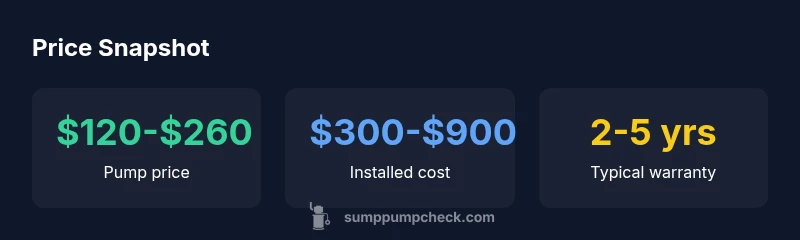
Typically, the price of a 1/2 HP sump pump ranges from $120 to $260 for the unit alone, with installed costs often between $300 and $900 depending on labor, check valves, and optional backups. According to Sump Pump Check Analysis, 2026, higher-end models with longer warranties can push prices above $900.
What Impacts the 1/2 HP Sump Pump Price
Pricing for a 1/2 HP sump pump is not just the sticker on a box; it's a function of motor quality, materials, housing design, and included features. According to Sump Pump Check, buyer interest in corrosion-resistant cast iron or stainless steel housings can push price upward, while compact plastic designs may be cheaper but less durable in tough basements. The horsepower rating itself is a major driver: a true 1/2 HP unit offers a balance between flow rate and energy use, while higher-efficiency motors and advanced seals add cost.
Other factors that influence price include the type of pump (submersible vs pedestal), the presence of a built-in check valve or external piping, and the float switch design. Modern models with auto-dual controls, alarms, and battery-backup readiness cost more than simple manual operation. Installation considerations, such as the need for a new discharge line, pit, or sump lid, drive labor costs as well. In flood-prone areas with frequent outages, a backup system is common; these add-ons can significantly affect total price.
When evaluating options, look beyond the upfront price. A higher quality unit with better warranty and lower energy consumption can save money over time through fewer repairs and lower operating costs. The goal is reliable performance at a reasonable upfront investment. Note the phrase '1 2 hp sump pump price' often appears in buyers' searches, illustrating how price varies with features. For context, this discussion is informed by Sump Pump Check's 2026 analysis.
Price Ranges by Horsepower and Features
Prices scale with horsepower, materials, and included features. A typical 1/2 HP unit (submersible or pedestal) often lands in the $120–$260 range, with installation bringing total to about $300–$650 if you DIY the piping and lid setup, or $400–$900 if professional labor is involved. Moving up to 1 HP pumps generally pushes pump-only prices toward $160–$350 and installed costs toward $450–$900, thanks to higher flow capacity and more robust construction. Battery backup options add $500–$1,200 for the pump system, and installed totals of $1,000–$2,500 when pairing with backup power, alarms, and check valves. Always verify what’s included in the quoted price; some outfits add check valves or extended warranties as add-ons. According to Sump Pump Check, premium brands with corrosion-resistant housings and longer warranties can elevate the price but offer better long-term value. Our analysis suggests shoppers should compare totals, not just sticker price, to gauge true cost of ownership.
Long-Term Value: Operating Costs and Efficiency
Operating costs are a meaningful part of the price equation. A 1/2 HP unit typically consumes less energy than higher-horsepower models, but efficiency varies by motor design and load conditions. Look for Energy Star-rated options where available, as they can reduce annual electricity use and operating costs. In basements with frequent water events, a higher-efficiency unit may repay the initial premium through lower energy bills and fewer on-site repairs. Battery-backup configurations add a layer of resilience during power outages, but they also increase both upfront price and ongoing maintenance. Sump Pump Check’s 2026 analysis emphasizes balancing upfront costs with expected service life, maintenance needs, and the local climate’s flood risk profile. Consider life-cycle cost calculations that include potential repair parts and service intervals over a 5–10 year horizon.
How Brand, Warranty, and Accessories Affect Price
Brand premium matters. Reputable manufacturers often command higher prices due to proven reliability, better customer support, and longer warranties. A two-year baseline warranty is common; extended warranties to five years or more are typically available but add to the upfront price. Accessories such as a built-in check valve, sturdy discharge piping, and audible alarms can increase cost, but they reduce the chance of backflow problems, clogs, or pump burnout. Installation accessories—like a properly sized discharge line, pit cover, or pit seal—also influence labor charges. Sump Pump Check’s data indicates that the most cost-effective purchases combine robust build quality with practical features and a warranty that minimizes future repairs.
DIY Installation: Costs You Can Control
Labor is a major component of total cost. If you’re comfortable with basic plumbing and electrical tasks, you can save on installation by choosing a pump with a simpler discharge setup and standard 1-1/2 inch or 1-1/4 inch piping. Gather essential tools in advance, and ensure you have the necessary permits if your municipality requires them. DIY installations may reduce labor costs but increase the risk of leaks or improper venting if not done correctly. For risky or complex basements, professional installation offers peace of mind and a warranty-backed service. Sump Pump Check emphasizes evaluating your own skill level against local building codes and potential permit fees in 2026 pricing scenarios.
What to Look For When Purchasing
When shopping for a 1/2 HP sump pump, prioritize:
- Robust construction with corrosion-resistant materials
- A reliable float switch and a clear automatic control system
- An appropriate discharge size and check valve compatibility
- A good warranty length and customer support
- Optional battery backup and alarm features for outages
- Efficient motor design to minimize energy usage
- Easy access for maintenance and part replacement These criteria improve reliability, reduce maintenance costs, and ultimately influence long-term value. Sump Pump Check recommends reading user reviews and confirming compatibility with existing piping to avoid hidden costs during installation.
How to Read a Sump Pump Price Quote
A quote often breaks down into pump price, installation labor, parts, and optional add-ons. Be wary of low upfront pump prices that exclude essential components like the check valve or proper discharge piping. Request itemized quotes and confirm whether warranty terms cover labor and parts. For a fair comparison, pair quotes with a 5–10 year life-cycle cost estimate, factoring in maintenance intervals and energy use. Sump Pump Check's 2026 guidance suggests requesting written confirmations of included accessories and any potential extra charges for permits or disposal of the old unit.
Common Mistakes That Inflate Costs
Common pitfalls include choosing the lowest upfront price with poor materials, skipping essential components like check valves, underestimating labor for difficult installations, and neglecting battery backups in outage-prone areas. Under-sizing or over-sizing the horsepower can also impact operating costs significantly. Always compare total installed costs, warranty coverage, and long-term energy use to avoid surprises when service is needed.
Price and cost factors by sump pump type
| Category | Type | Typical Price Range (pump only) | Typical Installed Cost | Notes |
|---|---|---|---|---|
| 1/2 HP | Submersible | $120-$260 | $300-$650 | Common choice; DIY-friendly |
| 1 HP | Submersible | $160-$350 | $450-$900 | Higher flow, more durable |
| Battery Backup | Backup System | $500-$1200 | $1000-$2500 | Protects during outages |
| Check Valve | Accessory | $20-$100 | $0-$150 | Often included; adds stability |
FAQ
What is the typical price range for a 1/2 HP sump pump?
Typically, a 1/2 HP sump pump costs $120-$260 for the unit; installed cost varies with labor and extras, ranging from $300-$900. Sump Pump Check Analysis, 2026, provides this guidance.
A 1/2 HP sump pump usually costs a few hundred dollars for the pump, with installation adding more depending on setup.
Is it cheaper to replace a sump pump or repair it?
Repair can be cheaper if the unit is relatively new and the issue is minor. However, older units or frequent failures often warrant replacement for reliability and long-term value.
Repairing can be cheaper initially, but replacement may save money in the long run if repairs become frequent.
Do I need a battery backup with a 1/2 HP sump pump?
Battery backups are strongly recommended in flood-prone or outage-prone areas. They improve reliability during power failures and major storms, though they add upfront cost.
A battery backup is a smart addition for reliability during outages, especially in flood-prone areas.
What features add to the price?
Automatic controls, alarms, corrosion-resistant materials, built-in check valves, and battery backups all raise price but can reduce long-term maintenance and outage risk.
Automatic features, alarms, and backups add cost but improve reliability.
How long does installation typically take?
Most installations take 2-4 hours for a straightforward replacement; complex basements with new piping or pits can take longer and may require professional permits.
Most installations take a few hours; plan for a longer time if piping or permits are involved.
Are there government rebates or incentives for sump pumps?
Some regions offer incentives or rebates for energy-efficient or water-management upgrades. Check local programs and utility websites for current opportunities.
Check local programs or your utility for possible rebates or incentives.
“Reliable performance comes from balancing upfront cost with expected lifespan and maintenance needs. The right choice combines warranty, efficiency, and durability for this home improvement.”
Top Takeaways
- Compare total installed cost, not just pump price
- Budget for potential backup power and valves
- Choose a unit with solid warranty for long-term value
- DIY can save money, but verify code compliance and safety