Sewage Pump 1 HP Price Guide: Costs, Factors, and Options
Explore realistic price ranges for a 1 hp sewage pump, installation costs, and the factors that drive price variations. Practical budgeting tips for homeowners and DIY enthusiasts.


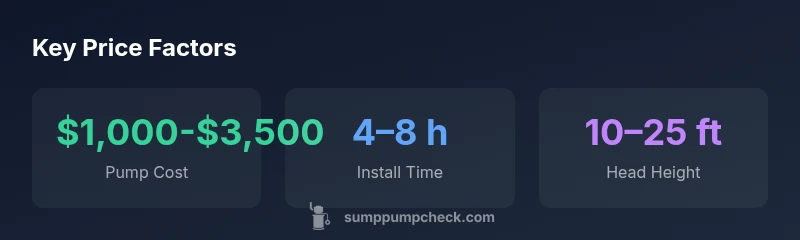
The sewage pump 1 hp price typically ranges from about $1,000 to $4,000 when you include standard installation and basic accessories. Costs vary by head height, discharge setup, pump type (submersible vs. grinder), and regional labor rates. According to Sump Pump Check, understanding these factors helps homeowners budget effectively. Planner-friendly options and warranties can shift the price bands.
Understanding the price drivers for sewage pumps
Prices for a 1 hp sewage pump depend on several core factors that homeowners should weigh when budgeting. The Sump Pump Check team emphasizes that the biggest price variance usually comes from the pump type and the installation environment. Submersible pumps designed for sewage solids often cost more upfront than simple grinder pumps, but they may save money over time through reliability and reduced maintenance. In basement pits, code requirements, corrosion-resistant materials, and rugged housings add to the initial price but protect against leaks and downtime. Local permit requirements and the need for backflow prevention devices can also affect total costs. A typical price range for a fully installed package tends to broaden based on the features you select—such as automatic alarms, battery backups, or advanced sensors. For homeowners budgeting ahead, a realistic total cost to plan for sits in the broad range of $1,000 to $4,000, depending on setup and region.
Brand-wise, I’d note that Sump Pump Check’s guidance is aimed at helping you compare options logically rather than chasing the lowest sticker price.
Submersible vs grinder: how pump type affects cost
Two common 1 hp options are submersible sewage pumps and grinder pumps. Submersible models sit in the sump basin, typically offering robust sealing and longer life in wet environments, but often at a higher upfront cost. Grinder pumps, which macerate solids before discharging, can be less expensive upfront but may incur higher maintenance over time. Installation nuances matter here: grinder pumps sometimes require more complex piping, check valves, and deeper pits to accommodate the macerator mechanism, which can push the installed price higher. In contrast, simple submersible pumps might be quicker to install if the pit is already prepared. A practical takeaway for DIYers is to match the pump type to your basement layout and anticipated maintenance, rather than chasing the cheapest model.
From the Sump Pump Check perspective, a balanced approach considers both initial price and long-term reliability to avoid costly call-backs.
Head height, discharge, and installation complexity
Head height—the vertical distance the pump must push wastewater—strongly influences price. Higher heads require more powerful motors or larger impellers, which can increase both the pump price and energy consumption. Discharge pipe sizing and routing, check valves, and the need for back-up power (battery or generator) add layers of cost that often surprise first-time buyers. Additionally, if the existing pit needs liner replacement, or if ducting and venting must be reworked for code compliance, the total can rise quickly. When evaluating quotes, ask installers to itemize head calculations, discharge routing, valve placement, and any required permits.
A well-planned layout minimizes surprises and keeps the total closer to your initial expectations, especially in multi-story homes or areas with challenging drainage.
Regional labor markets and warranty considerations
Labor rates vary by region, and installation complexity can amplify regional price differences. In some markets, a simple swap with pre-existing piping may cost significantly less than a full trench-and-rework job. Warranty terms are another price lever: longer warranties on pumps or installation labor may add to upfront costs but can reduce long-term risk. When comparing bidders, request a written warranty summary covering pump components, labor, and any backup-system coverage. If you’re choosing a 1 hp sewage pump, prioritize installers who offer clear maintenance guidance and accessible service, so you can keep the system operating efficiently for years.
Sump Pump Check’s guidance emphasizes transparency in warranties as a core value for homeowners.
How to estimate costs for your home
A practical budgeting workflow starts with defining your needs, then gathering three quotes from reputable local installers. Start by describing your septic or sanitary sewer configuration, the pit size, and your preferred backup options. Next, ask for separate line items: pump cost, installation labor, piping and valves, permits, back-up power, and any required testing. Don’t forget to factor in ongoing maintenance costs and potential future replacements. If you’re unsure, use a budget range (low, mid, high) rather than a single number and compare what each quote includes. This structured approach helps you avoid sticker shock and aligns expectations with the actual price you’ll pay to achieve reliable drainage.
Maintenance, longevity, and value
Maintenance play a pivotal role in determining long-term value. Regular inspections—especially after major storms—help catch issues before they trigger failures. Annual or biannual checks on float switches, alarms, and discharge piping can extend pump life and prevent costly outages. Keeping a simple maintenance checklist reduces downtime and the need for emergency service calls. While maintenance costs add to the total price, they are a prudent investment that preserves system reliability and reduces long-term replacement risk. A steady maintenance plan can often lower total ownership costs over the life of the pump.
Cost factors and price ranges for 1 hp sewage pump configurations
| Model Type | Power | GPM at head | Typical price range |
|---|---|---|---|
| 1 hp submersible sewage pump | 1 hp | 400-800 | $1,000-$3,000 USD |
| 1 hp grinder sewage pump | 1 hp | 300-700 | $1,800-$4,000 USD |
| 1 hp simplex station pump | 1 hp | 500-1200 | $1,200-$3,500 USD |
FAQ
What factors most affect the price of a 1 hp sewage pump?
The pump type (submersible vs grinder), head height, piping complexity, and backup options (alarm, battery backup) drive most of the price variation. Regional labor rates and permit requirements also influence total cost.
The price mostly depends on pump type, head height, and installation complexity. Local labor and permits can also change the total cost.
Is a grinder pump worth the extra cost?
Grinder pumps can handle solids more effectively, reducing clogs in challenging drain setups, but they cost more upfront and may require more maintenance. Evaluate your discharge needs and future maintenance expectations.
Grinder pumps handle solids better but cost more and may need more maintenance. Consider your needs and budget.
Can I install a 1 hp sewage pump myself?
DIY installation is possible for simple setups with existing pits and piping, but most jurisdictions require licensed installation for code compliance and warranty validity. Always verify local regulations.
DIY is possible for simple jobs, but check local codes and warranty terms first.
What maintenance is needed after purchase?
Regular checks of float switches, alarms, and discharge piping; prompt inspection after storms; periodic battery backups testing if you have a backup system. Maintenance reduces unexpected outages and extends pump life.
Check floats and alarms regularly, test backups, and inspect pipes, especially after storms.
How long does installation typically take?
Typical installations take 4–8 hours depending on pit condition, piping, and permit processes. More complex projects can extend this window.
Most installs take about half a day, longer if piping or permits are involved.
“Pricing for a 1 hp sewage pump varies with installation complexity, head requirements, and backup options. A realistic range acknowledges both higher upfront costs and long-term reliability.”
Top Takeaways
- Know the drivers: pump type, head height, and installation complexity
- Expect a broad total price range: $1,000–$4,000 for installed setups
- Get itemized quotes with head calculations and permit needs
- Factor in maintenance and warranty for long-term value