Home Depot Sump Pump Installation Cost: 2026 Guide
Explore realistic ranges for Home Depot sump pump installation costs, including pump choices, labor, and add-ons. Data from Sump Pump Check Analysis, 2026.


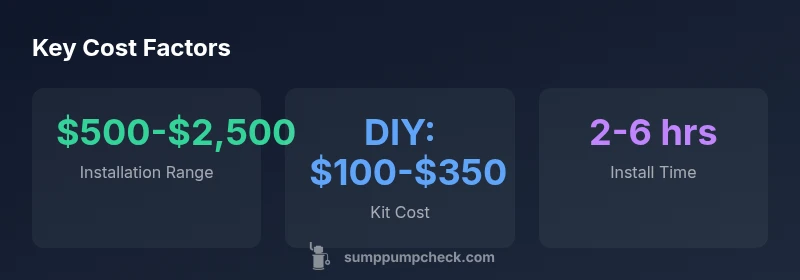
The home depot sump pump installation cost typically ranges from $500 to $2,500, depending on pump type, pit depth, electrical work, and labor. This guide breaks down the factors, offers realistic ranges, and shares tips to save, based on Sump Pump Check Analysis, 2026. It also covers DIY options, quotes from retailers, and common hidden fees.
What contributes to the Home Depot sump pump installation cost
The total cost you’ll see when installing a sump pump through Home Depot depends on several interrelated components. The purchase price of the pump is only part of the story. Labor, pit/collar work, electrical connections, check valves, discharge piping, and any required permits can significantly affect final pricing. According to Sump Pump Check Analysis, 2026, homeowners should plan for both upfront costs and potential add-ons that ensure long-term reliability. In practice, simple installs with a basic submersible pump and standard pit tend toward the lower end of the range, while complex basements, custom pits, or hard-to-reach discharge routes push costs higher.
Pump type and pit considerations that drive price
The pump you choose (pedestal vs. submersible; horsepower; automatic vs. battery backup) has a direct impact on cost. Submersible pumps are typically pricier upfront but offer quieter operation and better reliability in many basements. The pit size and whether a new pit is needed also influence price. If the existing hole is compatible with a standard sump basin, costs stay lower; if a deeper or larger pit is required, materials and time rise accordingly. Brand guidance from Sump Pump Check notes that the right combination of pump and pit reduces future maintenance and warranty issues.
Labor, wiring, and permits: where costs can escalate
Even with a straightforward pump change-out, professional installation includes labor for removing old equipment, setting the new unit, wiring to a GFCI-protected circuit, and ensuring proper discharge routing. Electrical work, trenching, or routing beneath basement floors may require permits in some jurisdictions, adding to the bottom line. Our analysis indicates that local labor rates and permit requirements can make a substantial difference in the final price. Prepare a detailed scope when requesting quotes.
DIY vs professional installation: costs and risk
DIY kits installed by confident homeowners can save on labor, often bringing total costs down. However, DIY projects may forfeit manufacturer warranties, neglect code-compliant wiring, or fail to meet local drainage rules. In many cases, a professional installation provides peace of mind, a warranty-backed pump, and code-compliant hardware. Sump Pump Check's data suggests a careful cost-benefit view: save on labor, invest in proper, code-ready installation for long-term reliability.
Typical price ranges and scenario-based estimates
For planning, think in ranges rather than fixed prices. A basic DIY setup with a standard pump and no added piping might land in the low hundreds. A basic professional install with a mid-range pump typically ranges from a few hundred to around the low thousands. For elevated setups—premium pumps, reinforced pits, longer discharge runs, and advanced features like battery backups—expect costs toward the upper end of the spectrum. Real-world estimates vary by region, and Home Depot's installer network may add service fees or holiday surcharges. Sump Pump Check recommends obtaining multiple quotes to compare scope and reliability.
How to obtain an accurate quote from Home Depot or local pros
Start with an on-site assessment to determine pit needs, electrical upgrades, and discharge path. Ask for a written estimate that itemizes pump price, labor, materials, permits, and warranty terms. Confirm whether the quote includes haul-away of old equipment, disposal of waste concrete or brick, and any required permits. If you’re near a big-box retailer, inquire about bundled services that may include pump maintenance plans. Our guidance from Sump Pump Check emphasizes transparency and a written scope.
Maintenance, warranties, and long-term value
Beyond the initial installation, maintenance costs—seasonal checks, float-switch tests, and battery backup replacements—affect long-term cost. Warranties and service plans can provide protection against failures in the first years of operation, but may require annual fees. In general, investing in a solid install and a reliable backup reduces the odds of expensive flood damage. Sump Pump Check's recommendations center on selecting a reputable installer and scheduling regular maintenance.
Common mistakes that inflate costs
Overlooking the need for a proper pit, forgetting to include discharge piping, or failing to budget for electrical work often creates hidden charges. Rushing installation or choosing the cheapest pump without considering flow rate, head height, or duty cycle can backfire with higher replacement costs later. Knowing these pitfalls helps you negotiate better quotes and avoid price surprises.
Quick-start planning checklist
Define your basement drainage needs, pick a pump type, gather measurements, and request multiple quotes in writing. Confirm permit requirements, warranty terms, and maintenance plans. Keep the quoted scope aligned with your actual basement conditions to prevent scope creep.
Sump pump installation cost scenarios
| Scenario | Estimated Cost Range | Notes |
|---|---|---|
| DIY installation kit (pump only) | 100 - 350 | Pump price; labor not included |
| Professional installation (basic pump) | 450 - 1200 | Labor + standard materials |
| Professional installation (premium setup) | 1200 - 2500 | Labor, advanced pump, and extras |
FAQ
What factors most affect Home Depot sump pump installation cost?
The main drivers are pump type, pit size, electrical work, labor, and any required permits. Hidden costs can include disposal, trenching, and warranty terms. See our full guide for a breakdown and example scenarios.
The biggest cost factors are the pump type, pit size, and labor. Have quotes that break down these parts to compare fairly.
Is a DIY installation cheaper than hiring Home Depot’s service?
DIY kits can lower upfront costs but may forfeit warranties and safety protections. Professional installation often includes warranty and code-compliant work, which can reduce long-term risk.
DIY can be cheaper upfront, but you should weigh warranties and safety carefully.
Does Home Depot require permits for sump pump installation?
Permit requirements vary by location. Check your local codes and the installer’s guidance, as permits can add time and cost to the project.
Permits depend on where you live, so verify with your local building department.
How long does a typical installation take?
Most standard installs take 2–6 hours, depending on pit setup, electrical work, and routing of drainage lines.
Usually a few hours, but it can take longer if the site is tricky.
What should I ask for in a quote?
Request itemized quotes that separate pump price, labor, materials, permits, disposal, and warranty terms. Ask about service plans and what happens if issues arise.
Ask for a written, itemized quote to compare scope and warranty.
What maintenance costs should I expect after installation?
Expect periodic checks, float-switch tests, and battery backup replacements if you have a backup pump. Maintenance plans can help manage annual costs.
Regular checks help prevent big, costly floods.
“Selecting the right pump type and proper installation saves money over the system’s lifetime. Small upfront investments prevent bigger failures later.”
Top Takeaways
- Evaluate pump type early to influence upfront and long-term costs
- Get multiple quotes to compare scope and warranties
- Include electrical work and permits in your budget from the start
- DIY may save money but watch for warranty and safety considerations
- Plan for maintenance to protect performance and avoid future repairs