Cost to Replace Sump Pump Homewyse in 2026: A Practical Guide
Comprehensive breakdown of the cost to replace sump pump homewyse style estimates, including factors, ranges, labor, and cost-saving strategies for homeowners in 2026.


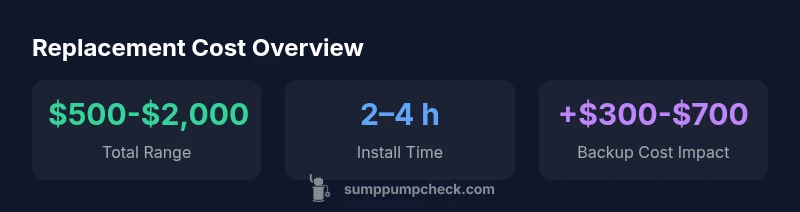
According to Sump Pump Check Analysis, 2026, the cost to replace sump pump homewyse ranges from $500 to $2,000, depending on pump type and labor. A basic install with a standard submersible unit and simple discharge line typically falls near the lower end, while trenching or adding a battery backup drives prices higher. This quick snapshot helps homeowners budget and plan.
What factors influence the cost to replace sump pump homewyse
The cost to replace sump pump homewyse is not a single figure; it reflects several interacting factors. According to Sump Pump Check Analysis, 2026, the most influential drivers are the pump type (submersible vs pedestal), horsepower (0.5-1/3 HP typical), and the complexity of the installation. Higher-end models with built-in alarms, battery backups, or superior corrosion resistance push prices upward, especially when the job requires trenching or upgrading electrical service. The presence of a battery backup can add several hundred dollars to the project, but it can also reduce risk and potential water damage during outages. Labor costs vary by region, contractor experience, and whether permits are needed. Electrical work, new discharge piping, check valves, and backflow prevention devices all contribute to the final number. For homeowners, understanding these levers helps in evaluating bids and deciding whether a DIY approach is feasible in their basement environment. The Sump Pump Check team emphasizes that obtaining multiple bids that itemize each component is essential to avoid sticker shock and to ensure the chosen pump will perform reliably in the long term.
In practice, the cost to replace sump pump homewyse is a proxy for overall system reliability; taking the time to select the right pump type for your home’s layout reduces future maintenance cost and minimizes nuisance calls for service.
Typical cost components in a sump pump replacement
There are distinct cost categories that commonly appear in quotes and invoices. The unit price for the pump itself depends on type and features—pedestal pumps are often cheaper upfront than submersible models but may have higher maintenance costs over time. Labor accounts for roughly a portion of total cost and covers removal of the old unit, mounting the new unit, wiring, and testing. Materials include discharge piping, check valves, glue or sealants, and any needed adaptors to fit existing lines. If the project includes trenching, line relocation, or upgrading the electrical circuit, those line items can quickly raise the total. Battery backup systems, if installed, add up-front costs but can provide important protection during power outages. Finally, permits and inspections (where required) can add a small but notable surcharge in some regions. The bottom line: don’t assume a pump price alone equals the total project cost; the installation-related items matter just as much.
To keep costs predictable, ask for itemized bids that separate the pump price from labor, materials, and any permitting fees. This helps you compare apples-to-apples and identify where you might scale back features without compromising fundamental protection.
Realistic cost ranges by scenario
Real-world replacements fall into a few common scenarios, each with its own typical range. For a basic replacement with no trenching and a standard submersible pump, expect a lower-mid range around $500-$1,000 when labor is straightforward and there’s minimal electrical work. Adding a battery backup, a check valve, and basic monitoring can push the cost toward $900-$1,500, depending on parts quality and labor rates. If your project requires trenching, relocation of the discharge line, or upgrades to the home’s electrical circuit to meet code, total costs commonly land in the $1,200-$2,000 band. Keep in mind regional differences in labor rates and permit requirements; in some markets, permits add a modest fee but in others may require inspections that extend the timeline and cost. Choosing higher-efficiency pumps or models with advanced alarms can add to the cost but may save money through reduced maintenance and better protection.
How Homewyse-style estimates compare to contractor bids
Homewyse-style estimates strive to standardize the cost components by listing pump price, labor, and materials, but actual bids vary by contractor, region, and project specifics. Homewyse-like estimates are helpful for budgeting and benchmarking, yet they are still a starting point. Contractors may adjust for site access, existing piping, or the need to reroute a discharge line. The most reliable approach is to obtain multiple bids that itemize pump type, backup options, wiring, permits, and any trenching or line relocation. Always ask bidors to explain assumptions, such as pump efficiency, warranty terms, and whether the quote includes disposal of the old unit. By comparing apples-to-apples, you gain insight into whether a vendor is offering genuine value or simply a low upfront price with hidden surcharges later on.
Cost-saving strategies and value adds
- Consider a basic submersible pump with essential protections first; upgrade only if your home’s setup demands it.
- Opt for a reliable battery backup and a check valve to reduce future callouts and water damage risk.
- Request a single contractor to handle electrical, piping, and mounting to minimize coordination costs.
- Maintain the existing discharge line where feasible to avoid additional trenching costs; small relocations may suffice.
- Schedule installation during shoulder seasons to reduce labor rates and wait times.
- Invest in a proper warranty and post-install maintenance plan; routine maintenance lowers long-term costs.
- Ask about permits early; in some jurisdictions, permits can be included in the estimate or handled separately with clear fees.
Decision framework: repair vs replace and timing
If your current sump pump is over 10 years old, showing frequent failures, or lacks a modern backup, replacement often becomes more cost-effective than constant repairs. Quick maintenance can stretch a unit’s life, but persistent issues, high cycle counts, or motor burnout point toward replacement. When deciding, weigh the probability of future water events, the reliability of your drainage and check valve, and the costs of potential water damage mitigations. Consider budgeting for a backup system if you experience power outages or heavy storm seasons. Sump Pump Check’s guidance emphasizes proactive planning and routine maintenance to protect your basement and avoid expensive emergencies.
Replacement cost scenarios for sump pump replacement
| Scenario | Typical cost range | Inclusions | Notes |
|---|---|---|---|
| Basic replacement (no trenching) | 500-1000 | Pump + basic install + basic check valve | Lower end; labor simple; discharge line often included |
| With battery backup and check valve | 900-1500 | Pump + backup battery + check valve + wiring | Adds reliability; battery life varies |
| With trenching or line relocation | 1200-2000 | Pump + install + trenching + electrical work | Most expensive; may require permits |
FAQ
What factors most influence the cost to replace a sump pump?
The pump type (submersible vs pedestal), horsepower, and added features (battery backup, alarms) drive most of the cost. Labor, electrical upgrades, piping, and any trenching or permits can substantially affect the total.
The biggest cost drivers are pump type, extras like a backup battery, and any electrical or piping work needed.
Do Homewyse-style estimates include labor and materials?
Homewyse-style estimates typically break out pump price, labor, and materials, but actual bids may differ by region and site conditions. Always verify which items are included and whether permits are counted.
Estimates usually separate pump price, labor, and materials, but verify what’s included.
Is a battery backup worth installing with a new sump pump?
Battery backups improve protection during power outages and can prevent flood damage during storms. They add upfront cost but may save money over time by reducing risk.
Yes, backups can save you from flood damage during outages.
When should I trench or relocate a discharge line?
Trenching or relocating lines is only needed if the existing discharge path is blocked, directed toward unsuitable areas, or if clearance issues prevent proper drainage. It increases cost but can prevent recurring problems.
Consider trenching if the current path causes drainage problems.
How long does a sump pump replacement generally take?
A typical replacement takes 2-4 hours, depending on access, electrical work, and whether trenching is required. Planning for a full workday helps avoid scheduling errors.
Most replacements take a few hours, with longer timelines if trenching is needed.
Can I do sump pump replacement myself to save costs?
DIY replacement is possible for simple setups with a straightforward discharge path, but it requires electrical safety expertise and plumbing know-how. Improper installation can cause leaks or electrical hazards.
DIY is possible for simple setups, but be cautious of electrical and plumbing hazards.
“A well-chosen sump pump setup, installed by a skilled technician, reduces long-term risk and can prevent costly water damage. Look for clear bids that separate pump, labor, and possible add-ons.”
Top Takeaways
- Budget the full scope, not just the pump price
- Get itemized bids for apples-to-apples comparisons
- Include a backup system for outage protection
- Consider regional labor costs and permit requirements