Commercial Sump Pump Cost in 2026: A Practical Guide
A detailed, data-driven look at commercial sump pump cost in 2026, including installed price ranges, drivers, maintenance, and budgeting tips for owners and facility managers.


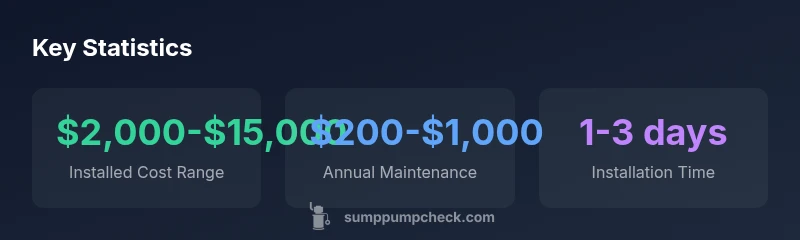
Typical total installed cost for a commercial sump pump system ranges from $2,000 to $15,000, depending on capacity, redundancy, controls, and site preparation. For larger facilities or high-head applications, costs can exceed $15,000. The range accounts for pumps, electrical upgrades, piping, and professional installation; regional labor rates also influence final pricing. This snapshot reflects Sump Pump Check Analysis, 2026.
Understanding the Cost Landscape for Commercial Sump Pumps
According to Sump Pump Check, the cost picture for commercial sump pumps is driven by system size, desired reliability, and installation complexity. In practice, you’re looking at two broad axes: capex (the upfront equipment and install) and opex (ongoing power, maintenance, and potential replacement cycles). For facility managers, it’s essential to quantify not just the sticker price but the cost of downtime avoidance, flood protection, and compliance with local drainage codes. Regional labor rates and the specific site, including existing electrical panels and pipe routing, further shape final pricing. In this guide, we break down cost drivers and provide actionable budgeting strategies to help you plan with confidence.
Price Ranges by System Size and Configuration
Cost tiers for commercial sump pumps vary with pump head, horsepower, and redundancy. A basic, single-pump setup for a small commercial space may fall in the lower end of the spectrum, while multi-pump, weather-resistant configurations with automatic switchovers can push price well into the higher range. When evaluating quotes, compare not only the pump unit cost but also controller reliability, check valves, and the quality of discharge piping. The Sump Pump Check team emphasizes evaluating total cost of ownership, not just upfront price, since downtime avoidance and preventive maintenance can save money over the system’s life. The introduction of smart controls and remote monitoring can also influence both price and risk management, especially in flood-prone zones.
Installation, Permits, and Site Prep: What Affects Labor
Labor costs are often the largest variable in commercial sump pump projects. Factors include trenching or core drilling, concrete cutting, electrical upgrades, and any required permits. If a building already has a robust electrical service or a dedicated sump pit, installation can proceed more quickly, reducing labor hours. Conversely, complex layouts, difficult access, or the need to synchronize multiple units across a facility will drive up both time and cost. Sump Pump Check notes that engaging a licensed plumber or contractor early to assess site readiness can prevent expensive change orders. In some jurisdictions, inspection and permit fees add to the initial bill but may be required for code compliance and insurance purposes.
Core Components and Their Price Impacts
The pump unit is only part of the cost. Discharge piping, check valves, switches, basins or pits, and electrical controls add substantial value to the overall price. A higher-quality cast-iron or stainless steel pump will incur a higher upfront cost but typically offers greater durability in challenging environments. Autostart/auto-restart features, water level sensors, and battery backup systems add layers of protection but also price. When planning, balance upfront quality against projected maintenance and replacement needs. In many cases, upgrading to a redundant system with automatic switchover and a backup power source reduces the risk of costly floods in extreme weather, which can justify the higher initial investment.
Operating Costs and Total Cost of Ownership
Beyond the installation price, expect annual energy costs, routine maintenance, and occasional component replacements. Energy use for a single sump pump is modest, but a large facility with multiple pumps and continuous duty cycles can accrue meaningful energy costs over time. Maintenance tasks—such as checking seals, testing float switches, and cleaning intakes—help prevent failures that could be far more expensive than routine care. The total cost of ownership model encourages budgeting for parts, labor, and periodic upgrades to keep performance reliable over time. Sump Pump Check recommends setting aside a maintenance fund to cover routine service and unexpected repairs.
Replacement vs Repair: When to Upgrade
A failing pump or corroded components may tempt a repair, but older units often become less cost-effective to fix. If replacement costs approach or exceed 50% of the price of a new system—especially for high-head or high-volume applications—upgrading can deliver better efficiency and reliability. Evaluate the expected remaining life of pumps, the availability of spare parts, and the potential advantages of newer models with improved efficiency and smart diagnostics. The decision should factor in downtime risk and the cost of potential outages during peak flood seasons.
Budgeting and Choosing the Right Vendor
A practical budgeting approach includes: (1) obtaining three or more written quotes, (2) asking for a breakdown by equipment, labor, permits, and contingency, (3) requesting references and proof of licenses, and (4) validating warranties and service terms. When comparing bids, prioritize vendors that offer clear maintenance plans and remote monitoring options. The Sump Pump Check methodology encourages focusing on total value rather than lowest price, enabling you to balance upfront costs with long-term protection against water damage. Consider phased implementations if capital budgets are constrained, prioritizing high-risk zones first.
Authoritative Sources and Practical Tips
For further context, consult authoritative sources on home and environmental safety and equipment standards:
- Extension program resources for facility improvements: https://extension.illinois.edu
- FEMA guidance on flood resilience and basement protection: https://www.fema.gov
- U.S. Department of Energy efficiency resources: https://www.energy.gov This external guidance helps frame risk management and best practices in conjunction with the data from Sump Pump Check Analysis, 2026.
Representative cost ranges for commercial sump pump configurations
| Scenario | Cost (installed) | Notes |
|---|---|---|
| Small business single-pump | "$2,000-$5,000" | Entry-level, basic controls, minimal redundancy |
| Mid-size facility two-pump | "$6,000-$12,000" | Redundancy, controllers, larger discharge |
| Heavy-duty industrial | "$12,000-$25,000" | Industrial-grade pumps, multiple zones |
| Replacement (existing system) | "$2,000-$10,000" | Depends on removal and disposal needs |
FAQ
What factors most influence commercial sump pump cost?
System size, the number of pumps, redundancy, control systems, and installation complexity are the primary cost drivers. Site conditions and permit requirements can also shift prices. Planning for these elements helps prevent budget overruns.
The main cost drivers are how big the system is and how much redundancy you need. Site conditions can also change the price.
How does installation complexity affect price?
More complex installations—such as multiple zones, long discharge runs, or retrofits into existing structures—require additional labor, permits, and potential structural work. This typically increases both labor hours and material costs.
If your building needs complicated routing or retrofits, expect higher installation costs.
What is the typical lifespan of a commercial sump pump?
Commercial sump pumps typically last 10-15 years with proper maintenance. Harsh environments or heavy-duty use can shorten life, whereas high-quality units with good maintenance will last longer.
Most commercial pumps last about a decade or more with good care.
Do warranties affect total cost?
Yes. Longer or more comprehensive warranties can reduce future repair costs and downtime, effectively lowering long-term expenses. Compare warranty terms as part of the total value proposition.
A good warranty can save you money if something goes wrong later.
When should I replace vs repair?
If a pump is older than 10-12 years or requires frequent, costly repairs, replacing with a modern, more efficient unit often makes financial sense.
If it’s old or keeps failing, a replacement is usually smarter.
Should I budget for ongoing maintenance?
Yes. Set aside funds for annual inspections, seals, float switches, and occasional component replacements to prevent costly outages.
Maintenance helps avoid surprise failures.
“Choosing the right commercial sump pump involves balancing upfront cost with long-term reliability. A well-planned system reduces downtime and protects critical facilities from flooding.”
Top Takeaways
- Budget for total cost of ownership, not just upfront price
- Prioritize redundancy in high-risk areas to reduce flood risk
- Get multiple quotes and compare detailed scope of work
- Plan for permits, inspections, and potential site prep costs
- Invest in quality components to reduce long-term maintenance