Sump Pump Sound Troubleshooting: Quick Fixes & Tips
Learn practical steps to diagnose and fix common sump pump sound issues. This guide covers quick checks, safe diagnostics, and when to call a professional to prevent basement flooding. Includes a structured diagnostic flow and a step-by-step fix.


Most sump pump noises come from simple, solvable causes. Start by checking the discharge line for obstructions and air pockets, then reseat or tighten mounting bolts. If the pump still sounds loud, inspect the impeller and bearings for wear, and consider lubricating or replacing worn parts. If problems persist, contact a licensed plumber or pump technician.
Why a sump pump sound happens
In basements, the most noticeable sounds from a sump pump are often caused by simple, fixable issues rather than a dead motor. The term sump pump sound covers everything from a subtle hum to a loud banging. The first step is to listen carefully to the type of noise and the pump's behavior. Common culprits include air trapped in the discharge line, loose mounting bolts, a worn impeller, or a misaligned or stuck check valve. Recognizing the sound type helps you target the right fix and reduce the risk of water damage. Addressing the issue early protects your basement and the life of the pump. By understanding how a sump pump sound manifests, homeowners can triage quickly and prevent unnecessary service calls. This page focuses on practical, action-oriented steps you can take when you hear a troubling sump pump sound.
Common sounds and their meanings
- Hum or buzz with no pumping: the motor is running but something is jammed or the impeller is obstructed.
- Gurgling or banging when starting: air pockets in the discharge line or poor priming.
- Grinding or screeching: worn or failing bearings; motor wear could cause damage.
- Rattling or clanking: loose parts or a pipe striking against the basin or housing.
- Thumping or heavy vibration: mounting hardware loose or the unit sitting on a soft surface.
Each sound has a likely cause; addressing it promptly saves energy, prevents overflow, and extends the life of the unit. Keep in mind that some noises indicate a deeper issue that may require professional diagnosis, especially if the pump cycles frequently or runs constantly.
Immediate checks you can safely perform
- Safety first: unplug the pump and switch off the circuit breaker; never work on live electrical equipment.
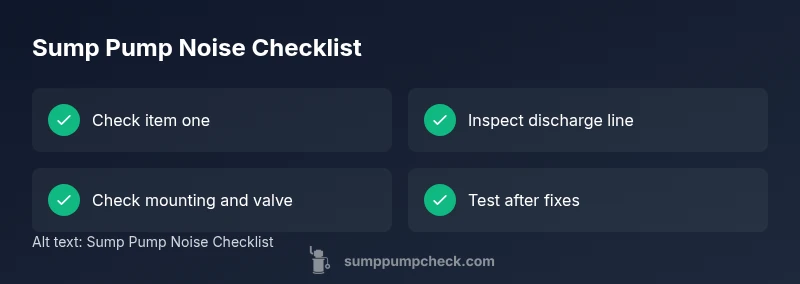
- Inspect the discharge line for kinks, cracks, and clogs. Clear obstructions and ensure the line is sloping away from the pit and away from the house foundation.
- Check the check valve for proper operation and ensure it isn't reversed or stuck.
- Inspect the mounting bolts and frame; tighten any loose screws or straps so the pump sits firmly and reduces vibration.
- Look at the impeller and housing for debris or damage; remove debris carefully with the pump unplugged.
- Reassemble, plug in, and slowly test the unit with water added to the pit to observe changes. If the noise changes with water level, the issue may be related to impeller balance or housing clearance.
Safe maintenance practices to reduce noise
A proactive maintenance routine goes a long way toward reducing sump pump noise. Annually inspect the unit for wear, clean fine debris from the basin, and verify that the discharge line remains free of obstructions. Use vibration dampers or rubber mounting feet to minimize vibration transfer to the sump pit. If you notice persistent grinding, squealing, or beeping, it’s time to consider bearing inspection or professional service. Remember: keeping the system clean, level, and properly attached reduces noise and extends lifespan.
Steps
Estimated time: 45-60 minutes
- 1
Power down and prepare the area
Unplug the sump pump and switch off the circuit breaker. Remove the access panel if present and keep a flashlight handy. This ensures you’re working safely around water and electricity.
Tip: Always verify power is off with a non-contact tester before touching any parts. - 2
Inspect discharge line and clear air pockets
Look for kinks, blockages, or tight bends in the discharge line. If you see air pockets, reseat joints and run a small amount of water to prime the line.
Tip: Run water slowly to observe if air pockets reappear. - 3
Check mounting and secure the unit
Examine mounting screws, straps, and the sump pit edges. Tighten any loose fasteners and ensure the pump sits level without wobble.
Tip: Place a level on the pump base to confirm levelness. - 4
Examine the impeller and valve components
Visually inspect the impeller for obstructions and check the valve for proper orientation and movement. Remove debris if present and ensure the valve isn’t stuck.
Tip: Do not force parts; if parts won’t move, stop and seek help. - 5
Test run and evaluate noise
Plug the unit back in, re-engage power, and slowly introduce water to the pit. Listen for changes in sound and verify that the pump cycles normally without strange grinding.
Tip: If noise persists, plan a professional inspection rather than continuous troubleshooting.
Diagnosis: Sump pump makes unusual noise or vibration
Possible Causes
- highAir in discharge line
- highLoose mounting bolts
- mediumClogged or misaligned check valve
- mediumWorn impeller bearings
- lowDamaged motor or housing
Fixes
- easyBleed air from discharge line and reseat line connections
- easyTighten mounting bolts and secure the pump frame
- easyInspect and replace a clogged or misaligned check valve
- hardInspect or replace worn impeller bearings; consult a pro if motor is affected
FAQ
What is the most common cause of a noisy sump pump?
The most frequent culprits are air pockets in the discharge line, a loose mounting, or a worn impeller. Start with simple checks before considering replacement.
The most common cause is air pockets, loose mounting, or worn impeller. Start with simple checks before replacing anything.
Is a loud sump pump dangerous?
A loud pump isn't immediately dangerous, but it signals issues that could lead to overflow or equipment failure if left unchecked.
A loud pump isn't immediately dangerous, but it signals issues that could lead to overflow if ignored.
Can I fix sump pump noises myself?
Yes, for simple issues like clogs, air pockets, and loose components. Always unplug first and proceed with caution.
Yes, you can fix simple issues yourself, but unplug first and proceed carefully.
When should I replace a sump pump due to noise?
If noises persist after basic fixes or the unit shows signs of wear that affect performance, replacement is the safer option.
If the noises persist after fixes or the pump shows wear, replacement is safer.
Do I need a professional to diagnose sump pump noise?
For electrical issues, persistent bearing wear, or uncertain repairs, a professional diagnosis protects you from hazards and ensures a proper fix.
If you’re unsure or there are electrical concerns, a professional should diagnose the noise.
What maintenance helps reduce sump pump noise?
Regular cleaning, checking the discharge line, and ensuring secure mounting reduces noise and extends pump life.
Regular cleaning, discharge line checks, and secure mounting reduce noise and extend life.
Watch Video
Top Takeaways
- Identify the noise type first and act quickly
- Check discharge line for air pockets or clogs
- Tighten mounting and inspect the valve
- Inspect impeller bearings; replace if worn
- Call a professional for persistent issues