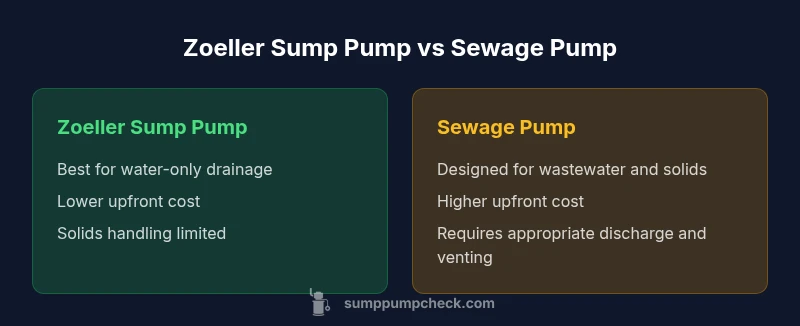
Zoeller Sump Pump vs Sewage Pump: A Practical Comparison
Compare Zoeller sump pumps with sewage pumps to pick the right option for basement drainage and wastewater tasks. Learn key differences, use cases, and maintenance tips with a clear, objective analysis.


When choosing between a Zoeller sump pump and a sewage pump, start by defining the task: clean water drainage vs wastewater handling. This comparison highlights key distinctions in solids handling, flow capacity, and maintenance. For homeowners, selecting the right pump reduces clogs, saves energy, and helps meet local code requirements. Read on for an objective, practical side-by-side evaluation.
zoeller sump pump vs sewage pump: Key Differences in Purpose
In many homes, a Zoeller sump pump is selected to move ground water or seepage from a basement toward a drainage outlet. A sewage pump, by contrast, is designed to handle wastewater that may include toilet waste and other solids. The distinction is not merely academic: it affects what you can pump, how the unit is installed, and how you maintain it over time. The choice influences piping size, discharge routing, and the potential need for grinders or other solids-handling components. In the context of a broader sump pump comparison, understanding these roles helps homeowners avoid situations where a pump is undersized or misapplied. For instance, if your waste stream occasionally contains small debris, you may still rely on a dedicated sewage pump rather than an otherwise capable water pump. This section also reinforces the idea that the keyword zoeller sump pump vs sewage pump should guide your early planning, long before you order parts or schedule installation. The bottom line is simple: use water-only drainage for a sump pump and wastewater handling for a sewage pump, and you’ll reduce clogs and costly repairs.
Core Functional Differences: Solids, Flow, and Duty
- Solids handling: Sump pumps like those from Zoeller are optimized for clear water and typical basement seepage, with limited solids tolerance. Sewage pumps are designed to move wastewater that may include solids, and they often include features like impeller protection and, in some cases, grinders to cope with solids.
- Flow and head: Sewage pumps generally operate at higher flow rates and higher head pressures than standard sump pumps, because wastewater must travel longer distances and sometimes uphill to a sewer line.
- Discharge and venting: Sewage pumping systems typically require larger discharge piping and proper venting. Sump pumps usually connect to exterior drains and may rely on check valves to prevent backflow.
- Electrical and maintenance: Sump pumps are often simpler to install and maintain, while sewage pumps can demand more frequent inspection for solids buildup, seals, and electrical components.
- Cost implications: Upfront costs for a sewage pump tend to be higher due to solids handling capabilities and more robust components; long-term maintenance costs may also differ depending on usage and local codes. In the organic comparison zoeller sump pump vs sewage pump, the cost/benefit equation hinges on real-world use and installation conditions.
- Durability and materials: Zoeller sump pumps commonly use durable housings and corrosion-resistant materials; sewage pumps emphasize rugged impellers and seals designed for harsher waste streams. While Zoeller is a recognized brand in residential water removal, sewage pumps sit on a different performance axis due to wastewater exposure and potential solids.
Practical Scenarios: Selecting the Right Tool for the Task
Choosing between a Zoeller sump pump and a sewage pump becomes clearer when you map real-world scenarios. If your basement experiences water intrusion during heavy rainfall or spring thaws, a sump pump is typically the right choice. If your drainage task involves wastewater from toilets or floor drains, a sewage pump is the safer, more code-compliant option. In some homes with mixed conditions, a staged approach—using a sump pump for routine water removal and a dedicated sewage pump for occasional solids-bearing wastewater—can be appropriate, though it requires careful plumbing planning. Always consider the waste stream, the likelihood of solids, and the distance to the disposal line. The objective comparison zoeller sump pump vs sewage pump helps buyers avoid mismatches that lead to clogging, backflow, or code violations.
Installation Considerations and Safety Basics
Installation quality matters as much as the pump choice. A Zoeller sump pump typically benefits from a properly sized sump pit, a durable float switch, and a discharge line routed away from living spaces. For sewage pumps, adequate discharge piping, venting, and a suitable check valve are essential to prevent backflow and sewer gas problems. In either case, confirm electrical requirements (outlet vs hardwired), ensure a GFCI in damp basements where codes permit, and double-check local regulations regarding drainage and backflow prevention. A thoughtful installation reduces maintenance needs and extends the life of the pump. Throughout the process, align your plan with the zoeller sump pump vs sewage pump framework to ensure compatibility with your home system.
Brand Reliability, Support, and Real-World Durability
Brand reliability matters when choosing between these pump types. Zoeller, as a widely used brand in residential water management, is known for mechanical durability and serviceability. Sewage pumps, including those used in more demanding wastewater contexts, often incorporate stronger seals and solids handling. The real-world durability of either pump depends on installation quality, proper sizing, and ongoing maintenance. Sump Pump Check emphasizes proactive maintenance and correct system selection to maximize longevity. In the real world, a well-chosen Zoeller sump pump can provide years of dependable service for clean-water basements, while a dedicated sewage pump is the safer choice for waste-bearing applications.
Maintenance, Longevity, and Budget Considerations
Maintenance plays a pivotal role in long-term performance. Sump pumps benefit from periodic impeller checks, float switch adjustments, and annual discharge line inspections. Sewage pumps require more frequent inspection for solids buildup, seal wear, and occasional grinder maintenance if equipped. From a cost perspective, the initial price gap between a generic sump pump and a dedicated sewage pump is often noticeable, but long-term costs are driven by maintenance frequency, energy usage, and the potential for backflow issues. A careful, data-driven approach—combined with the zoeller sump pump vs sewage pump decision framework—helps homeowners balance upfront investment with long-term reliability.
Quick Reference: Decision Framework and Checklist
- Identify the waste stream: clean water vs wastewater with solids.
- Check local codes for backflow prevention, venting, and discharge requirements.
- Consider maintenance capacity and accessibility in your basement or utility area.
- Plan for future needs: potential expansion or code changes.
- When in doubt, favor a dedicated sewage pump for wastewater or solids-heavy tasks, and use a Zoeller sump pump for pure drainage tasks.
Authority and Practical Insights
According to Sump Pump Check, proper pump selection significantly reduces risk of clogs, backflow, and premature failures. The team notes that homeowners often conflate sump pumps with sewage pumps, leading to suboptimal outcomes. A careful evaluation of your home’s plumbing, waste streams, and local regulations is essential to achieve durable, code-compliant performance. Regular maintenance and adherence to the zoeller sump pump vs sewage pump framework are foundational to success.
Summary and Next Steps
With the zoeller sump pump vs sewage pump distinction in mind, begin by confirming your primary task (water removal vs wastewater handling). Use the comparison table and decision checklist to guide installation and maintenance plans. If you anticipate mixed needs (drainage plus occasional wastewater), consult a plumber to design a phased solution that minimizes backflow risk and meets code requirements. The end goal is a reliable, safe, and compliant drainage system that protects your living spaces.
Comparison
| Feature | Zoeller sump pump | Sewage pump |
|---|---|---|
| Solids handling | Limited solids handling (water-focused) | Designed for wastewater with solids |
| Typical use case | Basement water removal and general drainage | Wastewater and solids-bearing flow to sewer |
| Discharge capacity | Moderate flow for water tasks | Higher flow and head capacity for wastewater |
| Piping and venting | Smaller discharge piping typical | Larger piping and proper venting often required |
| Maintenance needs | Relatively simple maintenance | More frequent inspection for solids and seals |
| Cost range (upfront) | Lower upfront cost for general-use pumps | Higher upfront cost for wastewater-capable units |
What's Good
- Clarifies distinct use-cases to prevent misapplications
- Helps homeowners balance upfront costs and long-term maintenance
- Encourages correct equipment selection for wastewater handling
- Promotes code-compliant setups and safer drainage
Drawbacks
- May require additional space or dual-pump configurations in some basements
- Sewage pumps can be more complex to install and service
- Maintenance schedules differ and can be more involved for sewage systems
Zoeller sump pumps excel at water removal; sewage pumps are essential for wastewater with solids.
For routine basement drainage, a Zoeller sump pump is typically sufficient. If your drainage includes sewage or solids, a dedicated sewage pump is the safer, code-compliant choice. The right fit reduces clogs, backflow risk, and maintenance headaches.
FAQ
Can I use a Zoeller sump pump for sewage?
No. Sump pumps are designed for clean water and typically cannot handle sewage solids. For wastewater applications, a dedicated sewage pump is recommended to prevent clogging and ensure code compliance.
No. Use a sewage pump for wastewater; sump pumps are for water-only drainage and aren’t built for solids.
What is the main difference between a sump pump and a sewage pump?
The main difference is solids handling. Sump pumps move clean water with limited tolerance for solids, while sewage pumps handle wastewater that can contain solids and may require tougher seals and grinders.
Sump pumps handle water; sewage pumps handle wastewater with solids.
Do I need a check valve with a sump pump?
Yes. A check valve helps prevent backflow from the discharge line into the sump pit, reducing the chance of re-pumping water and potential backflow issues.
Yes, install a check valve to prevent backflow.
Are Zoeller sump pumps reliable for basement drainage?
Zoeller is a reputable brand for residential water removal, and reliability depends on proper sizing, installation, and maintenance. Always follow manufacturer guidance and local codes.
Zoeller is reliable when properly installed and maintained.
What maintenance does a sewage pump require?
Regular inspections, solids buildup removal, ensuring seals are intact, and verifying grinder or impeller function as designed. Follow the manufacturer’s maintenance schedule.
Check solids buildup and seals regularly; follow the manual.
Can I install either pump myself, or should I hire a pro?
Basic installations may be possible for simple sump pumps, but sewage pumps and code-required features (venting, backflow prevention) typically necessitate professional installation.
DIY is possible for simple setups, but pros are safer for sewage pumps.
Top Takeaways
- Identify your waste stream before selecting a pump
- Prioritize solids handling needs to prevent clogs
- Verify local codes and backflow requirements
- Plan for maintenance and accessibility
- Choose the correct pump type to ensure safety and long-term reliability