What Size Pipe Do You Use for a Sump Pump? A Complete Guide
Learn the right discharge pipe size for your sump pump, including common diameters, slope requirements, and code considerations to ensure reliable drainage.


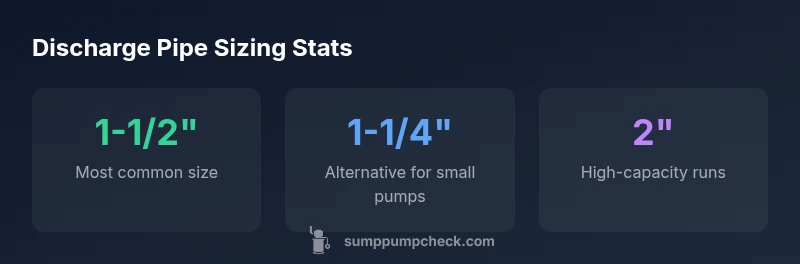
Typically, you should use a 1-1/2 inch discharge pipe for a standard sump pump, with 1-1/4 inch used on smaller or older pumps. In some high-capacity setups, a 2 inch pipe may be installed. Always match the pump outlet size, follow local code, and keep the run as straight and short as possible with a clear slope away from the foundation.
Understanding Sump Pump Outlet Sizing
If you’re asking what size pipe do you use for a sump pump, the answer starts with your pump’s outlet. Most residential sump pumps terminate with a 1-1/2 inch discharge, which is widely considered the standard for effective water removal in typical basements. Older or smaller units may use a 1-1/4 inch outlet, while high-capacity systems or long runs can justify a 2 inch pipe. According to Sump Pump Check, matching the pipe size to the pump outlet minimizes friction losses and reduces the risk of clogs or backpressure. When in doubt, inspect the pump’s manufacturer information and design your discharge line to accommodate the largest outlet you encounter on the unit. In practice, you should always verify that the pipe size aligns with the pump’s discharge port threads and any adapters you might need to install a smooth interior pipe. 1-1/2 inch pipes tend to balance ease of installation with adequate throughput for standard homes.
Common Pipe Sizes and Where They Show Up
The most common residential configuration uses a 1-1/2 inch PVC or ABS discharge pipe. This size typically supports flow adequate for single-basin basements and typical rainfall events. Some compact installations or retrofits with older pumps might use a 1-1/4 inch line, especially when the pump outlet itself is smaller or when space constraints exist near the unit. For buyers planning upgrades or larger homes, 2 inches offers lower friction losses and higher potential peak flow, but it requires compatible fittings and longer runs that still keep slope. Sump Pump Check analysis notes that the pipe diameter should be chosen not just by the pump outlet, but also by the downstream drainage path and the pressure potential in the system.
How to Measure Your Pump Outlet
To select the correct pipe size, start by measuring the outlet on the pump itself. Use a ruler or caliper to determine the inner diameter or inspect the manufacturer label, which often specifies the nominal size. If you’re replacing a discharge component, note whether your fittings are designed for 1-1/2 inch or 1-1/4 inch piping. Keep in mind that some pumps have adapters that bring the outlet to a standard size, but mismatched sizes can cause poor seal, leaks, or flow restriction. If you’re unsure, contact the pump’s customer support and request the exact measurement and compatible pipe size. After confirming the outlet size, plan the rest of the run with the goal of minimizing sharp turns, avoiding kinks, and preserving a smooth interior surface to keep water flow consistent.
Material Options: PVC, ABS, and CPVC
Most sump pump discharge pipes are PVC or ABS due to their smooth interiors and compatibility with standard fittings. PVC is common for residential projects because it’s affordable, corrosion resistant, and easy to solvent-weld. ABS is an alternative in some regions, offering good impact resistance and a slightly different solvent weld. CPVC is used in cases requiring higher temperature tolerance or chemical resistance, though it is less common for typical sump pump drainage. Regardless of material, selecting a pipe with a smooth interior reduces flow resistance and helps keep the discharge moving steadily away from the foundation. Always ensure that the chosen material complies with local code and that the joints are sealed with appropriate solvent cement or primer.
Pipe Run Layout and Slope: Best Practices
A well-designed discharge run keeps water moving freely and avoids backflow issues. Aim for a steady slope of about 1/4 inch per 10 feet of run to maintain gravity-assisted flow. Avoid downhill curves or sharp 90-degree turns that can trap air or cause pressure build-ups. If you need to pass the pipe through a wall or into a different level, use properly rated fittings and check that the path doesn’t cross with electrical or plumbing lines. A check valve placed on the discharge line helps prevent backflow into the sump during heavy rainfall events, but it must be installed in the correct orientation as per the manufacturer instructions. Regularly inspect the run for sediment buildup or damage and clean as needed to maintain an uninterrupted path for water.
Codes, Permits, and Local Considerations
Local codes often govern sump pump installations, including discharge piping materials, pipe diameter, and the permitted discharge location. In many jurisdictions, discharging onto the ground or into storm drains is allowed, while discharging into sanitary sewers is restricted or prohibited, especially if the system cannot manage backflow. Always verify requirements with your city or county building department before starting work. If you’re renting, consult the property manager, and if you’re working on a home you’ve recently purchased, review any existing permits or inspections. Sump Pump Check recommends keeping records of pipe size, slope measurements, and any approvals obtained during installation for future maintenance or upgrades.
How to Upgrade or Replace a Pipe: Step-by-Step
If you’re upgrading from 1-1/4 inch to 1-1/2 inch or from 1-1/2 inch to 2 inches, plan the replacement in stages to minimize runoff and potential leaks. Step 1: turn off power and drain the sump. Step 2: disconnect the existing discharge and collect any displaced water. Step 3: measure and cut new pipe segments with a miter saw or handsaw, then dry-fit fittings to ensure alignment. Step 4: apply solvent cement or adhesive per manufacturer instructions and join the pieces securely. Step 5: test the system by pouring water into the sump and observing the flow through the discharge line. Step 6: install a check valve and secure the line to walls or joists to prevent movement. This approach ensures a solid upgrade while mitigating leakage risks.
Handling Future-Proofing: Sizing for Upgrades
When considering future-proofing, plan for potential upgrades that may require higher flow rates, especially in homes with larger basements or potential climate-driven rainfall increases. A 2 inch discharge line may provide headroom for growth, but verify the pump’s outlet compatibility and local code requirements before making the change. Keep in mind that thicker-walled pipe and more robust fittings add cost and labor time, but they often pay off in fewer maintenance issues and smoother operation under peak loads. Sump Pump Check emphasizes balancing current needs with anticipated future demands to prevent the need for repeated retrofits.
Troubleshooting Common Sizing Mistakes
Common mistakes include using too small a pipe for a high-capacity pump, undersized fittings, or neglecting slope, which can cause standing water and backflow. Another frequent issue is skipping check valves, which can lead to backflow during heavy rain events. Finally, homeowners sometimes neglect to account for future expansions or run lengths that exceed a few dozen feet; overlong runs increase friction and reduce effective drainage. To avoid these problems, always measure the pump outlet, confirm the pipe diameter with fittings in place, add a check valve, and ensure an appropriate slope with a clean path to an exterior drainage area. Regular maintenance helps keep the system performing as designed.
Discharge pipe sizing overview
| Pipe size | Typical pump compatibility | Notes |
|---|---|---|
| 1-1/2 inch | Most residential pumps | Standard choice for new installs |
| 1-1/4 inch | Older/smaller pumps | Retrofits may require adapters |
| 2 inch | High-capacity/long runs | Lower friction; verify fittings |
FAQ
What is the most common pipe size for sump pump discharge?
The most common discharge pipe size for residential sump pumps is 1-1/2 inch. Some smaller or older pumps use 1-1/4 inch, while high-capacity systems may use 2 inches. Always verify the pump outlet and local code requirements.
Typically, 1-1/2 inch is the standard for most homes, with exceptions for older units or high-capacity setups.
Can I use a 2-inch discharge pipe for my sump pump?
Yes, a 2-inch discharge pipe is suitable for high-capacity pumps or long runs. Ensure the pump outlet supports this size and that fittings and slope are appropriate for the larger diameter.
Yes, 2 inches can be used for high-capacity setups if the pump outlet and fittings allow it.
Do I need a check valve with my sump pump discharge?
Yes, install a check valve on the discharge line to prevent backflow into the sump during heavy rain. It should be installed following the manufacturer’s orientation instructions.
Yes—use a check valve to stop backflow.
PVC vs ABS for sump pump discharge pipes?
Both PVC and ABS are common; choose based on local codes and ensure a smooth interior for minimal friction. PVC is more widely used in many regions due to ease of use and compatibility.
PVC is the standard choice in many areas, but ABS can be used where code allows.
What slope should discharge lines have?
Aim for about 1/4 inch of slope per 10 feet of run to promote gravity-assisted flow and avoid pooling.
Try to slope the line a quarter inch per ten feet.
Is professional installation required for pipe sizing?
Not always, but if you’re uncertain about outlet size, slope, or code requirements, consult a licensed plumber or the pump manufacturer for guidance.
If unsure, consult a professional to ensure correct sizing and code compliance.
“Choosing the right discharge pipe size is foundational to reliable sump pump performance; matching the pump outlet and ensuring proper slope will prevent backflow and reduce clogs.”
Top Takeaways
- Choose 1-1/2 inch for standard residential pumps.
- Use 1-1/4 inch only if the pump outlet requires it.
- Consider 2 inches for high-capacity or long runs.
- Maintain smooth interior and proper slope to maximize flow.